
















Once revered for its verdant forest canopy and calm lake waters, Kalangala is fast becoming a cautionary tale of unchecked agricultural expansion.
Environmentalists are sounding the alarm as oil palm cultivation stretches beyond the main island of Buggala into the delicate ecosystems of smaller islands—threatening biodiversity, destabilizing the climate, and compromising cultural heritage.


The shift follows a 2023 presidential directive allowing oil palm expansion to new frontiers: over 700 acres on Serinya Island, 600 acres on Lulamba, and 1,500 acres on Bukasa.
Other islands such as Bugaba, Bufumira, Buyovu, and Funve are also being targeted.
But environmental experts argue this strategy comes at a steep ecological cost.
“The original Environmental and Social Impact Assessment (ESIA) was clear—limit oil palm to Buggala,” says Joseph Byaruhanga, the Kalangala District environmental officer. “It was a safeguard to preserve forests and food crop diversity on the other islands.”
Forest Cover in Freefall
Kalangala’s forest cover has seen a dramatic decline—from 57% in 1954 to just 22% today. Oil palm cultivation is the second biggest driver of this decline, accounting for 18% of forest loss, trailing only rice farming at 20%.
According to Byaruhanga, the economic allure of oil palm is pushing communities to clear more land, often without consideration for long-term consequences.
“Sedimentation, pollution, and increased lake accidents—these are all connected to deforestation and changing weather patterns,” he warns.
The island geography of Kalangala makes it particularly vulnerable. The region is surrounded by shallow waters, and without forested buffers, erosion and siltation could gradually choke the lake.
“Kalangala’s trees aren’t just scenery,” explains David Kureeba, a senior programme officer at the National Association of Professional Environmentalists (NAPE).

“They regulate the microclimate, support biodiversity, and act as carbon sinks. Oil palm doesn’t offer the same benefits.”
While oil palm trees resemble trees in appearance, Kureeba clarifies that they don’t match the ecological functions of indigenous forests.
“They don’t support complex ecosystems, absorb less CO₂, and release less oxygen. They’re no substitute for natural forest.”
Environmental Costs vs. Economic Promise
The environmental degradation stands in contrast to the promises made by project stakeholders.
Since 2006, over 12,000 hectares have been turned over to oil palm farming in Kalangala, primarily on mailo land. Smallholder farmers and Oil Palm Uganda Limited (OPUL) dominate the enterprise.
Proponents like Boaz Zaake, an agronomist with Ssese Oil Palm Growers Cooperative Society (SOPAGCO), insist the expansion is being handled responsibly.
“We use cover crops and buffer zones to control erosion. The targeted lands were not part of protected forests—they were abandoned due to tsetse flies,” he said.
Yet critics remain skeptical. “You cannot replace a multi-layered forest with monoculture and claim environmental neutrality,” argues NAPE’s Executive Director, Frank Muramuzi.
“Oil palm plantations lack the resilience and regenerative capacity of forests.”
Muramuzi also slammed Uganda’s Environmental Impact Assessment (EIA) process as compromised. “Developers fund their own EIAs. That’s a conflict of interest. Many risks are downplayed to favor economic growth.”
Efforts Toward Sustainability: A Drop in the Ocean?
In response to growing criticism, the Ministry of Agriculture partnered with Solidaridad Eastern and Central Africa in 2023 to promote environmentally and socially sustainable practices.
The initiative has yielded RSPO-aligned training manuals, cultural heritage management plans, and two satellite-based vegetation monitoring reports.
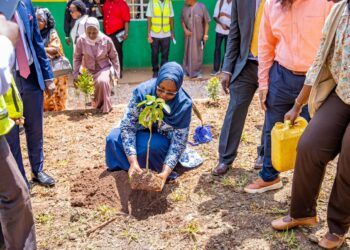
Additionally, restoration efforts have seen 40.4 hectares of degraded lakeshore rehabilitated with indigenous species.
In 2024, 600 hectares were demarcated for protection using bamboo as a live boundary, in line with NEMA guidance.
Still, environmentalists say such efforts are dwarfed by the scale of degradation.
“Restoring 40 hectares while expanding thousands into sensitive zones is like applying a bandage to a gaping wound,” Kureeba remarked.
The Bigger Picture: Ecosystem at a Crossroads
Kalangala’s 84 islands—only 64 of which are inhabited—have long been ecological jewels in Uganda’s crown.
They offer not just timber or farmland, but also climate stability, freshwater filtration, and a haven for biodiversity.
Replacing this rich mosaic with monoculture plantations risks collapsing an already fragile system.
“Once you clear these forests, it’s not just about lost trees,” says Muramuzi. “You lose pollinators, medicinal plants, bird species, soil stability, and cultural identity. Oil palm is turning Kalangala into an ecological casualty.”
With oil palm plantations continuing to encroach on sensitive areas, the island district faces a stark dilemma: Can economic development coexist with ecological preservation, or will the pursuit of profit ultimately strip Kalangala of its natural heritage?
As policymakers weigh the benefits of oil palm against the long-term health of ecosystems, environmentalists are urging a pause—a moment to reconsider, to restore, and to respect the intricate balance that once defined Kalangala’s landscape.








 English