
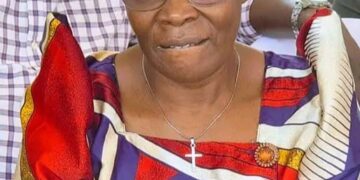




Proceedings in the murder trial of businesswoman Molly Katanga were abruptly suspended on Friday after High Court Judge Rosette Comfort Kania walked out of the courtroom following a heated confrontation between prosecutors and defense lawyers over the admissibility of medical photographs.
The tense exchange unfolded during the testimony of the defense’s third witness, an orthopedic surgeon who treated Molly Katanga shortly after the shooting death of her husband, businessman Henry Katanga, at their home in Mbuya on November 2, 2023.

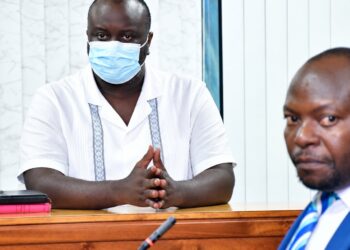
Testifying before the court, the surgeon, whose identity was withheld for security reasons, said he was summoned to the emergency unit of International Hospital Kampala (IHK), now operating as C-Care, on the morning of the incident.
He told the court that by the time he arrived, Molly Katanga was already under the care of a neurosurgeon because of serious head injuries.
“She had a heavily bandaged head, which was being managed by the neurosurgeon. I was specifically called in to assess injuries to her upper limbs,” the witness testified.
According to the surgeon, examinations and X-ray scans revealed multiple fractures affecting both hands. He said Molly sustained fractures to the middle and ring fingers of her left hand, as well as a fracture to the little finger on her right hand, whose tip had been partially detached. She also suffered extensive swelling of soft tissues and loss of sensation in one finger.
The witness informed the court that he performed surgery to treat the injuries and later prepared a medical report dated November 13, 2023, which was admitted into evidence.
In testimony that appeared to support the defense’s argument, the surgeon described the injuries as consistent with what medical practitioners refer to as “defense injuries” — wounds commonly sustained when a person instinctively shields themselves from an attack.
He explained that individuals facing an assault often raise their hands and forearms to protect vulnerable areas such as the head, adding that most of Molly Katanga’s injuries were located on the outer portions of her forearms and hands, a pattern he said matched defensive actions.
The witness further testified that photographs documenting the injuries had been taken by a nurse during treatment and stored in the hospital’s electronic records system.
However, proceedings descended into chaos when defense lawyers sought to have the surgeon identify printed copies of the photographs in court.
State prosecutors objected, arguing that the witness was not legally competent to identify the printouts because he had only viewed the images in digital form within the hospital database and had not personally produced the printed copies presented before court.
The disagreement quickly escalated into a prolonged and animated exchange between lawyers from both sides, with voices raised as they argued over the authenticity and admissibility of the photographs.
As the dispute intensified and order in the courtroom deteriorated, Justice Kania rose from the bench and exited the courtroom, effectively ending the day’s session.
The judge later adjourned the matter to June 23, when the defense is expected to continue presenting its case.
The latest courtroom drama comes only days after another defense witness, retired forensic pathologist Dr. Sylvester Onzivua, acknowledged during cross-examination that he had never personally examined Molly Katanga’s injuries and was unable to conclusively establish Henry Katanga’s position at the time he sustained the fatal gunshot wound.
Molly Katanga is charged with murdering her husband, an accusation she has consistently denied.
Her daughters, Martha Nkwanzi and Patricia Kakwanza, are jointly charged alongside Charles Otai and George Amanyire with being accessories after the fact and destroying evidence. All the accused persons have entered pleas of not guilty.




 English