
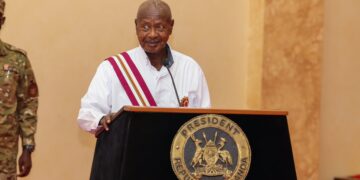









The Minister for the Presidency, Babirye Milly Babalanda, has urged voters in Busoga Sub-region to turn up in large numbers and support NRM-endorsed candidates in the Local Council II elections scheduled for Monday, August 10, 2026.
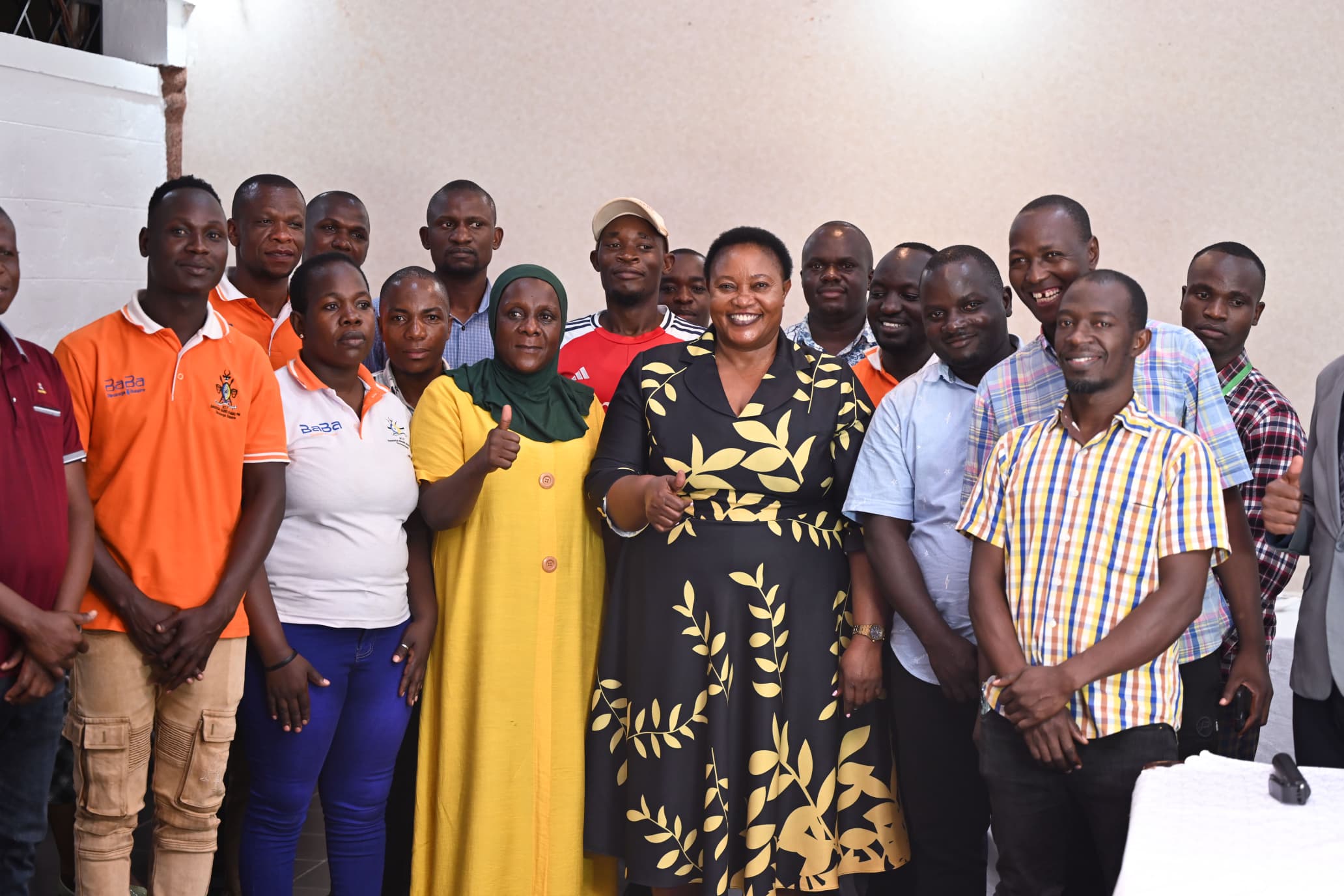
Babalanda made the call yesterday during a media briefing in Busoga, where she also conveyed appreciation from President Yoweri Kaguta Museveni, First Lady and Minister of Education and Sports Janet Kataaha Museveni, Presidential Permanent Secretary Hajji Yunus Kakande and staff in the Office of the President.

She commended residents of Busoga for supporting NRM candidates during the recently concluded Local Council I elections, in which the ruling party secured victories in several parts of the country.
“I thank the people of Busoga for standing with the NRM candidates in the LC1 elections. Let us replicate that same spirit on Monday and vote leaders who will deliver services and support Government programmes,” Babalanda said.
She, however, urged all elected leaders, irrespective of their political affiliation, to put the interests of their communities ahead of partisan politics.
“Every Ugandan deserves quality services, opportunities for economic empowerment, and responsive leadership. These can only be achieved through cooperation and a shared commitment to national development,” she said.
Babalanda also directed Resident District Commissioners, Resident City Commissioners, their deputies and assistants, the Police and other security agencies to strengthen supervision and security during the elections.
She said security agencies must protect voters, candidates and polling officials to prevent a repeat of the violence witnessed in Buwenge, Jinja, where lives were lost.
The minister further called on voters to support candidates who understand the NRM ideology, Museveni’s wealth creation agenda and the party’s manifesto.
She said parish-level leadership is particularly important because the parish is a key point for implementing Government wealth creation programmes, including the Parish Development Model (PDM).
“Parish leaders are the bridge between Government policy and the households. They are the first to explain Government programmes to the people in the local language,” Babalanda said.
She identified sensitisation, household mobilisation, monitoring and accountability as some of the critical responsibilities of parish leaders.
According to Babalanda, Local Council II leaders, parish chiefs, LC I chairpersons and Parish Development Committee members should help mobilise communities to participate in programmes such as PDM, Emyooga, Operation Wealth Creation and the 4-Acre Model.
She said they should also help identify households still engaged in subsistence production and guide them towards income-generating activities and participation in the money economy.
The leaders, she added, should ensure proper oversight of Government funds by preventing ghost beneficiaries, inflated beneficiary figures and misuse of funds, while promoting timely repayment of revolving funds and regular reporting to sub-county and RDC offices.
“Therefore, I urge all Ugandans to elect responsible leaders at the parish who are ready to guide and give accountability to wananchi, since Government is pushing a lot of money for wealth creation programmes at the parish level,” she said.
Babalanda also reminded voters that under Section 123(2) of the Local Governments Act, the election of a Parish or Ward Council Chairperson is conducted through lining up behind the nominated candidate, the candidate’s representative, portrait or symbol.
She called on voters to participate peacefully and elect leaders capable of working with Government to improve service delivery and advance development at parish level.
“Let us turn up in large numbers, remain peaceful, and elect leaders who will work with Government to transform our parishes,” she said.



 English