










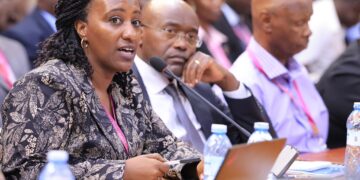




The Uganda National Examinations Board (UNEB) is considering reviewing upward the fees paid by candidates registering for national examinations, citing rising costs involved in conducting the examinations.
The proposal is being discussed by the UNEB board and its committees, which are assessing whether the existing charges are still adequate to meet the cost of examination administration.


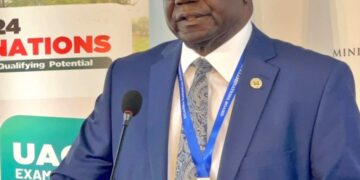
UNEB Executive Director and Secretary to the Board, Dan Odongo, confirmed the discussions on Tuesday, saying the board has increasingly struggled to meet some of its obligations using the current revenue.
Odongo said the cost of examination materials and other operational requirements has risen considerably, making it difficult for UNEB to improve payments to personnel involved in the examination process.
“There are several things that we want to effect, including increasing remuneration of people involved in management of the examinations, like scouts and invigilators, but we could not as we are limited on revenue,” he said.
According to Odongo, UNEB currently depends significantly on government funding to supplement revenue collected through examination registration. He said a modest adjustment in the fees could provide the board with additional resources to meet some of its operational expenses.
“Currently, we rely a lot on releases from government, yet if a small, manageable amount is added to what is being paid, it can improve on the matter,” he said.
Under the existing fee structure, candidates sitting the Primary Leaving Examination pay Shs34,000, while those registering for the Uganda Certificate of Education pay Shs134,000. Candidates sitting the Uganda Advanced Certificate of Education pay Shs186,000.
For private candidates, registration fees are paid by parents or guardians. Government, through funding allocated to UNEB, covers the registration costs of learners under the Universal Primary Education programme.
Any increase would therefore affect families differently depending on the level at which their children are studying and whether they are registered as government-supported or private candidates.
The current charges were introduced in 2017 after UNEB revised the registration fees through a circular dated April 4 of that year.
Odongo said the nearly decade-long period since the last review has seen significant increases in the cost of goods and services required to conduct examinations, while the registration charges have largely remained unchanged.
“A lot has changed since 2017. The rates of materials used have increased amid other changes, but the rates have remained the same, affecting the board,” he said.
He said UNEB has considered adjusting the fees for several years, but the proposal has now gained greater attention within the board.
“We have had internal discussions on this matter for years, but this time round we are giving it serious consideration,” Odongo said.
The executive director did not indicate how much the fees could increase or when a final decision would be announced.
The possibility of higher charges has, however, drawn concern from some parents who fear that additional costs could put further pressure on already stretched household budgets.
Alex Kamya, a parent from Nabweru South in Wakiso District, said some families already consider the existing secondary examination fees burdensome.
“Already some parents feel that the amount is a bit high, more so at secondary level, and increasing it might lock out some learners from the examination,” Kamya said.
Alice Ssembatya, a parent from Nansana East, said government should consider increasing its financial contribution to UNEB rather than transferring additional costs to parents.
“Education is a public service. Government should shoulder the registration of all candidates, whether in private or public schools,” she said.
The proposed review comes amid the broader financial demands associated with administering national examinations. UNEB incurs costs related to examination materials, transportation, security, storage, supervision, invigilation, marking and remuneration of personnel involved in the examination process.
Before increasing the registration charges, Odongo said UNEB is also seeking to strengthen its revenue collection systems and address practices that result in financial losses.
UNEB Targets Revenue Leakages
The examination body has also uncovered cases in which some headteachers in government schools allegedly register private candidates as government-sponsored learners, thereby denying UNEB fees that should be paid by parents or guardians.
Odongo said the board intends to investigate the suspected practice and take action against school administrators found responsible.
“We are going to investigate through our means, and once a head teacher is found doing this, first he will have to remit the examination fees of the candidates, but also be fined by paying a surcharge,” he said.
He added that UNEB could withhold examination results from centres found to have participated in the practice until the outstanding fees and imposed surcharges are cleared.
Odongo further said administrators involved could face criminal proceedings, arguing that deliberately providing false information about candidates in order to avoid paying examination fees could amount to fraud under the UNEB Act and other applicable laws.
The discussions on registration fees and efforts to recover lost revenue come as UNEB prepares and administers the Primary Leaving Examination, Uganda Certificate of Education and Uganda Advanced Certificate of Education for hundreds of thousands of learners across the country each year.







 English