














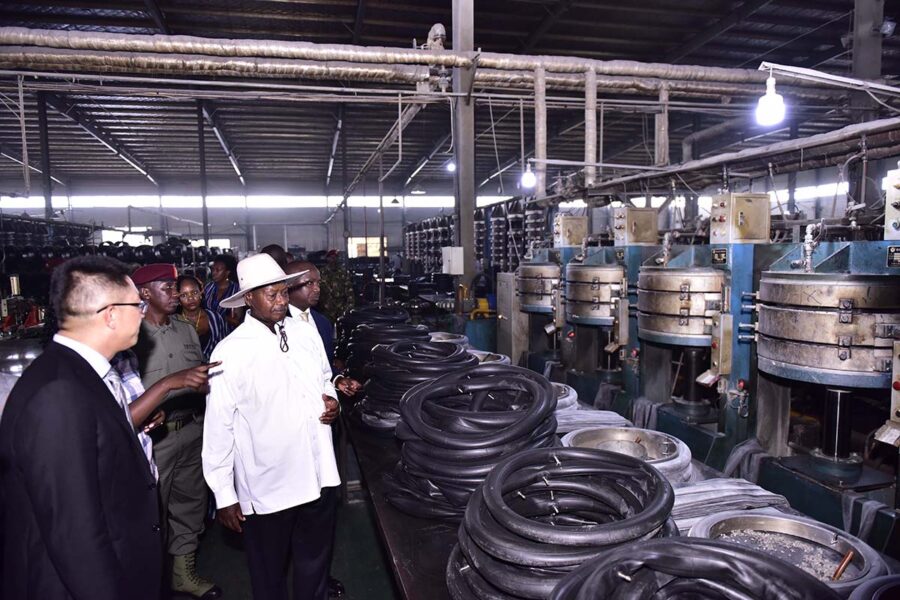
As reports of workplace injuries continue to emerge from CCLE Rubber Company, concerns are growing over what workers and labour observers describe as an apparent lack of transparency and urgency in addressing safety issues at the factory.
Over the past several weeks, multiple incidents have been reported by workers and sources familiar with operations at the plant, raising questions about occupational safety practices in one of Mbalala Industrial parker’s prominent manufacturing facilities.

While the company has not publicly acknowledged the reported incidents, neither has it provided answers to a series of questions submitted by this publication regarding worker safety, accident prevention measures, compensation policies, and internal investigations.
Repeated attempts to obtain comment from management have yielded no response. Questions seeking clarification on safety procedures, the frequency of workplace injuries, employee protection measures, and steps being taken to prevent future accidents were either declined or went unanswered.
The company’s silence has left many questions unresolved, particularly for workers and their families who say they are increasingly concerned about safety conditions in departments where heavy machinery, high temperatures, steam systems, and industrial equipment are routinely used.
Reports of Multiple Injuries
Information gathered from sources within the factory indicates that several workers have reportedly suffered serious injuries in recent months.
Among the cases reported are those of Robert Ndikabaana, who allegedly sustained a severe neck injury after being struck by machinery; Mary Abeja, whose hand was reportedly caught in a machine resulting in a broken bone; Samuel Etanu, who is said to have suffered burns from steam; and Paran Omale, who reportedly lost four fingers in a machine-related accident.
More recently, a 28-year-old casual worker, Barack Nabongo, reportedly sustained a leg injury while handling a trolley in the Rubber Mixing Department.
Although each incident occurred under different circumstances, workers say they share a common concern: whether sufficient safeguards exist to protect employees from preventable injuries.
The company has not publicly disputed or confirmed the reports.
Growing Worker Anxiety
Current and former workers interviewed for this story described an atmosphere of anxiety among some employees, particularly those assigned to production sections where industrial machinery is in constant operation.
Several workers, speaking on condition of anonymity for fear of losing their jobs, said concerns about safety are often discussed informally among employees after accidents occur. Some claimed that incidents are treated as isolated events rather than triggers for broader safety reviews.
Others expressed concern that casual workers, who often make up a significant portion of the industrial workforce, may be particularly vulnerable because of the temporary nature of their employment and their limited bargaining power.
These claims could not be independently verified, and the company has not responded to requests for clarification.
Industrial Growth and Worker Protection
CCLE Rubber Company was commissioned in 2019 as part of Uganda’s broader industrialisation agenda aimed at increasing local manufacturing capacity, reducing imports, and creating employment opportunities.
The growth of manufacturing has been widely promoted as a key driver of economic transformation. However, labour experts argue that industrial expansion must be accompanied by robust investment in occupational health and safety systems.
Factories engaged in rubber processing and manufacturing typically involve significant workplace hazards, including moving machinery, conveyor systems, cutting equipment, steam operations, high-pressure processes, and chemical handling. Such environments require continuous risk assessment, regular equipment maintenance, worker training, emergency response systems, and strict adherence to safety procedures.
Where these controls are weak or inconsistently enforced, experts say the likelihood of accidents increases substantially.
The Cost of Silence
While accidents can occur in any industrial setting, safety specialists note that how a company responds is often as important as the incident itself.
A prompt response, transparent investigation, communication with workers, and implementation of corrective measures are widely regarded as indicators of a strong safety culture. Conversely, prolonged silence can create uncertainty among employees and the public, particularly when multiple incidents are being reported.
The absence of an official response from CCLE has made it difficult to assess whether the company has conducted internal investigations, reviewed operational procedures, strengthened safety protocols, or provided additional support to affected workers.
As a result, questions about the factory’s commitment to workplace safety remain unanswered.
Editorial Analysis
It is important to distinguish between two separate issues: the occurrence of workplace accidents and the company’s response to concerns about those accidents.
Industrial facilities around the world experience occasional accidents despite having comprehensive safety programmes. The existence of an accident alone does not necessarily prove negligence. However, repeated reports of injuries across different departments within a relatively short period can indicate deeper systemic challenges that warrant scrutiny.
The more significant issue emerging from the CCLE case is the apparent absence of public engagement by management. When a company repeatedly declines to explain its safety practices, injury records, training programmes, or corrective actions, it becomes difficult for workers, regulators, and the public to assess whether lessons are being learned from reported incidents.
That said, it would be inaccurate to state as fact that CCLE has “no plans” to address workplace safety concerns. The company’s refusal to comment does not, by itself, prove that no action is being taken internally. What can fairly be said is that management has not disclosed any immediate measures, reforms, investigations, or safety improvements in response to the concerns raised.
The result is a growing perception gap. Workers and observers see a series of reported injuries, while management remains silent. Until the company provides a substantive response, questions about workplace safety, accountability, and worker welfare are likely to persist.
ENDS.










 English