

















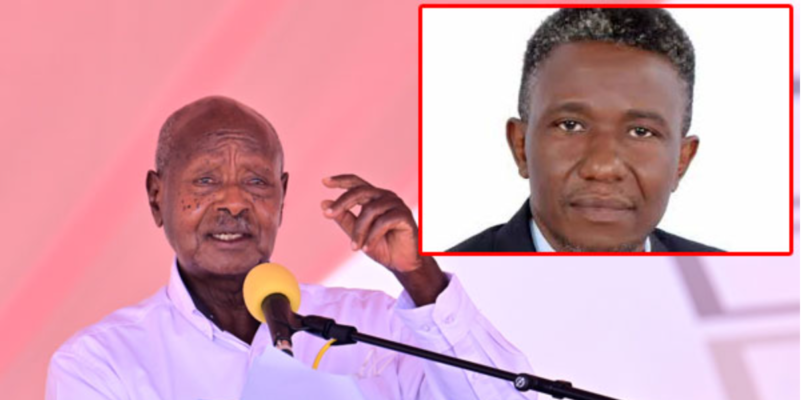
President Museveni has strongly fired back at critics who argue that his government has left Uganda economically stagnant for 40 years, specifically taking aim at a recent political commentary published in the Daily Monitor.
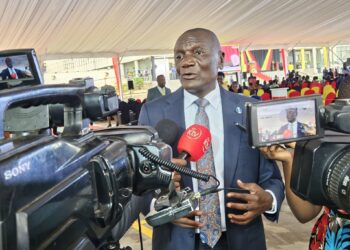
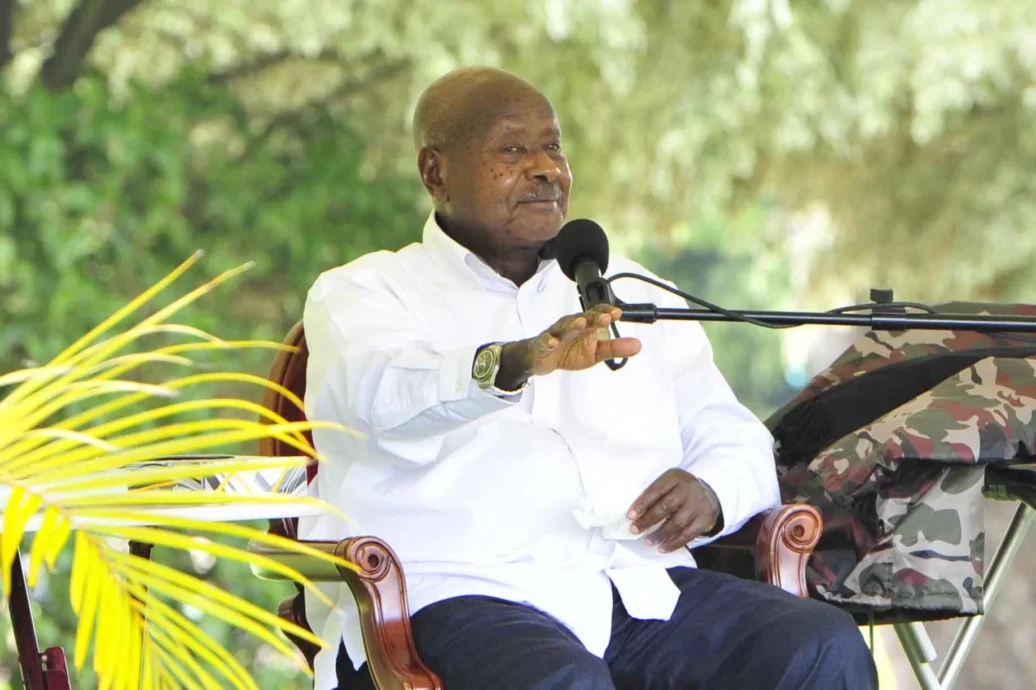
Delivering his State of the Nation Address at Kololo Ceremonial Grounds on Thursday, Mr Museveni, who has been in power since 1986, directly addressed an article authored by political commentator Gawaya Tegulle in the Monitor. Tegulle had claimed that Uganda has been “wandering in the desert for forty years” under the National Resistance Movement (NRM) administration.
Dismissing the remarks as mendacious and malicious, the President retorted that those who listen to such “liars” are the ones actually wandering in the wilderness.
He noted that while many leaders fail to sufficiently amplify the government’s wealth creation message, citizens who embrace NRM programmes are actively transforming their lives.
Pointing out that Tegulle hails from the Bugwere region, one of the poorest areas in Eastern Uganda, Mr Museveni challenged him to visit successful local farmers, such as Maama Nabutono and her husband in Kasasira Town Council, to see real household transformation.
To counter his critics, Mr Museveni outlined five distinct phases of positive development Uganda has achieved since the devastation of the Idi Amin era.
These include economic recovery, expansion, diversification—evidenced by the cattle corridor’s thriving dairy sector—value addition, and an emerging knowledge economy focused on automobiles and vaccines.
“What is ‘high sounding sloganeering’ there? These are achievements on the ground,” Museveni argued, urging his critics to look at the bustling Mbale Industrial Park.
The President backed his pushback with macroeconomic data, stating that Uganda has officially graduated from a Least Developed Country to a Lower Middle-Income status.
According to the address, Uganda’s GDP has risen from USD 3.9 billion in 1986 to USD 69.3 billion by the foreign exchange method.
Additionally, household poverty has dropped sharply from 56.4 per cent in 1992 to 16.1 per cent, average life expectancy has climbed to 68 years, and infant mortality has been reduced to 36 per 1,000 live births.
Reaffirming his latest directive of “no more sleep,” Museveni warned that non-performers driven by personal ego would no longer be tolerated in leadership as the country eyes a projected 10 per cent economic growth rate in the next financial year.







 English