

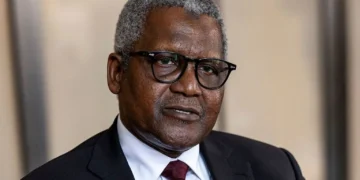










State Minister for Internal Affairs-designate Lawrence Muganga has defended his loyalty to Uganda amid mounting scrutiny over allegations that he holds dual Ugandan-Canadian citizenship, a controversy that has sparked legal and political debate following his nomination by President Yoweri Museveni.
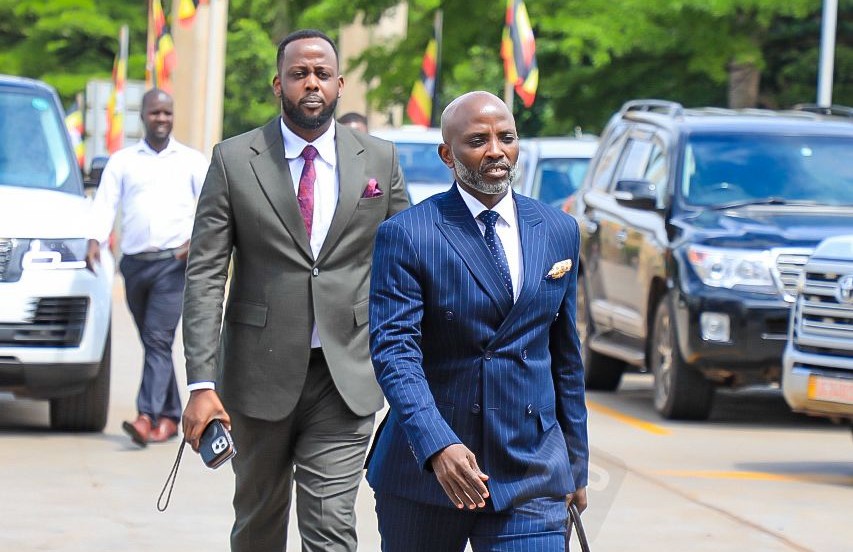
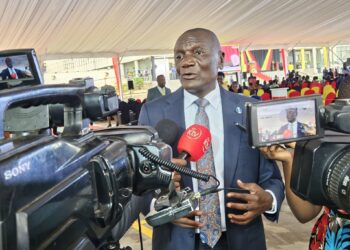
Speaking to journalists at Parliament on Tuesday after appearing before the Appointments Committee chaired by Speaker Jacob Oulanyah Oboth-Oboth, the Victoria University vice chancellor said he had fully explained his position to lawmakers and would leave the final decision to the committee.

“I am Munyarwanda, and I don’t regret being a Munyarwanda. Just as a Muganda is a Muganda and a Munyankole is a Munyankole,” Muganga said.
He maintained that he had adequately addressed concerns surrounding his citizenship status and any possible implications for his appointment.
“I don’t know whether the question of citizenship will affect my appointment. I’ll leave that for the members of the committee to decide. For me, I have presented my case, and I think it has been sufficient,” he said.
Muganga acknowledged that he previously held both Ugandan and Canadian citizenship, attributing this to the years he spent living and working abroad.
“Before I came here, I definitely had two citizenships — Ugandan citizenship and Canadian citizenship,” he said.
He argued that many Ugandans living overseas acquire foreign citizenship while maintaining strong ties to their home country.
The minister-designate further stated that he is willing to renounce his Canadian citizenship if required by law.
“It is possible for me to renounce my citizenship. There is no better country than Uganda,” Muganga said.
“I was Ugandan before I became a Canadian, and I am proud to be Ugandan.”
Muganga was nominated to replace Gen. David Muhoozi as State Minister for Internal Affairs, a position that has placed him at the centre of an intensifying debate over whether holders of dual citizenship are eligible to occupy certain public offices.
Similar concerns have also emerged regarding Soroti City West MP David Calvin Echodu, who was appointed Minister of State for Foreign Affairs in charge of International Relations amid unverified reports that he may hold dual Ugandan-American citizenship.
Meanwhile, businessman Sanjay Tanna, recently appointed Minister of Trade, Industry and Cooperatives, has publicly maintained that he holds only Ugandan citizenship.
Under Ugandan law, dual citizenship is permitted, although restrictions apply to holders of dual nationality occupying specific state offices.
Article 15(7) of the 1995 Constitution empowers Parliament to regulate the rights of dual citizens, while the Uganda Citizenship and Immigration Control Act of 2009 bars dual citizens from holding offices listed under Section 19D and the Fifth Schedule.
The restricted positions include Cabinet Ministers, Ministers of State, and offices connected to national security, immigration and intelligence.
Lawyer and Democratic Front Deputy Secretary General Deric Fredric Namakajo has petitioned Parliament, arguing that Muganga’s appointment could conflict with these legal provisions. He has asked the Appointments Committee to suspend the vetting process pending clarification of the minister-designate’s citizenship status.
The petition, addressed to the committee chaired by Speaker Oboth-Oboth, was also copied to President Museveni and Security Minister Maj. Gen. Jim Muhwezi.
Documents circulating on social media reportedly suggest that Muganga obtained Ugandan citizenship in 2024 and later acquired a Ugandan passport in 2026, although the authenticity of the documents has not been independently verified.
The controversy has reignited public debate about Muganga’s background, including his previous work in Canada and Rwanda, as well as earlier reports linking him to citizenship questions during periods of strained relations between Uganda and Rwanda.
His nomination to the Internal Affairs ministry, a docket responsible for immigration, citizenship and national identity management, has further intensified scrutiny over whether he meets the legal requirements for ministerial appointment.
The Appointments Committee is expected to make a determination after reviewing his explanations and supporting documentation.





 English