

















The deaths of at least 40 Ugandan migrant workers in various countries since the beginning of 2026 have renewed concerns about the welfare and protection of citizens seeking employment overseas.
The fatalities, recorded across destinations including Saudi Arabia, the United Arab Emirates (UAE), the United States, China, Germany and several other countries, have sparked calls for stronger safeguards for Ugandans working abroad.


According to a report compiled by Kyeyo Initiative Uganda, an organization that advocates for the rights of migrant workers, Saudi Arabia registered the highest number of deaths with 11 cases, followed by the UAE with 10. Six Ugandans reportedly died in the United States, while other deaths were documented in different labour destination countries.
Kenneth Olooka, the Chief Executive Officer of Kyeyo Initiative Uganda, said the figures represent only the cases that have been documented and verified, warning that the actual number could be much higher due to gaps in reporting and investigations.
“The numbers continue to rise, yet many incidents are either poorly investigated or never fully documented,” Olooka said.
The report also highlights concerns about Ugandans who are allegedly lured abroad with promises of lucrative jobs, only to find themselves trapped in dangerous situations. Some young professionals are reportedly deceived into accepting employment offers that later expose them to armed conflicts and other high-risk environments.
Among the most recent cases are those of Josephine Olowo and Sheila Kenyana, who died while working in Saudi Arabia, and Apollo Kaddu Mukasa, who passed away in Boston in the United States. In all three cases, relatives and advocates say the circumstances surrounding their deaths remain unclear.
The uncertainty surrounding these deaths mirrors the experiences of many families whose relatives die while working overseas. One such case involved Hillary Niwetuliko, who travelled to Dubai in search of better economic opportunities. Family members say he reportedly collapsed while returning from work and was taken to Rashid Hospital, where he died on February 27.
Although his body was eventually returned to Uganda months later, relatives remained dissatisfied with the explanation that his death resulted from natural causes. His widow said the family never received a detailed account of what happened, leaving many unanswered questions.
Her concerns reflect a wider challenge faced by families of migrant workers who often struggle to obtain comprehensive information about the deaths of their loved ones.
Labour migration experts say health complications remain one of the leading causes of death among migrant workers. Prince Hassan, a specialist in labour externalisation programmes, noted that many Ugandans abroad suffer from untreated or poorly managed conditions such as heart disease, stroke, diabetes and kidney-related illnesses.
According to Hassan, these conditions are often worsened by limited access to healthcare, inadequate medical insurance and employment arrangements that restrict workers from seeking timely treatment.
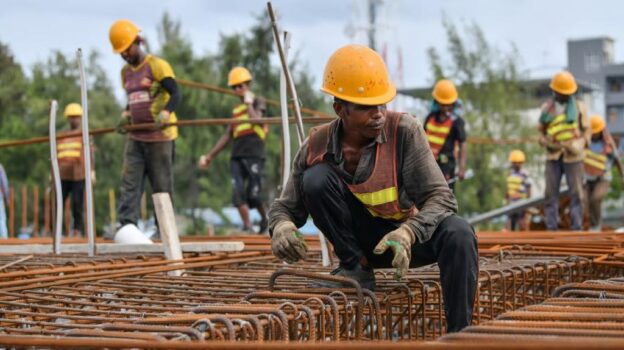
Workplace accidents also continue to pose serious risks. Many Ugandan migrants are employed in sectors such as construction, where workers face hazards including falls from elevated structures, machinery-related injuries, electrocution and road crashes.
Domestic workers face different challenges. Because they work within private residences, they often operate beyond the reach of routine labour inspections, making it difficult to monitor working conditions and enforce labour standards.
Extreme weather conditions in the Gulf region have also emerged as a major threat. During peak summer months, temperatures regularly exceed 45 degrees Celsius, exposing workers to heat exhaustion, dehydration and potentially fatal heatstroke.
Hassan further pointed to the dangers associated with overcrowded accommodation facilities. He cited the 2025 labour camp fire in Kuwait, which reportedly claimed the lives of several Ugandan workers alongside dozens of other foreign nationals, as evidence of the vulnerabilities faced by migrant labourers living in congested housing.
Government statistics indicate that more than 350,000 Ugandans are employed abroad, particularly in Gulf countries. The workers contribute significantly to the economy through remittances, which generate an estimated 1.7 billion US dollars in foreign exchange annually and support thousands of households across the country.
The labour externalisation programme was introduced as part of efforts to tackle unemployment, especially among young people. However, rights advocates argue that the systems designed to protect migrant workers have not expanded at the same pace as the growing number of Ugandans leaving the country for work.
Olooka says one of the biggest challenges remains the absence of a comprehensive system capable of tracking migrant workers in real time.
“The human cost is undeniable. Uganda still lacks a reliable and comprehensive tracking system for workers abroad, while gaps in data collection and traceability continue to undermine accountability,” he said.
The lack of centralized records has made it difficult to establish the full extent of migrant worker deaths and abuses. Kyeyo Initiative Uganda documented at least 164 deaths among Ugandan migrant workers during 2025 alone, suggesting that the current year’s figures could increase significantly if the trend continues.
Beyond the emotional trauma of losing a loved one, affected families often face financial and legal obstacles. Many struggle to repatriate bodies, process insurance claims or obtain compensation. Others encounter difficulties securing official reports explaining the cause of death.
Mariam Mwiza, an anti-human trafficking activist with Overseas Workers Voices Uganda, said families deserve greater transparency whenever a Ugandan worker dies abroad.
“Relatives should receive clear and timely information. Investigations into worker deaths, communication with families and the repatriation process must be handled in a transparent and accountable manner,” she said.
Government officials acknowledge the challenges and say reforms are being implemented to strengthen worker protection. State Minister for Labour Simon Mulongo said authorities are working on measures aimed at improving oversight of labour migration programmes.
The proposed reforms include tighter regulation of recruitment agencies, enhanced digital monitoring systems, expanded deployment of labour attachés in destination countries and the establishment of a dedicated repatriation fund for migrant workers.
“We want labour migration to remain safe, orderly and beneficial. Our goal is to protect workers while ensuring that labour mobility continues to contribute to national development,” Mulongo said.
Uganda has enacted several laws and policies intended to safeguard migrant workers, including the Employment Act, the Externalisation of Labour Guidelines, the Prevention of Trafficking in Persons Act of 2009 and the National Migration Policy. The country’s Constitution also guarantees the protection of citizens and upholds human dignity and fundamental rights.
In addition, Uganda has ratified a number of international labour standards under the International Labour Organization aimed at promoting fair recruitment practices, decent working conditions and protection against forced labour and human trafficking.
However, labour rights advocates maintain that the biggest challenge lies not in the existence of laws but in their enforcement, arguing that stronger implementation mechanisms are needed to ensure Ugandans working abroad are adequately protected.











 English