














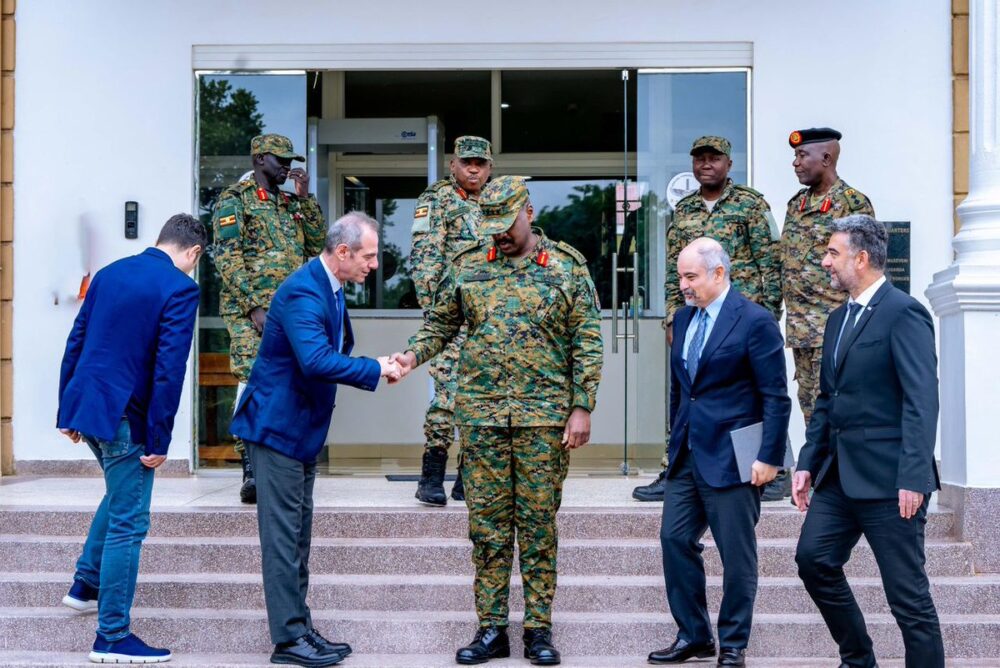
A fresh controversy has engulfed Uganda’s long-awaited Standard Gauge Railway (SGR) project after Chief of Defence Forces (CDF) Gen Muhoozi Kainerugaba announced the cancellation of the €2.7 billion (approximately Shs10.8 trillion) contract awarded to Turkish construction giant Yapi Merkezi.
Gen Muhoozi, who also serves as Senior Presidential Advisor for Special Operations and Chairman of the Patriotic League of Uganda (PLU), made the announcement on Tuesday through his official X account, while simultaneously directing supporters of the PLU to stage demonstrations at the Turkish Embassy in Kampala on Friday, June 19, 2026.
“We have cancelled the contract with the Turkish company to build the SGR. We will get another one that is more worthy of our country! PLU should demonstrate on Friday, comrade! All Security Services are instructed to leave our supporters/ordinary Ugandans to demonstrate at the Turkish Embassy on Friday 19th June 2026!” Gen Muhoozi wrote.
The declaration has immediately cast uncertainty over one of Uganda’s most ambitious infrastructure projects. By Tuesday evening, neither the Ministry of Works and Transport nor the SGR Project Secretariat had issued a formal statement confirming that the contract had been legally terminated.
The development has surprised many stakeholders, given that the agreement with Yapi Merkezi was signed in October 2024 and implementation activities had already commenced. Preparatory works, including the establishment of workers’ camps, construction facilities and sleeper manufacturing plants, have been progressing ahead of full-scale construction.
Observers say Gen Muhoozi’s announcement raises questions about the status of the project, the legal standing of the contract, and whether the government intends to formally endorse the decision.
The timing is particularly notable because it comes just weeks after the African Development Bank (AfDB) reaffirmed its support for the railway. On May 29, 2026, the Ministry of Finance announced that the AfDB had tentatively allocated $650 million under the African Development Fund-17 framework to support the construction of the Malaba-Kampala section of the railway.
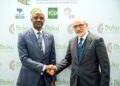
During the bank’s annual meetings in Brazzaville, Republic of Congo, AfDB Acting Vice President Dr. Abdul Kamara met a Ugandan delegation led by Assistant Commissioner Mustapha Achidri and reportedly pledged to conclude financing arrangements during a planned appraisal mission scheduled for July 2026.
The SGR project has been at the centre of Uganda’s regional integration ambitions for more than a decade. In 2013, leaders from Uganda, Kenya, Tanzania, Rwanda and South Sudan jointly launched the regional railway initiative aimed at enhancing trade and reducing transport costs across East Africa.
While Kenya and Tanzania proceeded with significant construction works, Uganda’s progress was delayed largely by financing challenges.
The government initially contracted China Harbour Engineering Company (CHEC) in 2015 on the understanding that the company would secure financing from the Chinese government. However, after years of unsuccessful negotiations, Uganda terminated the Chinese arrangement in 2023 and later turned to Yapi Merkezi.
At the signing of the Turkish contract in 2024, Permanent Secretary in the Ministry of Works, Bageya Waiswa, said the project would be completed within 48 months using a financing structure involving government funding, commercial credit from Citibank and export credit agencies.
The railway has consistently been promoted by government officials as a transformative economic project. Secretary to the Treasury Ramathan Ggoobi previously described the SGR as a critical intervention that would significantly lower transportation costs and improve Uganda’s competitiveness by reducing dependence on costly road freight services between Kampala and the Port of Mombasa.
Analysts have projected that the railway could cut cargo transportation costs by nearly half once operational.
The latest developments are also striking because Gen Muhoozi had previously expressed support for the Turkish contractor. In December 2025, he hosted a delegation from Yapi Merkezi at the Special Forces Command headquarters in Entebbe.
The delegation, led by board member Sami Özge Arıoğlu and General Manager Mustafa Şahin Kopuz, briefed him on various aspects of the project, including plans for a two-kilometre tunnel expected to pass through military land in Mbuya. Following the meeting, Gen Muhoozi publicly encouraged the company to deliver quality work within the agreed timelines and construction preparations continued.
His latest remarks therefore represent a dramatic shift in tone and have fuelled speculation about what may have triggered the apparent fallout between Ugandan authorities and the Turkish contractor.
The directive instructing security agencies to allow demonstrations at the Turkish Embassy has also raised diplomatic questions. Turkey has in recent years deepened its economic and political ties with Uganda, with Turkish Ambassador Mehmet Fatih Ak previously describing the SGR partnership as a landmark project capable of transforming Uganda’s access to regional and global markets.
By press time, government officials had not clarified whether Gen Muhoozi’s statements reflected an official government position, a formal executive decision, or a personal political directive. Equally unclear is whether any legal process has been initiated to terminate the contract and what implications such a move could have for ongoing financing arrangements and Uganda’s relations with Turkey.
Until an official government position is issued, the future of the country’s flagship railway project remains uncertain.




 English