


















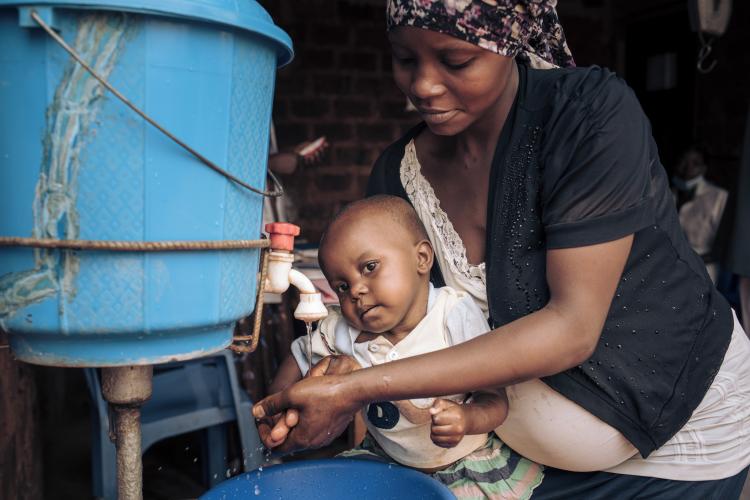
Children under the age of five are nearly three times more likely to fall ill from unsafe food compared to older children and adults, according to new global estimates released by the World Health Organization.
Although they make up only about 9% of the world’s population, young children account for roughly a third of all foodborne disease cases worldwide. Diarrhoeal illnesses remain the most common and most dangerous outcomes in this age group.


The WHO report highlights that contaminated food continues to pose a major but often underestimated public health threat, affecting hundreds of millions of people every year. WHO Director-General Tedros Adhanom Ghebreyesus noted that food safety impacts every household daily and that the newly compiled data finally gives governments a clearer picture of the scale and distribution of the problem, enabling more targeted responses.
The assessment covers 42 different foodborne hazards, including bacteria, viruses, parasites, and chemical contaminants, across 194 countries over a period spanning 2000 to 2021. It estimates that unsafe food is responsible for about 866 million illnesses and approximately 1.5 million deaths each year, many of which could be prevented through improved hygiene systems, safer food handling practices such as pasteurization, better sanitation, and stronger healthcare access for at-risk groups.
The analysis also incorporates additional hazards that were previously not fully quantified, such as certain metals, rotavirus, and the parasite responsible for Chagas disease.
Chemical contamination remains a major concern. Substances like arsenic, lead, and mercury can enter food through soil, water, industrial activity, and natural environmental processes. Experts warn that once these contaminants enter the food chain, removing them becomes extremely difficult, making prevention at the source essential through stronger regulation in agriculture, industry, and environmental management.
While levels of some toxic metals in food have shown gradual improvement in recent years, the report reveals for the first time the extent to which such exposure contributes to serious long-term conditions, including cardiovascular disease, cancers, and developmental impairments in children. In particular, arsenic and lead exposure are linked to more than one million deaths annually, while mercury exposure is associated with severe neurological damage in developing children.
Despite an overall decline in foodborne disease since 2000, the burden remains unevenly distributed. Africa and South-East Asia continue to bear the highest impact, accounting for the majority of cases and a significant share of deaths.
Biological hazards such as bacteria, viruses, and parasites remain the leading cause of illness, responsible for around 860 million cases in 2021. However, chemical contamination accounts for a disproportionately high share of fatalities. In that same year, chemicals were responsible for about 73% of all deaths linked to unsafe food, with arsenic and lead being the most significant contributors due to their links with heart disease and cancer.
The economic impact is also substantial. In 2021 alone, productivity losses linked to foodborne illness were estimated at around US$310 billion globally. When adjusted for differences in living costs between countries, the figure rises to approximately US$647 billion.
WHO technical expert on food safety Yuki Minato described the findings as a serious warning, stressing that foodborne diseases remain widespread and are being further complicated by climate change, which increases contamination risks, as well as antimicrobial resistance, which makes infections harder to treat.
She emphasized that countries need to adopt a “One Health” approach—linking human, animal, environmental, and agricultural systems—to effectively reduce risks. According to her, urgent action is needed to strengthen surveillance systems, improve coordination across sectors, and implement preventive measures, warning that delays will continue to cost lives.













 English