













Friday, April 24, 2026
  • About
  • Advertise
  • Careers
  • Contact
Insight Post Uganda
  • Home
  • NewsHot
    • Health
    • Politics
    • Religion
    • Lifestyle
    • World News
    • Tourism
    • Environment
    • Agriculture
  • Business
    ICPAC

    ICPAU Lists 275 Licensed Accounting Firms in 2026 Register

    launch,

    Gov’t Launches Posta Uganda E-Commerce Platform to Boost Digital Trade

    When Order Comes at a Cost: The Hidden Price of Clearing Uganda’s Streets

    Traders’ Body Urges Suspension of Evictions Amid Rising Tension

  • Sports
    Dr. Dennis Mujimba, Chairperson of the Communications and Signage Sub-Committee of the AFCON 2027 Local Organising Committee (LOC),

    Uganda Fast-Tracks AFCON 2027 Projects with UGX130 Billion Boost

    SFC Crowned Champions of 17th CDF Cup in Masaka City

    SFC Crowned Champions of 17th CDF Cup in Masaka City

    Wazalendo SACCO officials, UPDF participants, organisers, and hosts pose for a group photo after the handover of sports kits in Masaka.

    Wazalendo SACCO Donates Sports Kits to 20 UPDF Teams in 2025 CDF Cup

  • Education
    Parliament Passes National Teachers Bill, Raising Entry Requirements

    Parliament Passes National Teachers Bill, Raising Entry Requirements

    Moses Karangwa Graduates from Kampala University 

    Moses Karangwa Graduates from Kampala University 

  • In Luganda
    Betty Nambooze, Mukono Municipality MP

    Kibuule Akubye Mu Nambooze Ebituli, Talina Kyakoledde BannaMukono Okujjako Okujoboja

    Omubaka Gwetwalonda Teyadda-Abekyampisi Betondedde Kibuule

    Omubaka Gwetwalonda Teyadda-Abekyampisi Betondedde Kibuule

    Counsel George Musisi ng'alaga emu ku kaadi mu lukungana lw'amawulire

    Munnamateeka Wa NUP Atambula Nju Ku Nju Ng’ Asaggula Obuwagizi  

  • In Photos
    Ronald Kibuule at Mukono recently.

    Kibuule Poised for Return as Museveni Signals Endorsement in Mukono North

    Katikiro presiding over the opening of the renovated official residence of the Buddu County Chief at Ssaza grounds in Masaka City on Tuesday. Pictures by Robert Nsubuga.

    Pictorial:  Katikiro Mayiga Slams Masaka People Over Poor Hygiene

    Ismael-Kifudde-the-Mukono-Police-Division-Officer-in-Charge-directing-Nambooze-not-to-use-the-route-heading-to-town-center

    Moments of Excessive Force Against Betty Nambooze in Recent General Elections

  • Profiles
    Brig. Gen. Kiyengo (center) posing for the photo with the members of Nakifuma Rotary Club who promised to attend his book launch.

    CUTTING THROUGH HELL: UPDF Medic Chronicles Uganda’s Silent War in Somalia Through Powerful Memoir

    L-R MP Mawogola South (Sembabule)-Goreth Namugga, Councillor Amiri Kiggundu, COTFONE Coordinator-Kayinga Yisito Muddu and Mr Xavier Ejoyi, Country Director ActionAid International Uganda at the award event

    National Citizens’ Integrity Awards 2024: Unsung Heroes Celebrated

    Shaping Perceptions: Patricia Namiwanda, a Blind Advocate Of Change

    Shaping Perceptions: Patricia Namiwanda, a Blind Advocate Of Change

  • Op-Ed
    • Editorial
    • Opinion
  • Login
No Result
View All Result
Insight Post Uganda
Home Opinion

When Order Comes at a Cost: The Hidden Price of Clearing Uganda’s Streets

-A closer look at the human cost of urban order and the struggle for survival among ordinary Ugandans-

Insight Post Uganda by Insight Post Uganda
April 2, 2026
in Opinion
Reading Time: 4 mins read
A A
0
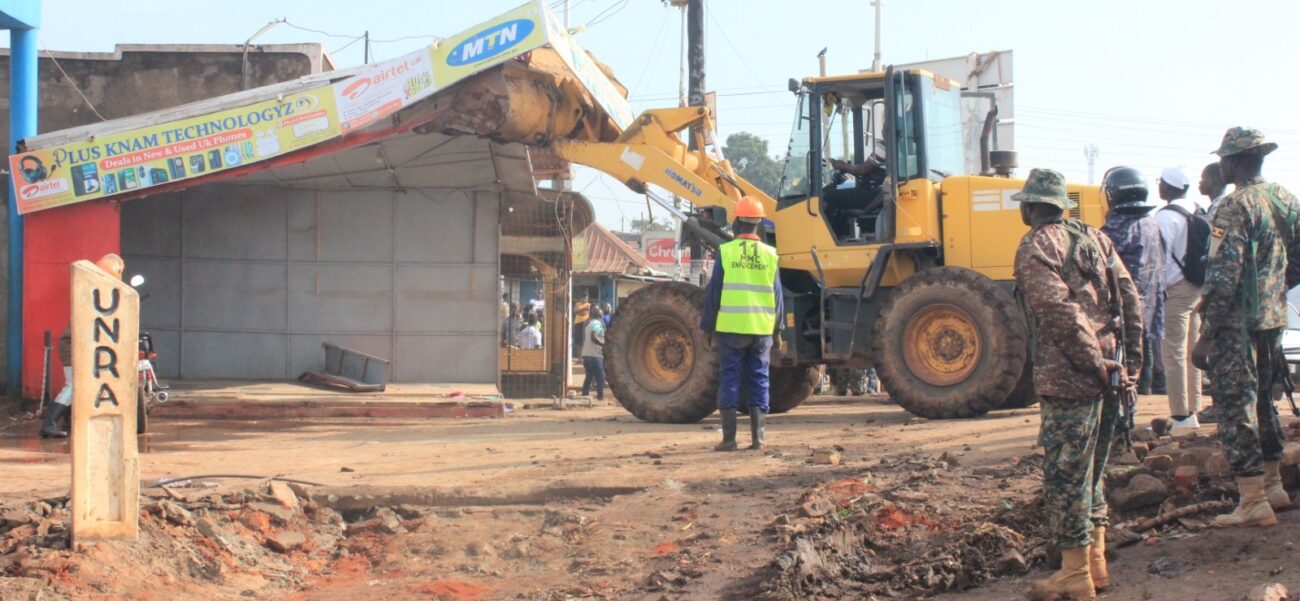
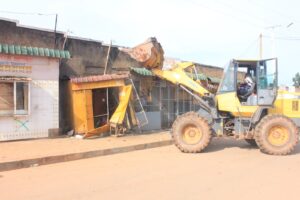
Authorities carry out an early morning demolition of roadside kiosks in Kikooza, Mukono Municipality, as part of an enforcement operation to clear illegal structures from road reserves.

Authorities carry out an early morning demolition of roadside kiosks in Kikooza, Mukono Municipality, as part of an enforcement operation to clear illegal structures from road reserves.

What happened in Mukono is no longer just a Mukono story. It is a Ugandan story.

 

Related posts

Why Mukono’s Trade Order Is a Necessary Step for Progress

Why Mukono’s Trade Order Is a Necessary Step for Progress

April 18, 2026
Man selling pineapples.

Uganda’s Jobs Crisis Is No Longer About Numbers, It Is About Survival

April 17, 2026

At dawn, when most families were still asleep, traders woke up to the sound of metal crashing and wood splintering under force.


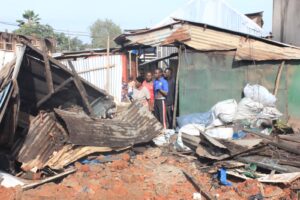
By mid-morning, stalls that had taken years to build through sweat, loans, and sacrifice were reduced to debris. For authorities, it was an enforcement operation. For the traders, it was the collapse of a livelihood.


Across towns and trading centres in Uganda, the same script is playing out. Structures marked with an “X.” Deadlines issued.


And then, early morning demolitions. The justification is always the same: restore order, clear road reserves, and modernize urban spaces. On paper, it makes sense. In reality, it is far more complicated.


To understand this situation, one must step away from policy language and think like a common Ugandan.


This is a country where survival is daily. Where business is not always planned from a business school, but from necessity.


A mother starts selling tomatoes because school fees are due. A youth sets up a roadside welding shed because there are no jobs. A family builds a small kiosk because it is the only way to eat.
 

These are not illegal ambitions. They are acts of survival. So when such structures are demolished, the impact goes far beyond the physical. It cuts directly into the fragile economic lifeline of ordinary citizens.


A stall is not just a structure. It is school fees. It is rent. It is food on the table. Yet, there is another side that cannot be ignored.


Uganda’s towns have, for years, grown in a chaotic and unregulated way. Road reserves have been encroached on. Drainage channels blocked.


Pedestrians forced onto roads, increasing accidents. Fire risks have multiplied in congested trading zones. Anyone who has navigated through busy town centres knows the disorder is real.


In that sense, government intervention is not only justified, it is necessary. No country develops without order.


Clean, organized, and planned urban spaces attract investment, improve safety, and create a more functional economy.


The vision many leaders speak about, of modern cities that can compete regionally, cannot be achieved if every open space becomes an informal market. This is the strongest argument in support of the demolitions.


But even a good policy can become bad in execution.


The biggest concern in Mukono, and across similar operations in the country, is not the intention, but the method. Giving traders two weeks to vacate, without providing clear and affordable alternatives, is not transition. It is displacement.


Telling a small trader with capital of one or two million shillings to move into a shop costing five hundred thousand or one million in rent is, in practical terms, telling them to shut down. It ignores the economic reality most Ugandans operate in.


There is also the question of timing and approach. Why early morning demolitions guarded by security forces? Why not phased relocations? Why not structured engagement with traders’ associations? Why not ensure that alternative markets are not only available, but accessible and affordable before enforcement begins?


When enforcement appears abrupt and forceful, it creates the impression of a government that is out of touch with the people it serves.


Another troubling aspect is the issue of trust. Some traders claim their structures were on private land or had existed for years without interference.


Others say they cooperated with government projects before, such as road construction, believing that their sacrifices would be respected.


When demolitions come without compensation or clear explanation, that trust erodes. And once trust is lost, even the best policies face resistance.


There is also a deeper economic contradiction at play. On one hand, government programs like the Parish Development Model and Emyooga are encouraging citizens to start small businesses and lift themselves out of poverty.


On the other hand, enforcement operations are dismantling the very informal spaces where many of these businesses operate. The result is a cycle of hope and frustration.


A trader takes a loan, invests in a small business, struggles to grow, and then loses everything overnight. The loan remains. The collateral is at risk. Poverty deepens.


This is where policy must be harmonized. If the goal is to formalize the economy, then the transition must be gradual and supported.


Informal traders should not be treated as obstacles to development, but as participants in it. They need pathways, not just pressure.


At the same time, citizens must also take responsibility. There has been a tendency to ignore regulations until enforcement arrives.


Some traders expand into road reserves knowingly, hoping that enforcement will never come. Others resist relocation even when given notice. This culture of reactive compliance contributes to the cycle of conflict.


Development is a shared responsibility. So what is the way forward?


First, government must prioritize humane enforcement. This means longer transition periods, genuine consultations, and most importantly, the provision of viable alternatives before demolition.


Second, urban planning must be proactive, not reactive. Markets, trading hubs, and low-cost commercial spaces should be developed in anticipation of growth, not after chaos has already set in.


Third, financial realities must be considered. If traders are to move into formal spaces, rent structures must reflect their earning capacity. Otherwise, formalization becomes exclusion.


Fourth, communication must improve. Policies should not reach people through warnings and markings alone, but through continuous engagement that builds understanding and cooperation.


Finally, there must be accountability on all sides. Authorities must enforce fairly and transparently, while citizens must respect regulations and participate in orderly development.


What happened in Mukono is painful, but it is also revealing. It exposes the gap between policy and reality. Between the vision of modern cities and the daily struggle of ordinary Ugandans. Between order and survival.


If handled well, this moment can become a turning point, a chance to rethink how Uganda urbanizes without leaving its most vulnerable behind.


If handled poorly, it risks deepening inequality, resentment, and economic hardship. In the end, development should not feel like punishment. It should feel like progress that carries everyone along.
By Ivan Kimbowa, Senior Journalist
Tel: +256 701 584195 | Email: ivankimbowa7@gmail.com




Tags: InsightPost-Editorial
ShareTweetPin
Previous Post

When Aptitude Tests Become Gatekeepers of Opportunity

Next Post

Four Juveniles Killed in Ggaba School Attack, Suspect Arrested

Related Posts

Why Mukono’s Trade Order Is a Necessary Step for Progress
Opinion

Why Mukono’s Trade Order Is a Necessary Step for Progress

April 18, 2026
Man selling pineapples.
Opinion

Uganda’s Jobs Crisis Is No Longer About Numbers, It Is About Survival

April 17, 2026
Twiine Mansio Charles, CEO and Founder, The ThirdEye Consults (U).
Opinion

Arrogance Before The Vatican: Why The Pope Remains The World’s Moral Compass

April 14, 2026
Twiine Mansio Charles
Opinion

A World That Condemns But Does Not Act: Israel, Lebanon, And The Funeral Of Justice

April 11, 2026
Twiine Mansio Charles
Opinion

Roma Locuta Est; Causa Finita Est. Rome Has Spoken, The Matter Is Settled

April 11, 2026
Twiine Mansio Charles
Opinion

Hormuz Blockade Exposes Africa’s Energy Vulnerability — The Time To Leap To Renewables Is Now

April 3, 2026
Next Post
Ggaba Early Childhood Development Program

Four Juveniles Killed in Ggaba School Attack, Suspect Arrested

RECOMMENDED NEWS

PURE-LOVE UGANDA Scandal: Child Trafficking, Its Implications And The Hunt For Proprietors

PURE-LOVE UGANDA Scandal: Child Trafficking, Its Implications And The Hunt For Proprietors

3 years ago
Ugandan Minister Shot Dead By Bodyguard

Ugandan Minister Shot Dead By Bodyguard

3 years ago
Robert Kambugu, Deputy RDC.

Caught In The Crossfire: How Escalating Buganda- Kooki Friction Claimed Kambugu’s RDC Position

3 years ago
Rotary, Rotaract Clubs Support Masaka Primary Schools Ahead of PLE

Rotary, Rotaract Clubs Support Masaka Primary Schools Ahead of PLE

6 months ago

FOLLOW US

Insight Post Uganda

We bring you the most balanced news professionally investigated by our news team. The Insight Post is Uganda’s News company regulated by the Uganda Communications Commission.

Follow us on social media:

Recent News

  • Parliament Passes National Teachers Bill, Raising Entry Requirements
  • Okello Has Case to Answer, Court Rules
  • Moses Karangwa Graduates from Kampala University 

Category

  • Agriculture
  • Business
  • Editorial
  • Education
  • Environment
  • Health
  • Lifestyle
  • Luganda
  • News
  • Opinion
  • Photos
  • Politics
  • Profiles
  • Religion
  • Runyankole
  • Security
  • Sports
  • Tourism
  • Uncategorized
  • World News

Recent News

Parliament Passes National Teachers Bill, Raising Entry Requirements

Parliament Passes National Teachers Bill, Raising Entry Requirements

April 23, 2026
Christopher Okello Onyum, the man accused of killing four toddlers at Ggaba Early Childhood Development Centre.

Okello Has Case to Answer, Court Rules

April 23, 2026
  • About
  • Advertise
  • Careers
  • Contact

© 2024 The Insight post Uganda - The Insight post uganda. Site Powered by Bookablehood Ltd.

Welcome Back!

Login to your account below

Forgotten Password?

Retrieve your password

Please enter your username or email address to reset your password.

Log In
error: Content is protected !!
en_USEnglish
en_USEnglish
No Result
View All Result
  • Home
  • Politics
  • Business
  • Sports
  • Lifestyle
  • Tourism
  • Opinion

© 2024 The Insight post Uganda - The Insight post uganda. Site Powered by Bookablehood Ltd.