

















Mukono, Uganda — The ruling National Resistance Movement (NRM) party’s primaries in Mukono District have once again turned into a political minefield, laying bare deep-rooted divisions, claims of electoral malpractice, and emerging splinter groups that threaten to further erode the party’s influence in the district.
On a day meant to reflect internal democratic maturity, the dramatic withdrawal of Hajji Twahir Ssebaggala, the incumbent district party chairperson, moments before the vote sent shockwaves through the NRM ranks.


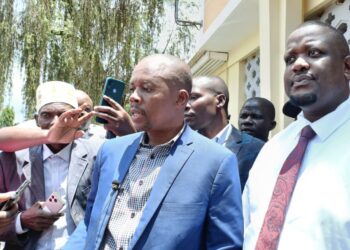
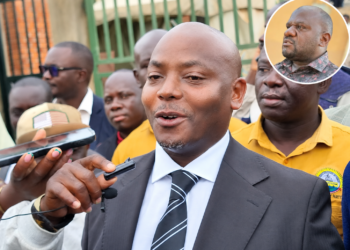
Holding a microphone with visible frustration, Ssebaggala accused party officials of altering voter registers, a charge that cast a long shadow over the legitimacy of the entire electoral process.
“I asked for the registers to verify the authenticity of the names before the election, but the registrar declined to release them,” Ssebaggala told journalists.
“The lists, particularly for veterans and the youth, were completely messed up. I have enough evidence and will petition the party secretariat to nullify this sham election.”
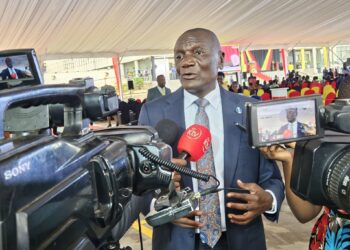
Despite the chaos, the district registrar Benon Ssekanyu wasted no time. With Ssebaggala out of the race, he declared the only remaining candidate, Hajji Haruna Ssemakula—previously Ssebaggala’s vice chair—as the new chairperson.

“This position had two candidates,” Ssekanyu said. “One has withdrawn, and as per party guidelines, I am declaring Hajji Haruna Ssemakula as the winner.”
Ssemakula, unfazed by the criticism, claimed Ssebaggala withdrew not out of principle but because he anticipated a humiliating defeat. “He saw the writing on the wall,” Ssemakula said. “He withdrew to save face.”
The confusion didn’t end with the top seat. Following Ssebaggala’s exit, a domino effect swept through the lower ranks.
Several candidates for the vice chairperson role—Fredrick Musonge, Gashegu Murimira, Davis Lukyamuzi, Andrew Ssenyonga, and Kitaka Kavulu—stepped down, also citing irregularities.

As a result, Yusuf Awuye emerged uncontested, backed by 114 lined-up voters.
Hakim Ssenfuka, who lost the youth election to Malik Kiberu, raised a red flag: “The people in the voting line were more than those listed in the register. It doesn’t add up.”
In contrast, some races were keenly contested. Margret Nakavubu clinched the position of party secretary with 192 votes, dwarfing her opponent Lilian Kobusingye Kalule’s 33.
For publicity secretary, Hakim Kyeswa came out on top with 153 votes, ahead of Stephen Musoke (34) and Travis Bogeere (41).

Ghosts of 2021 Still Haunt the Party
The divisions on display are not new. In the 2021 general elections, internal bickering within Mukono’s NRM chapters led to the loss of several parliamentary seats to the opposition.
Despite efforts to heal the rift through restructuring meetings earlier this year, the wounds appear far from healed.
“These meetings were supposed to bring unity,” said Gashegu Murimira, one of the vice chairperson aspirants who withdrew.
“Instead, they bred more chaos. The truth is, unity can only be achieved if every constituency is represented in the party leadership.”

His concerns are echoed by many in Mukono North and Central, where frustration is mounting over what they perceive as dominance by leaders from Mukono South.
The three most influential positions—chairperson, vice chairperson, and treasurer—all went to candidates from Mukono South.
This geographic concentration of power, critics argue, is alienating grassroots members and fueling discontent.
It has also emboldened some factions to consider breaking away to form splinter groups—a nightmare scenario for a party already bleeding support in a district considered key to the central region’s political calculus.
A Party at a Crossroads
With Hajji Ssebaggala threatening legal action and multiple candidates alleging vote rigging and voter list manipulation, the party’s secretariat faces growing pressure to step in.
Should the election be nullified, as Ssebaggala demands, it could set a precedent for other disgruntled districts to follow suit—opening a Pandora’s box for the NRM.
For now, Mukono’s NRM faithful remain divided, their confidence in internal democratic processes shaken. What was supposed to be a unifying exercise has instead deepened existing fissures—leaving the ruling party, once again, vulnerable on the very ground it hopes to solidify.
As the 2026 general elections loom ever closer, the Mukono debacle may serve as a cautionary tale for the NRM: unity cannot be enforced from the top; it must be earned from the grassroots up.






 English