


















KAMPALA, Uganda: As Uganda pursues an ambitious agenda of industrialisation and economic transformation, policymakers and financial sector leaders are increasingly looking beyond the national budget and traditional bank lending to answer a critical question: where will the long-term financing needed to drive the country’s sustainable future come from?
For the Capital Markets Authority, the answer lies partly in building deeper, broader and more inclusive capital markets capable of mobilising domestic and international investment for Uganda’s long-term development.


The Capital Markets Authority (CMA) has officially launched celebrations to mark 30 years since its establishment, under the theme, “Reimagining Uganda’s Capital Markets for a Sustainable Future.”
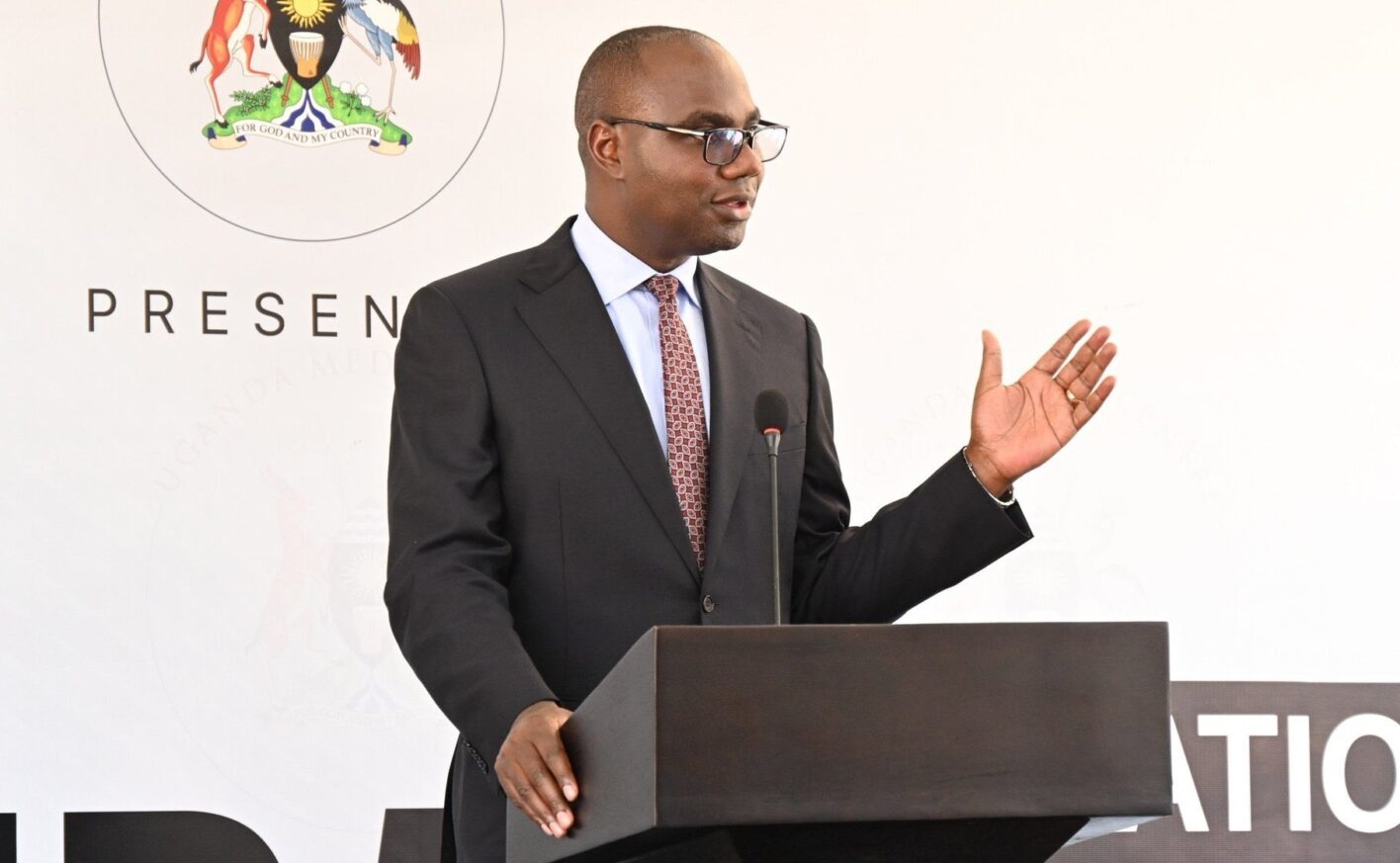
The anniversary celebrations were launched on Tuesday at the Uganda Media Centre in Kampala, with the main anniversary celebration and awards ceremony scheduled for October 8, 2026, at the Kampala Serena Hotel.
Established in 1996 under the Capital Markets Authority Act, Cap. 64, the Authority is mandated to develop, promote and regulate an orderly, fair and efficient capital markets industry in Uganda.
Over the past three decades, CMA has played a central role in building the regulatory and institutional foundations of Uganda’s capital markets, supporting the mobilisation of long-term capital, regulating and developing market intermediaries, and strengthening investor protection.
The launch brought together government officials, former and current CMA leaders, market participants, development partners and members of the media, including Minister of State for Finance for General Duties, Hon. Cissy Mulondo.
Three Decades of Growth
CMA Chief Executive Officer Josephine Okui Ossiya said the sector had recorded significant growth over the past 30 years, with the Authority now regulating more than 160 licensed market participants.
She said public understanding of capital markets had increased to 60.8 percent, while more than 220,000 Ugandans now hold funded Collective Investment Scheme accounts.
More than 235,000 investors have also maintained Securities Central Depository accounts, reflecting a gradual expansion in public participation in Uganda’s investment market.
According to Ossiya, segregated fund assets have grown to more than UGX 6 trillion, while domestic market capitalisation on the Uganda Securities Exchange has surpassed UGX 15 trillion.
Assets under management through Collective Investment Schemes have also risen to UGX 7.06 trillion, while total funds mobilised through Uganda’s capital markets have reached UGX 23.4 trillion.
While the figures demonstrate substantial progress, CMA believes the next phase of growth must focus on bringing a much larger section of the population into the investment economy.
Ossiya said one of the Authority’s major priorities is to increase the number of funded Collective Investment Scheme accounts to one million within the next five years.
However, she stressed that the target is not merely about increasing numbers.
CMA also wants to see more Ugandans investing in shares and other financial instruments, while encouraging more public and private companies to raise capital by listing on the country’s securities exchanges.
The broader objective is to create a capital market that is accessible not only to large institutional investors but also to ordinary citizens, young people, businesses and the Ugandan diaspora.
Financing Uganda’s Transformation
The importance of a stronger capital market is becoming increasingly evident as Uganda pursues its Fourth National Development Plan and the Tenfold Growth Strategy.
Minister for Finance for General Duties, Hon. Henry Musasizi, said the Government had adopted an ambitious agenda aimed at transforming Uganda into a significantly larger and more industrialised economy.
The strategy is anchored on agro-industrialisation, tourism, minerals, oil and gas, science and technology, as well as the development of a competitive private-sector-led economy.
However, Musasizi said such a transformation cannot be financed through the national budget alone.
Uganda, he argued, needs stronger and more innovative mechanisms for mobilising long-term capital.
“A strong, innovative and inclusive capital market has become indispensable,” Musasizi said.
He noted that while commercial banks may typically provide financing over relatively shorter periods, capital markets have the potential to mobilise financing for much longer-term investments.
This distinction is particularly important for infrastructure, industrial development and other projects that require patient capital and may take years before generating returns.
Musasizi pointed to instruments such as infrastructure bonds, project bonds, real estate investment trusts, green bonds, sustainability-linked bonds and public offers of shares as practical mechanisms through which Uganda can finance its transformation.
Such instruments, he said, could enable Uganda to increasingly mobilise its own domestic resources rather than relying heavily on government borrowing and external development financing.
Unlocking Domestic Investment
The Government’s industrialisation agenda will require enormous levels of investment in industrial parks, agro-processing zones, energy infrastructure and other productive sectors.
Musasizi said financing these investments would require financial instruments capable of bringing together pension funds, insurance companies, diaspora investors, ordinary Ugandans, Government and development partners.
The challenge for Uganda’s capital markets over the next decade will therefore be to convert the country’s growing savings and institutional assets into productive investment.
Pension funds and insurance companies hold significant pools of long-term capital that could potentially support infrastructure and private-sector development if appropriate investment opportunities and market instruments are available.
At the same time, millions of ordinary Ugandans remain outside formal investment markets.
CMA’s push for financial literacy and wider participation is therefore expected to play an important role in determining whether capital markets become a tool for broad-based wealth creation or remain largely dominated by institutional and high-income investors.
Building Confidence and Participation
As part of its future strategy, CMA has reiterated its commitment to strengthening financial literacy and investor education, broadening retail and youth participation and improving investor confidence.
For a capital market to mobilise significant domestic resources, Ugandans must not only understand investment opportunities but also have confidence that markets are properly regulated and that their investments are protected.
This makes investor protection, market transparency and effective regulation central to the Authority’s long-term vision.
The 30th anniversary celebrations have attracted participation from key players across Uganda’s financial and corporate sectors, including the Insurance Regulatory Authority, Stanbic Bank, the Uganda Securities Exchange, MTN Uganda, Old Mutual Uganda, the National Social Security Fund, Bank of Uganda, the Presidential CEO Forum, Centenary Bank, Quality Chemicals, the Deposit Protection Fund, Roofings, Financial Sector Deepening Uganda and Standard Chartered Bank, among others.
The broad participation reflects the interconnected nature of Uganda’s financial sector and the growing recognition that capital markets will need to work alongside banks, pension funds, insurance companies and other financial institutions to support national development.
The Next 30 Years
Thirty years after its establishment, CMA’s achievements demonstrate that Uganda has built important foundations for a functioning capital markets industry.
But the next phase may prove even more important.
Uganda’s population is growing, its economy is expanding and the demand for infrastructure, industrial investment, housing and climate-resilient development is increasing.
The question facing policymakers is no longer simply whether Uganda needs capital markets, but whether the markets can grow fast enough and become inclusive enough to finance the country’s transformation.
For CMA, reimagining Uganda’s capital markets means moving beyond regulation and institutional development towards deeper participation, greater innovation and stronger mobilisation of long-term domestic capital.
If Uganda can successfully expand investment opportunities, attract more companies to list, mobilise pension and insurance funds and bring ordinary citizens into the investment economy, capital markets could become one of the most important pillars of the country’s sustainable development.
The next 30 years will therefore test whether the foundations built since 1996 can be transformed into a financial system capable of helping Uganda finance its own future.













 English