











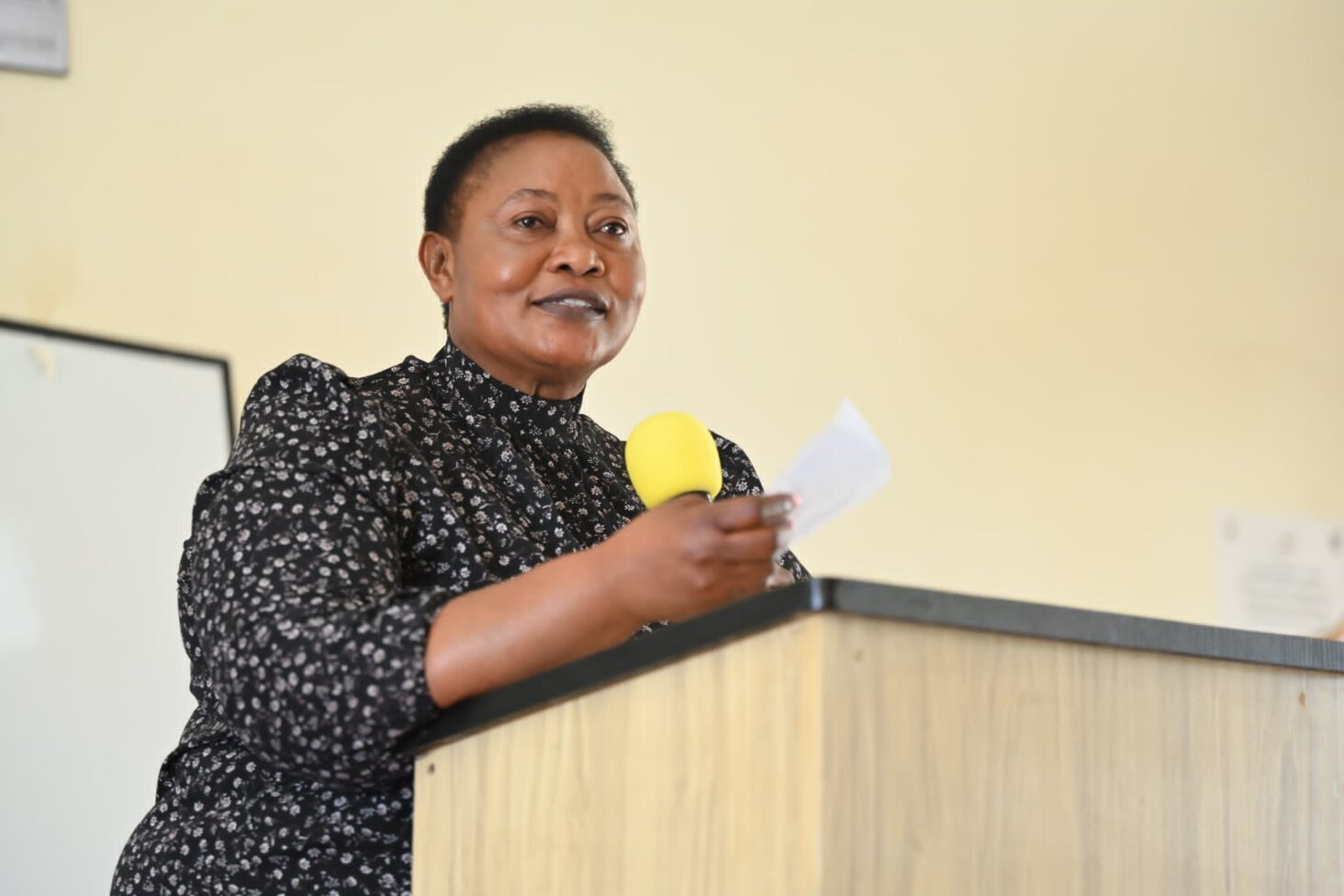
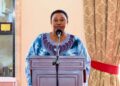
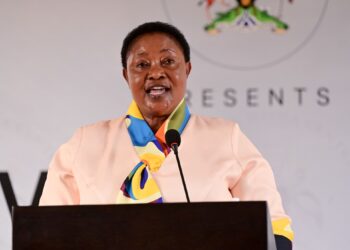
KYANKWANZI, Uganda — Minister for the Presidency and Budiope West Member of Parliament, Milly Babalanda, has said President Yoweri Kaguta Museveni remains committed to leading Uganda beyond 2031.
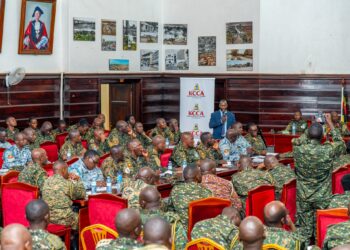
Babalanda made the remarks on Tuesday, September 1, 2026, while addressing district political and technical leaders from the Ankole, Kasese, Bunyoro, Tooro and Kigezi sub-regions at the National Leadership Institute (NALI) in Kyankwanzi.

The leaders are attending a retreat aimed at aligning local government planning and service delivery with the 2026 to 2031 National Resistance Movement (NRM) Manifesto and the Fourth National Development Plan (NDP IV).
According to Babalanda, Museveni’s continued leadership is necessary to complete what she described as the country’s unfinished socio-economic transformation, particularly the transition of households still dependent on subsistence production into the money economy and the fight against corruption.
“The NRM Government has moved Uganda from scarcity to surplus. We now produce enough food, we have tarmac roads connecting the country, electricity coverage has expanded, and security is guaranteed. But the President’s ultimate target is clear: moving all 39 percent of Ugandans still in subsistence into the money economy using wealth creation programmes like PDM, Emyooga and Operation Wealth Creation as direct weapons against poverty,” Babalanda said.
She added: “The President also has to finish the war on corruption. Therefore, he is here in 2031 and beyond to finish the unfinished business.”
Babalanda commended Museveni for what she described as sustained leadership and stewardship that have enabled the NRM Government to implement its programmes and achieve progress in various sectors.
She said the new manifesto should not be treated merely as a political document but as a commitment whose success must ultimately be judged by improvements in the lives of Ugandans.
“A manifesto is not merely a political document. It is a commitment to the people. Its success will ultimately be measured by whether the lives of Ugandans improve,” she said.
Babalanda said the Kyankwanzi retreat was intended to shift local government leaders away from measuring performance through activities and expenditure and instead focus on tangible results.
She said the real test of the 2026 to 2031 Manifesto would be at the district, city, municipal, community and household levels, where citizens should see improvements in schools, health facilities, agricultural productivity, roads, water and sanitation, employment opportunities and public services.
“Districts are the critical link between Government policy and service delivery,” she said.
The minister directed local governments to ensure that their development plans, budgets, work plans and performance targets are aligned with the priorities outlined in NDP IV and the NRM Manifesto.
She outlined the implementation chain as:
Manifesto → Plans → Budgets → Implementation → Monitoring → Results.
“The key question should be: ‘What has changed in the lives of our people?’ That is the standard by which we must measure our performance,” Babalanda said.
She also called for closer cooperation between political and technical leaders, including Resident District Commissioners, district chairpersons, mayors, NRM leaders, chief administrative officers and town clerks.
Babalanda cautioned leaders against unnecessary rivalry, saying public leadership should be judged by results rather than positions held.
“Let us avoid unnecessary rivalry and conflict. Leadership must be judged by results, not by position,” she said.
The minister warned local government leaders against misuse of public resources, stressing the need for stronger financial management, procurement systems, project supervision and internal controls.
“Every shilling of public money is a public trust,” she said.
She urged districts to ensure that citizens can clearly establish what has been budgeted, what has been delivered and what remains outstanding.
She also encouraged leaders to adopt a proactive approach to monitoring.
“Monitor early, identify problems early and act early,” she said, arguing that monitoring should be used as a management tool rather than merely a reporting requirement.
Babalanda placed household income growth and wealth creation at the centre of the new manifesto, urging each district to identify its economic strengths and develop them into viable sources of employment and income.
She challenged leaders to ask themselves what their districts can produce, where value can be added, which markets are available and which enterprises can create sustainable jobs.
She identified agricultural commercialisation, value addition, industrialisation, tourism, trade, innovation and the digital economy as key areas for local governments to exploit.
She also called for improvements in learning outcomes and school retention, better functionality of health facilities, adequate staffing and availability of medicines, as well as stronger support for vulnerable groups.
Babalanda said programmes targeting youth and women should be assessed based on the enterprises created and incomes generated rather than simply the number of beneficiaries reached.
She further urged district leaders to protect wetlands, forests and water sources while embracing digital systems to improve local revenue collection, transparency and service delivery.
Babalanda challenged participants to leave NALI with practical action plans instead of merely producing another retreat report.
“By the end of this retreat, every participant should return to their district with clarity, commitment and a practical action agenda, with priority commitments, required actions, resources, responsible officers, expected results and measurable indicators,” she said.
She concluded by urging local government leaders to approach implementation of the 2026 to 2031 Manifesto as a national responsibility requiring integrity, patriotism, discipline and accountability.
“The 2026 to 2031 Manifesto is not merely a document to be implemented; it is a national commitment to be delivered. Our task is not simply to promise. Our task is to deliver. Let us move from commitments to action, to results and to lasting transformation,” Babalanda said.






 English