
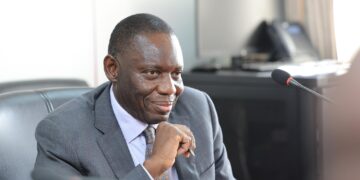
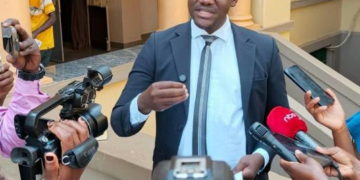














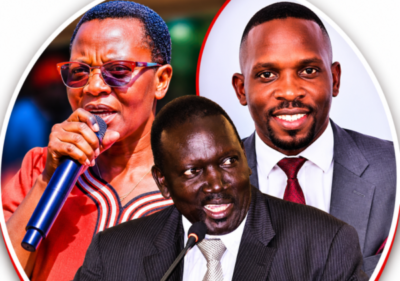
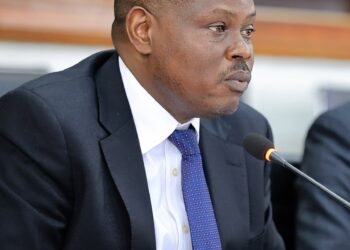
The Clerk to Parliament, Adolf Mwesige, has revealed that Parliament is still waiting for opposition political parties to submit names of members who will serve on the powerful Appointments Committee of the 12th Parliament.
The committee is expected to begin work soon, especially following President Yoweri Museveni’s recent appointment of new ministers who must first be vetted and approved by Parliament before assuming office.
While addressing legislators, Mwesige stressed the importance of parliamentary committees, describing them as the backbone of Parliament’s operations under Uganda’s constitutional system.
He explained that much of Parliament’s legislative and oversight work is handled through committees before matters are presented before the House for debate and adoption.
According to Mwesige, committees play a major role in scrutinising bills, examining reports from the Auditor General and monitoring government programmes and institutions.
Under Uganda’s multiparty arrangement, committee membership is determined through political party representation in Parliament, with party whips responsible for nominating MPs to various committees.
Mwesige said the ruling National Resistance Movement (NRM) has already forwarded its proposed members for the Appointments Committee, but opposition parties are yet to complete the process.
The Appointments Committee is one of Parliament’s most influential bodies because it is responsible for vetting presidential nominees, including ministers and other senior government officials.
The committee is chaired by the Speaker of Parliament and deputised by the Deputy Speaker. Other members include the Prime Minister, the Leader of Opposition, the Government Chief Whip and the Opposition Chief Whip, alongside representatives from political parties and independent MPs.
Its membership ranges between 20 and 40 legislators, with allocation based on the numerical strength of parties in Parliament.
In the current Parliament, the NRM holds the largest share with 372 out of 528 seats, giving it dominant representation on committees. The National Unity Platform (NUP) follows with 49 seats, while other parties including UPC, FDC, DP, PFF and ANT hold smaller numbers.
There are also 68 independent MPs and 10 representatives from the Uganda People’s Defence Forces (UPDF).
Unlike party-affiliated legislators, independent MPs are required to personally submit applications to the Clerk’s office indicating the committees they would like to join.
Mwesige said the Speaker will later assign independents to committees depending on their qualifications, interests and available positions.
He further reminded MPs that proceedings of the Appointments Committee are conducted privately and are not open to the public or ordinary members of Parliament who are not part of the committee.
This differs from sectoral committees where non-members are usually allowed to observe proceedings.
Mwesige also clarified that once the Appointments Committee approves presidential nominees, its decision becomes final and does not require endorsement by the entire House.
He encouraged legislators to familiarise themselves with Parliament’s Rules of Procedure and choose committees that match their professional backgrounds and interests.
As parties continue submitting names for committee membership, preparations are now intensifying ahead of the formal vetting of President Museveni’s newly appointed Cabinet and the commencement of full parliamentary business in the 12th Parliament.
Efforts to obtain a comment from National Unity Platform Secretary General David Lewis Rubongoya on the progress of opposition nominations were unsuccessful by press time.





 English