




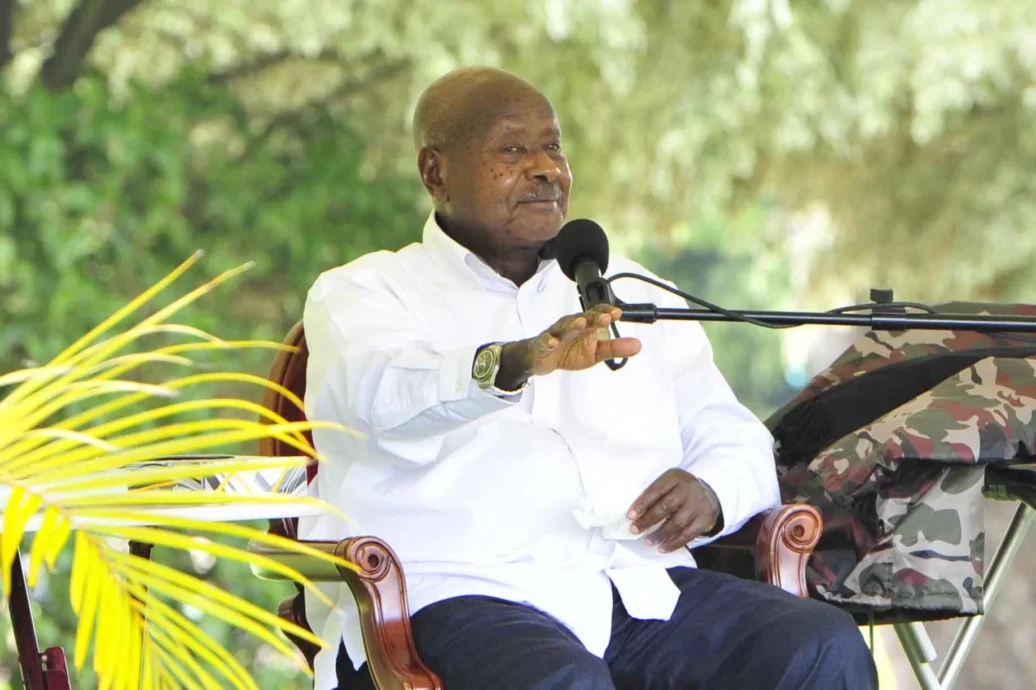
President Yoweri Museveni has defended the recent actions of Uganda’s security agencies against critics and opposition figures, insisting that the operations are intended to strengthen, rather than undermine, the rule of law and protection of human rights in the country.
In a national address delivered from Entebbe on Saturday, Museveni said concerns over alleged illegal detentions, enforced disappearances and human rights violations had been raised during recent meetings with the Inter-Religious Council of Uganda.
He argued that the government’s actions were aimed at closing long-standing gaps in accountability and ending what he described as a culture of impunity.
The President said Uganda’s peace and stability, achieved under the National Resistance Movement (NRM), were founded on justice and respect for human rights, recalling the popular phrase “Wakili, twebakka kutulo” to illustrate what he described as the country’s transformation from decades of insecurity to relative peace.
Museveni defended his government’s approach by drawing comparisons with indigenous systems of justice, which he said emphasized truth, accountability and restorative justice rather than technical legal arguments.
He criticized aspects of Uganda’s inherited colonial legal system, arguing that it sometimes allows suspects to evade accountability through legal technicalities, prolonged court processes and misuse of bail provisions.
He cited an incident during the National Resistance Army (NRA) bush war involving fighters who killed civilians while intoxicated, saying they were publicly executed after being found responsible, an action he claimed helped build public confidence in the movement’s commitment to justice.
The President acknowledged that corruption, abuse of office and weaknesses within the judiciary, bureaucracy and political class had over time created loopholes that undermined human rights and public confidence in state institutions. He said these shortcomings had allowed criminals and corrupt officials to exploit the legal system.
According to Museveni, recent interventions by security agencies are intended to address those weaknesses and restore public trust.
“The recent limited actions by security forces against some individuals and institutions are long overdue actions to fill those gaps,” he said, arguing that peace, economic growth and the fight against corruption require stronger enforcement of the law.
The President also defended the continued detention of opposition politician Dr. Kizza Besigye, accusing him of deliberately delaying his own trial instead of proving his innocence in court.
Museveni questioned why, in his view, an accused person should be allowed to refuse trial while continuing to invoke democratic and human rights principles.
He further argued that some opposition actors had encouraged violence through inflammatory political rhetoric, saying such actions had compelled security agencies to intervene in order to preserve public order. He maintained that denying bail to certain suspects was justified where witnesses could be intimidated or investigations compromised.
Rejecting accusations that Uganda is reverting to past human rights abuses, Museveni said today’s security operations differ fundamentally from previous regimes because suspects are processed through the courts rather than being killed or disappearing without trace.
He added that security personnel who violate the law would also be held accountable, citing the government’s compensation and reconciliation efforts with the family of a man known as “Zebra,” who died after an encounter with security personnel in 2021.
Beyond security matters, Museveni defended the government’s ongoing campaign against street hawking, arguing that unregulated roadside trade undermines legitimate businesses, deprives government of tax revenue, exposes consumers to unsafe products and contributes to traffic congestion and accidents.
He said local governments should identify designated trading spaces for former hawkers but insisted that all traders must operate from licensed premises, remain identifiable and pay taxes.
On environmental conservation, the President reaffirmed the government’s commitment to restoring wetlands and protecting natural forests, warning that continued encroachment threatens Uganda’s rainfall patterns and long-term environmental sustainability.
Museveni questioned officials who had authorized developments in protected wetlands and said government would review such approvals while continuing restoration operations.
He noted that wetlands play a critical role in maintaining Uganda’s water cycle, estimating that a significant proportion of the country’s rainfall depends on local wetlands as well as ecosystems in neighbouring countries.
The President also called on Ugandans to participate in the upcoming Local Council I and Women’s Council elections, saying the polls present an opportunity to elect leaders committed to fighting corruption.
He urged citizens to report corruption in government programmes, including health centres and the Parish Development Model (PDM), saying action would be taken against implicated officials.
Museveni concluded by appealing for continued public support in combating corruption, crime and environmental degradation while preserving peace and stability across the country.



 English