
















Ibrah Muwonge has been convicted of terrorism-related offences over his role in the deliberate destruction of electricity infrastructure in central Uganda.
Muwonge was convicted on Tuesday by the International Crimes Division of the High Court after entering into a plea bargain with the prosecution. He admitted two counts of terrorism and one count of terrorism financing.
Related posts

Justice Dr Andrew Bashaija sentenced him to 10 years in prison on the terrorism charges and five years for terrorism financing. The sentences will run concurrently.
The case arose from a series of attacks on electricity infrastructure between November and December 2022, which prosecutors said were deliberately organised to disrupt power supply and interfere with essential services.
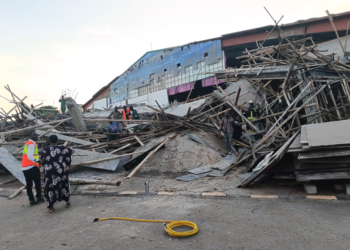
The attacks targeted transmission infrastructure serving several parts of central Uganda. Fourteen high-voltage electricity pylons and poles along the Owen Falls–Lugogo, Bujagali–Kawanda, Owen Falls–Namanve and Kawanda–Kapeka transmission lines were cut down or otherwise destroyed.
The damage triggered widespread power interruptions, affecting water supply, health facilities, industries, communication services, financial institutions and schools.
The electricity disruptions also resulted in substantial economic losses and prompted the government to deploy an emergency thermal power plant at Namanve to help maintain electricity supply to the Kampala metropolitan area.
According to the Office of the Director of Public Prosecutions, investigations established that Muwonge was a leader of a group known as the Uganda Defence Forces, which investigators linked to the Allied Democratic Forces.
Prosecutors alleged that Muwonge used a WhatsApp group to recruit and mobilise young people and coordinate attacks on electricity installations. The prosecution said the wider objective was to undermine government programmes, interfere with economic and social activities and ultimately contribute to efforts aimed at overthrowing the government.
Muwonge was also accused of financing aspects of the operation, including the purchase of equipment, transportation and payments to individuals involved in destroying the infrastructure.
Investigators relied heavily on evidence recovered from mobile phones. This included photographs, videos, audio recordings and electronic communications that prosecutors said connected Muwonge to the planning, funding and implementation of the attacks.
At the time he entered the plea bargain, about eight prosecution witnesses had already testified in the case.
The conviction brings to a conclusion Muwonge’s individual case, which had previously been heard alongside charges against several other suspects accused of involvement in the destruction of electricity infrastructure.
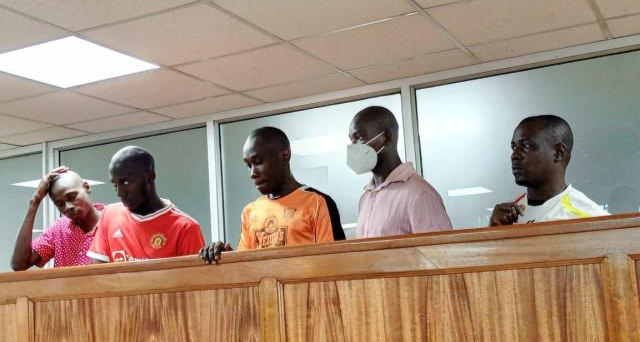
In 2024, Muwonge and four co-accused, Mustafa Lule, Wycliff Makabayi, Opio Patrick, also known as Wasswa, and Vincent Ssenyonga, petitioned the High Court seeking medical examinations and treatment while in prison.
Through their lawyer, Zephania Zzimbe, they told court that they had allegedly been tortured following their arrests and were suffering from bruises and persistent body pains.
Zzimbe said Muwonge had complained of chest pain and alleged that he had been tortured at the Chieftaincy of Military Intelligence headquarters in Mbuya. Makabayi was also reported to have sustained bruises and pain in his right leg.
However, Justice Bashaija declined to direct prison authorities to take the suspects to hospital, noting that there was no evidence before the court showing that they had requested medical attention and that their requests had been rejected.
The prosecution case had linked the group to attacks at several locations.
Court heard that on December 15, 2022, electricity distribution poles were cut in Bukasa and Bukomba villages in Nakaseke District. The incident disrupted electricity supply in Nakaseke and Luwero.
Other incidents involved the destruction of high-voltage transmission pylons in Kivuuvu, Mpoma and Nsanvu villages in Mukono District. The affected infrastructure formed part of the Owen Falls–Lugogo, Bujagali–Kawanda and Owen Falls–Namanve transmission lines.
While determining Muwonge’s sentence, Justice Bashaija considered the seriousness of the offences and their impact on critical national infrastructure.
The judge cited the deliberate and premeditated nature of the attacks, the alleged involvement of a group, Muwonge’s role in organising the activities and the extensive damage caused to electricity infrastructure. The court also considered the need to deter similar attacks.
On the other hand, the judge considered several mitigating circumstances, including Muwonge’s decision to plead guilty, his expression of remorse, his responsibilities as a father and breadwinner, and the fact that the attacks did not result in loss of life.
The prosecution was led by Jacquelyn Okui, Chief State Attorney at the Office of the Director of Public Prosecutions.
The ODPP described the conviction as an indication of the seriousness with which attacks against critical national infrastructure are treated, particularly where individuals are accused of financing, facilitating or participating in activities considered to threaten national security, essential services and economic stability.



 English