

















Dozens of farmers in Kalangala District are putting their lives at serious risk by reclaiming land located directly beneath high-voltage electricity distribution lines.
The action follows years of government delay in compensating the landowners whose property was acquired for the establishment of a public energy project.


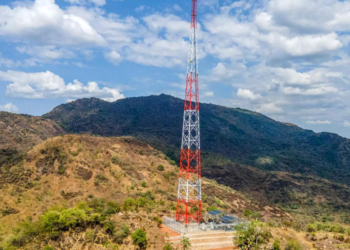
In 2012, the government partnered with Kalangala Infrastructure Services Limited under a Public-Private Partnership arrangement to construct a solar-thermal power station in Bukuzindu village, located in Mugoye Subcounty.
The goal was to supply reliable electricity to communities across Bugala Island.
As part of the project, power lines were erected, and residents were asked to provide a 15-meter-wide wayleave to allow free and safe passage for supply equipment.
However, many of the landowners who surrendered their land for the project are yet to receive the promised compensation.
As a result, they have begun reclaiming and cultivating the electricity corridors, ignoring the potentially fatal consequences.
Vegetation Meets Voltage
According to Lad Lukwago, the Power Generation Manager at Kalangala Infrastructure Services, several farmers have planted oil palm and banana trees within the wayleave areas.
Some of the plants have now grown tall enough to touch or come dangerously close to the live electricity wires.
This interference has disrupted the flow of power and caused regular load shedding in some areas.
Lukwago noted that clearing the overgrown areas has become difficult due to the unresolved compensation issue.
He said the company has made repeated appeals to the Ministry of Energy and Mineral Development but is yet to receive a response.
Voices of Frustration
Resty Nakawungu, the Vice Chairperson of Kalangala District, expressed grave concern over increasing reports of electrocution.
She explained that some residents are pruning oil palm trees directly beneath live wires, exposing themselves to lethal hazards.
Nakawungu said that while the district recognizes the danger, it lacks the authority and resources to remove farmers from the power line corridors without compensating them.
She urged the central government to urgently fulfill its obligation and prevent further injuries or deaths.
Victoria Nambalirwa, Chairperson of Kalangala Town Council, said that only a few landowners received compensation, leaving many feeling neglected and betrayed.
She warned that if the issue is not addressed promptly, some residents may resort to vandalizing power infrastructure as a form of protest.
The sense of abandonment among affected landowners continues to grow, and local leaders fear that the situation could escalate into civil unrest.
Government Response Underway
Fred Badda, the Resident District Commissioner for Kalangala, has taken initial steps to address the crisis.
He has requested a detailed list of all uncompensated landowners from the project contractor.
Badda also announced the formation of a joint task force that will conduct community sensitization meetings focused on safety and public awareness.
He emphasized the need for a balanced approach that addresses both the community’s grievances and the urgent safety risks.
A Wider Problem
The Kalangala case highlights a recurring challenge in Uganda’s infrastructure development efforts.
Projects are often delayed or compromised due to incomplete or delayed compensation of affected landowners.
This gap in the process can lead to costly setbacks, unsafe practices, and in extreme cases, loss of life.
Urgent Need for Action
Civil society organizations and local leaders are calling on the Ministry of Energy and other relevant agencies to immediately review and settle all outstanding compensation claims.
They are also urging the government to develop a clear and transparent compensation policy that ensures fair treatment of all project-affected persons in future infrastructure projects.
Until that happens, the electricity distribution network in Kalangala will remain at risk, not just from technical failures, but from the consequences of unfulfilled promises.





 English