


















The Ministry of Education and Sports is preparing to merge the Uganda National Examinations Board (UNEB) and the National Curriculum Development Centre (NCDC) into a single institution, in what officials describe as a major structural reform aimed at improving efficiency and coordination in the education sector.
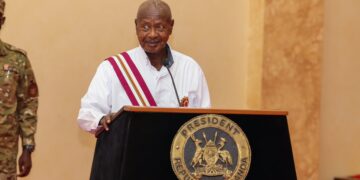
The proposal is contained in the forthcoming Curriculum, Assessment and Admissions Bill, one of the key education sector laws recently highlighted by President Yoweri Kaguta Museveni as part of government’s legislative agenda.

According to Brighton Barugahare, Commissioner for Policy Analysis and Research at the Ministry of Education and Sports, the merger is driven by the need to streamline government operations, reduce costs, and eliminate duplication of roles between institutions that already work closely together.
He said the current arrangement has contributed to fragmented decision-making within the education sector, slowing down implementation of reforms and policy alignment.
Barugahare explained that the proposed structure is not intended to abolish either curriculum development or assessment functions, but rather to consolidate them under one umbrella institution with clearly defined directorates.
At present, NCDC is responsible for developing Uganda’s curriculum, including teaching content, learning materials, and assessment frameworks. UNEB, on the other hand, conducts national examinations at the end of learning cycles, including the Primary Leaving Examination (PLE), Uganda Certificate of Education (UCE), and Uganda Advanced Certificate of Education (UACE).
While their mandates are distinct, officials argue that they are inherently interconnected and often require constant coordination.
Under the proposed arrangement, both functions would remain intact but operate under a single institution, with separate directorates handling curriculum development and national assessment.
Barugahare noted that this approach would enhance coordination, improve planning, and reduce institutional silos that currently exist between the two bodies.
He further observed that the two agencies already share overlapping governance structures, including representation from the Ministry of Education and cross-membership on their respective boards.
Aligning Curriculum and Assessment Under CBC
Government also argues that the reform is timely given Uganda’s shift to the Competency-Based Curriculum (CBC), which places greater emphasis on continuous assessment rather than relying solely on final examinations.
Under CBC, assessment is increasingly integrated into daily classroom learning, requiring closer alignment between curriculum design and evaluation systems.
Barugahare said this makes a strong case for merging the two functions under one institution to ensure coherence in how learners are taught and assessed.
He emphasized that assessment is no longer limited to end-of-cycle examinations, but now includes continuous assessment conducted throughout the learning process, requiring unified guidance linked directly to curriculum development.
The proposal also draws from recommendations of the Amanya Mushega-led Education Policy Review Commission, which proposed the establishment of a National Curriculum and Assessment Authority.
The commission recommended merging curriculum and assessment bodies at both basic and advanced education levels into one institution with separate directorates responsible for curriculum design and assessment systems across academic and skills-based pathways.
“The Commission notes that R5 on the merging of all curriculum and assessment bodies applies. NCDC, UNEB, and other assessment bodies under the Basic and Advanced levels should be merged under one body with respective directorates to develop curriculum and assessment frameworks for both the academic and skills tracks,” the report states.
Although the recommendations are yet to be formally adopted through a government White Paper, discussions around consolidation had already begun before the report was released.
Questions Over Institutional Autonomy
Despite the policy push, sources indicate that both UNEB and NCDC have previously raised concerns about the merger. These include fears over loss of institutional autonomy and uncertainty about how their distinct mandates would be preserved under a unified structure.
The exact name and governance framework of the proposed institution have not yet been publicly disclosed, leaving key operational details unclear.
Government has pointed to similar restructuring already undertaken in the Technical and Vocational Education and Training (TVET) sector, where curriculum development, assessment, and certification functions were consolidated under bodies such as the Uganda Vocational and Technical Assessment Board (UVTAB) and the Uganda Health Professions Assessment Board (UHPAB).
Officials argue that these reforms have improved coordination and strengthened alignment between training and assessment, offering a model that could be replicated in the general education system.
Historical Roles of UNEB and NCDC
Established in 1973, NCDC was created to localize Uganda’s curriculum, ensuring that education content reflects national priorities, culture, and socio-economic development needs.
UNEB, established in 1983 following the collapse of the East African Examinations Council, has since managed Uganda’s national examinations system, administering key assessments such as PLE, UCE, and UACE.
If implemented, the merger would mark one of the most significant structural changes in Uganda’s education system in decades. Supporters say it could improve coherence between what is taught and how learners are assessed, while reducing administrative duplication.
However, the proposal is expected to face scrutiny over how it will safeguard examination credibility and institutional independence — both considered central to public trust in Uganda’s education system.
For now, the proposal remains at the policy stage, awaiting further legal drafting and approval, but it signals a clear move toward a more integrated education governance model.










 English