
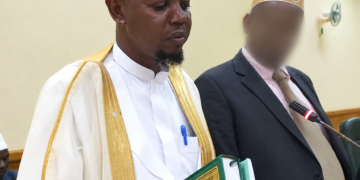


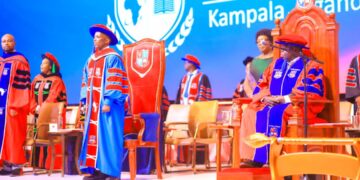











Friends of Rotaract Kalangala Ssese Islands gathered at the Sinyaland Museum in Kalangala Township for a colourful cultural dinner aimed at fundraising for the establishment of the district’s first-ever Kids Park.
The cultural dinner attracted key stakeholders, including local leaders, Rotarians, and community partners, all united behind a project designed to support early childhood development.

The initiative recognises the critical development window between birth and age five and seeks to give young children safe, stimulating spaces to learn and interact.
The Guest of Honour PAG Paul Ssemanda, Area Support Officer for District D9214 and Past Assistant Governor, praised Rotaract Kalangala Ssese Islands President Allan Mutagubya for championing an initiative rooted in the healthy development of children.

He encouraged the youth in Kalangala to join Rotaract and Rotary clubs, noting that the sustainability of such multicultural, community-driven organisations depends on active youth involvement.
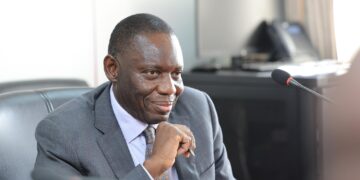
Rotaract President Allan Mutagubya said the idea was inspired by the Urban95 concept, an initiative of the Van Leer Foundation designed to help city leaders create child-friendly urban environments for babies, toddlers, and their caregivers.
“The concept promotes integrated approaches such as improving public spaces like parks and streets, and enhancing services including health care and childcare,” he explained.
“This Kids Park should be a foundation for our leaders to generate ideas that make Kalangala a place that works not only for babies and toddlers, but for everyone.”
Mutagubya appealed to all Friends of Rotaract to rally behind the project, saying it encourages active participation of both parents and children across the Ssese Islands.
He revealed that the Kids Park project is estimated to cost at least 35 million Uganda shillings, with completion and handover to the community expected by April 2026.
“We are reaching out to our friends in Uganda and the diaspora,” he said. “But Kalangala Township alone has over 6,000 residents, and we believe that small contributions, combined, can make this dream a reality.”

Research highlights the importance of investing in early childhood development. Countries like Australia allocate a significant share of their national budgets to children through education and early childhood programming.
Decades of evidence show that early life experiences have lasting effects on a child’s health, academic success, productivity, and overall well-being.
During early childhood, the foundation of the brain is built, and the immediate environment plays a major role in shaping cognitive, physical, and socio-emotional development. A well-designed built environment also strengthens family well-being—which young children depend on immensely.






 English