


















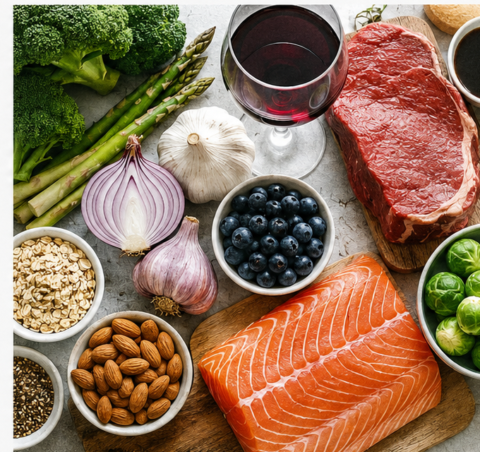
Garlic, alcohol, meat, and even fasting can affect our body odour – and alter how appealing our scent is to others.
Each one of us has a unique scent profile, like a fingerprint. Everything from our personality type – such as extroversion, dominance, and neuroticism – to our mood and health affects the way we smell.


“The past few decades have revealed that odour is shaped by our genes, hormones, health, and hygiene,” says Craig Roberts, professor of social psychology at the University of Stirling in Scotland. “Whether we are male or female, young or old, gay or straight, dominant or subordinate, ovulating or pregnant, sick or well, happy or sad.”
Many of these factors are out of our control – but not all. A significant influence on the way we smell is the food we eat. Not only does this affect our overall aroma, but also how we are perceived, including how attractive we appear to others, according to a small but growing body of research.
Breath and sweat
On a biological level, food affects our body odour through two main routes, says Lina Begdache, an assistant professor of health and wellness studies at the State University of New York at Binghamton: the gut and the skin.
First, the gut. As you digest your food, bacteria work to metabolise it inside your gut. Some interactions between food chemicals and bacteria release gases – volatile molecules that exit your body the same way the food went in, says Begdache. This can result in bad breath, or halitosis, especially depending on what you eat (more on this later). Data suggests that about one-third of adults worldwide suffer from some form of halitosis, though there are other causes besides digestion.
Second, the skin. Chemical components from your food, once metabolised, also travel through the bloodstream and many of the body’s tissues. Some end up being perspired through the skin, where they interact with the skin’s bacteria and create a smell there too. (Yes, sweat is odourless in itself; it’s the skin bacteria that thrive in sweat that make sweat smelly.)
Different foods contain a variety of chemical compounds that come into play at different stages, resulting in varying levels of odour. But the foods with the most pungent results almost always have one culprit in common: sulphur. Surprisingly, though, some studies suggest these odorous compounds can have the unexpected effect of making us more attractive.
Fruit and vegetables
Broccoli, cabbage, Brussels sprouts, and cauliflower may be staples of a healthy diet – but they are packed with sulphurous compounds, which can often be reminiscent of rotting eggs. When these compounds make their way through the bloodstream and interact with skin bacteria, sweat can become strongly pungent, according to nutritional therapist Kerry Beeson.
Foods from the allium family, such as garlic and onions, can also affect the smell of sweat and breath for the same reason as cruciferous vegetables: when metabolised, they break down into compounds like diallyl disulphide and allyl methyl sulphide, which are emitted at different times – immediately after ingestion and, in the case of allyl methyl sulphide, peaking about 30 minutes later.
Surprisingly, though, studies suggest that while garlic definitely makes breath smell stronger, it may make armpit sweat more attractive. In one experiment, 42 men wore armpit pads collecting sweat for 12 hours while consuming varying amounts of garlic. Then, 82 women rated the scent for pleasantness, attractiveness, masculinity, and intensity. Men with high garlic intake were perceived as more attractive, while supplements also improved ratings.
Carb-heavy diets produced the least attractive scents.
“We replicated this study three times because we were really surprised,” says Jan Havlíček, a researcher in human ethology and chemical communication at Charles University in the Czech Republic. He suggests garlic’s antioxidant and antimicrobial properties may improve overall health, which could influence scent.
Other vegetables also affect body odour. Asparagus produces asparagusic acid, which breaks down into sulphur compounds such as methanethiol and dimethyl sulphide. These compounds are responsible for the distinctive smell in urine after eating asparagus. Because sulphur compounds are highly volatile, they disperse easily in the air – which is why the smell is noticeable in toilets and can last more than five hours.
Not everyone produces this smell, and studies vary widely. Some research from the 1950s suggested fewer than 50% of people produce “asparagus urine,” while a 2010 study found more than 90% did. Genetics also influence whether people can detect the smell at all.
However, overall fruit and vegetable consumption is associated with a more attractive scent. A 2017 Australian study found that men who ate more fruit and vegetables were rated as smelling better – more fruity, floral, and sweet.
The same study also found that slightly yellower skin, rich in carotenoids (from foods like carrots, pumpkins, tomatoes, and papayas), was perceived as more attractive. Diets containing moderate amounts of fat, meat, eggs, and tofu were also associated with more pleasant-smelling sweat, while carb-heavy diets produced the least attractive scents.
Meat and fish
Meat and fish can also produce distinct body odours, as animal proteins are broken down into amino acids and fats, which are excreted through sweat and interact with skin bacteria.
Fish and beans, for example, can cause body odour because they contain trimethylamine, a strong-smelling compound. In rare cases, this leads to trimethylaminuria – also known as “fish odour syndrome” – where the body cannot convert trimethylamine into a non-smelly compound, says Beeson. This can cause a strong body odour, although the condition is rare.
A 2025 case report described a 10-month-old boy who developed temporary trimethylaminuria after eating fish, including swordfish. With careful management, the symptoms did not recur.
A 2006 study by Havlíček’s team examined 30 men on meat-based and meat-free diets over two weeks. Women rated their body odour for pleasantness, attractiveness, masculinity, and intensity. Men on meat-free diets were rated as more attractive, more pleasant, and less intense.
“To our surprise, those who were eating meat smelled slightly worse than when they were not eating meat,” says Havlíček.
He notes that this was unexpected, as meat has historically been an important part of the human diet, though not in the quantities common in modern industrialised societies.
Alcohol and coffee
Alcohol – especially when consumed heavily or regularly, says Begdache – can cause unpleasant odours from both the gastrointestinal tract and sweat glands. When metabolised in the liver, it produces acetaldehyde, a toxic, volatile compound with a strong smell of stale alcohol. (One study found police officers could detect alcohol consumption from breath odour 60–85% of the time, depending on intake.)
Alcohol also dehydrates the body and reduces saliva flow, allowing bacteria to accumulate in the mouth and worsening bad breath. One study found that daily drinkers were more likely to report bad breath and had higher levels of volatile sulphur compounds.
Another study found that beer drinkers were rated as more attractive – but only to mosquitoes.
Caffeine in coffee and tea can stimulate apocrine glands, increasing sweat production in areas such as the armpits and groin. This can create a more favourable environment for bacteria, potentially intensifying body odour, says Beeson. Some studies also show caffeine molecules can be present in sweat, though its direct effect on odour is unclear.
“We are mammals, and like all mammals, odour almost certainly has an important influence on social interaction,” says Roberts.
However, scent is only one of many factors influencing attractiveness, including appearance, behaviour, and speech. It is extremely difficult – if not impossible – to isolate smell from these other cues, he adds.
Research findings remain mixed. In one experiment, women who fasted for 48 hours produced sweat that men rated as slightly more attractive, although differences were small. However, fasting has also been shown to worsen breath odour in other studies.
Overall, researchers agree there is no single formula linking diet to body odour. Variability is high, and results often contradict each other.
“There are plenty of aromatic compounds, and in most of them we don’t know how they influence our body odour, but there is a high probability they do,” says Havlíček.













 English