
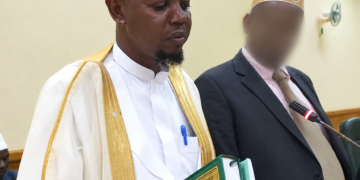

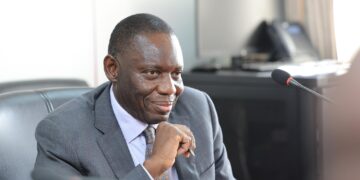
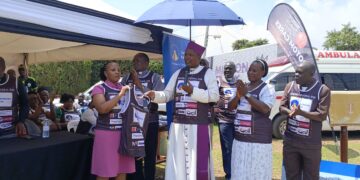





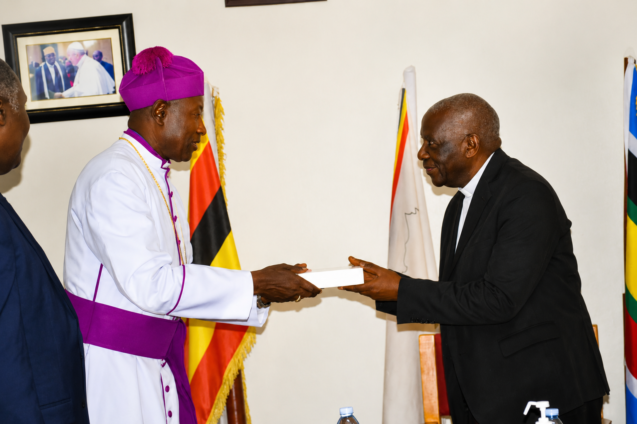
The Inter-Religious Council of Uganda (IRCU) has elected Rt. Rev. Dr. Joseph Antony Zziwa, Bishop of Kiyinda-Mityana Diocese and Chairman of the Uganda Episcopal Conference, as its new Chairperson for the 2026–2029 term.
In a statement issued after a meeting of the Council of Presidents held on June 23, 2026, IRCU announced that Bishop Zziwa was unanimously chosen to lead the interfaith body for the next three years.

“The Inter-Religious Council of Uganda, Council of Presidents, at its meeting of June 23, 2026, unanimously elected Rt. Rev. Dr. Joseph Antony Zziwa as its new Chairperson for the period 2026–2029,” the statement partly reads.
Bishop Zziwa succeeds the Most Rev. Dr. Stephen Samuel Kaziimba Mugalu, Archbishop of the Church of Uganda, whose tenure at the helm of the Council of Presidents has come to an end.
IRCU said the transition is in line with its established practice of rotating leadership among representatives of Uganda’s major faith communities, including the Catholic, Anglican, Muslim, Orthodox, Seventh-day Adventist and Born-Again denominations.
The council commended Archbishop Kaziimba for his stewardship, crediting him with strengthening interfaith collaboration and advancing initiatives aimed at promoting peace, unity and social cohesion.
“We extend our heartfelt gratitude to Archbishop Kaziimba for his dedicated leadership during his term,” the statement said.
The council also congratulated Bishop Zziwa on his election, expressing confidence that he will provide effective leadership as IRCU pursues its vision of a Godly, peaceful, united and prosperous Uganda.
IRCU serves as the country’s principal interfaith platform and has played a prominent role in peacebuilding, dialogue and conflict prevention, particularly during election periods and other politically sensitive moments.
The leadership transition comes amid continued public debate over the role of religious leaders in speaking out on governance and human rights concerns. Some civil society actors and social media users have criticised senior clerics, including Archbishop Kaziimba, for what they perceive as reluctance to publicly challenge restrictions on civil liberties, freedom of expression and media freedoms.
Archbishop Kaziimba previously defended his approach during a sermon at St. John’s Church, Makerere University, on April 19, 2026. Responding to calls for him to emulate the late Archbishop Janani Luwum’s outspoken stance against abuses under the regime of former president Idi Amin, Kaziimba said he was mindful of the risks involved.
“Some people have approached me saying, ‘Why don’t you do like Janani Luwum? The man did a great job.’ The man who was killed! Then [when I’m dead] they will say, ‘Kaziimba is also a good man, he was killed.’ Don’t I have a family? Why don’t you be sensitive?” he remarked.
The comments sparked mixed reactions, with some sympathising with his concerns about personal safety, while others argued that religious leaders have a moral obligation to speak boldly against injustice regardless of the consequences.




 English