

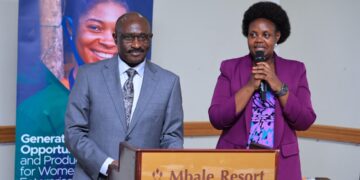
















Former State Minister for Children and Youth Affairs Balaam Barugahara has disclosed that the vast majority of DNA tests he facilitated to settle paternity disputes while in office excluded the alleged fathers as the biological parents of the children involved.
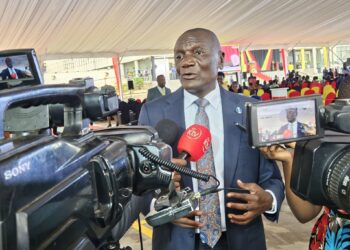
Speaking during an interview, Balaam, now the Minister for Local Government said that out of 250 DNA tests carried out in cases handled by his office, only 12 confirmed paternity, while 238 showed that the men accused of fathering the children were not biologically related to them.

He explained that the Ministry regularly received complaints from women seeking child support from men who denied responsibility for the children. According to Balaam, his office first attempted to resolve such disputes through mediation, but DNA testing was arranged whenever negotiations failed.
“During my time at the Ministry, I personally authorised and paid for DNA tests in 250 cases after attempts to resolve them amicably proved unsuccessful. In many cases, the men insisted they were not the biological fathers, while the women maintained that they were and demanded that they take responsibility. The results showed that 238 of those tests were negative,” Balaam said.
He noted that the 12 men whose DNA matched the children accepted parental responsibility after the results were released.
Balaam argued that many of the remaining men had been subjected to emotional distress and financial demands over children who were ultimately found not to be theirs. He added that the responsibility for handling such disputes now lies with the Ministry of Gender, Labour and Social Development under Minister Gen. Henry Tumukunde.
He further described unresolved paternity disputes as a major contributor to domestic conflict, maintaining that DNA testing remains the most reliable way of establishing the truth. He also urged men to exercise caution in their relationships to avoid similar situations.
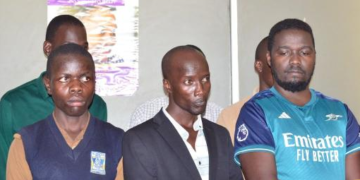
Balaam referred to the recently concluded paternity dispute involving individuals claiming to be children of the late Kadongo Kamu musician Paul Job Kafeero, saying the case demonstrated the importance of scientific evidence in resolving family disagreements.
DNA analysis conducted earlier this month and whose results were released last week established that only four of the 25 people claiming to be Kafeero’s biological children were genetically related to the late musician.
According to AIGP Andrew Mubiru, Director of Forensic Services at the Uganda Police Force, the findings were consistent with earlier results from the Government Analytical Laboratory. The confirmed biological children were identified as Benedict Kafeero, Simon Peter Kafeero, Tomas Kafeero (also known as Swazi), and Elizabeth Nagawa.
The outcome reportedly left several claimants disappointed, with some calling for fresh DNA testing to be conducted outside Uganda. Balaam, however, dismissed the need for additional tests, saying the latest findings reinforced the earlier laboratory conclusions.
Meanwhile, senior marriage counsellor Connie Nalugwa cautioned against interpreting the high number of negative DNA results as evidence of flaws in DNA technology.
She said paternity disputes are often rooted in complex social and economic realities, explaining that some women become involved in relationships outside marriage due to financial hardship or unmet family needs, which can later result in disputes over a child’s biological father.
Nalugwa also observed that some women may accuse financially well-off or influential men of fathering their children in the hope of obtaining financial support. She added that celebrities and public figures, particularly those known to have multiple relationships, are sometimes drawn into such claims because of their wealth and prominence.
The Ministry of Internal Affairs has previously stated that most paternity tests conducted by the Government Analytical Laboratory in 2025 for men seeking to establish fatherhood returned negative results.
Editor’s note: The statistics cited by Balaam (238 out of 250 tests, or 95.2%, being negative) and separate claims that 98% of paternity tests conducted by the Government Analytical Laboratory in 2025 were negative are significant and should be independently verified with the Government Analytical Laboratory or the Ministry of Internal Affairs before publication.









 English