




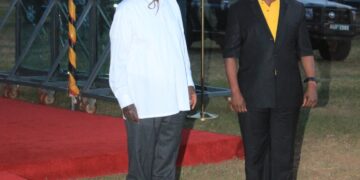
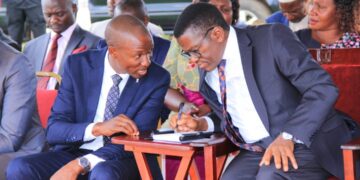


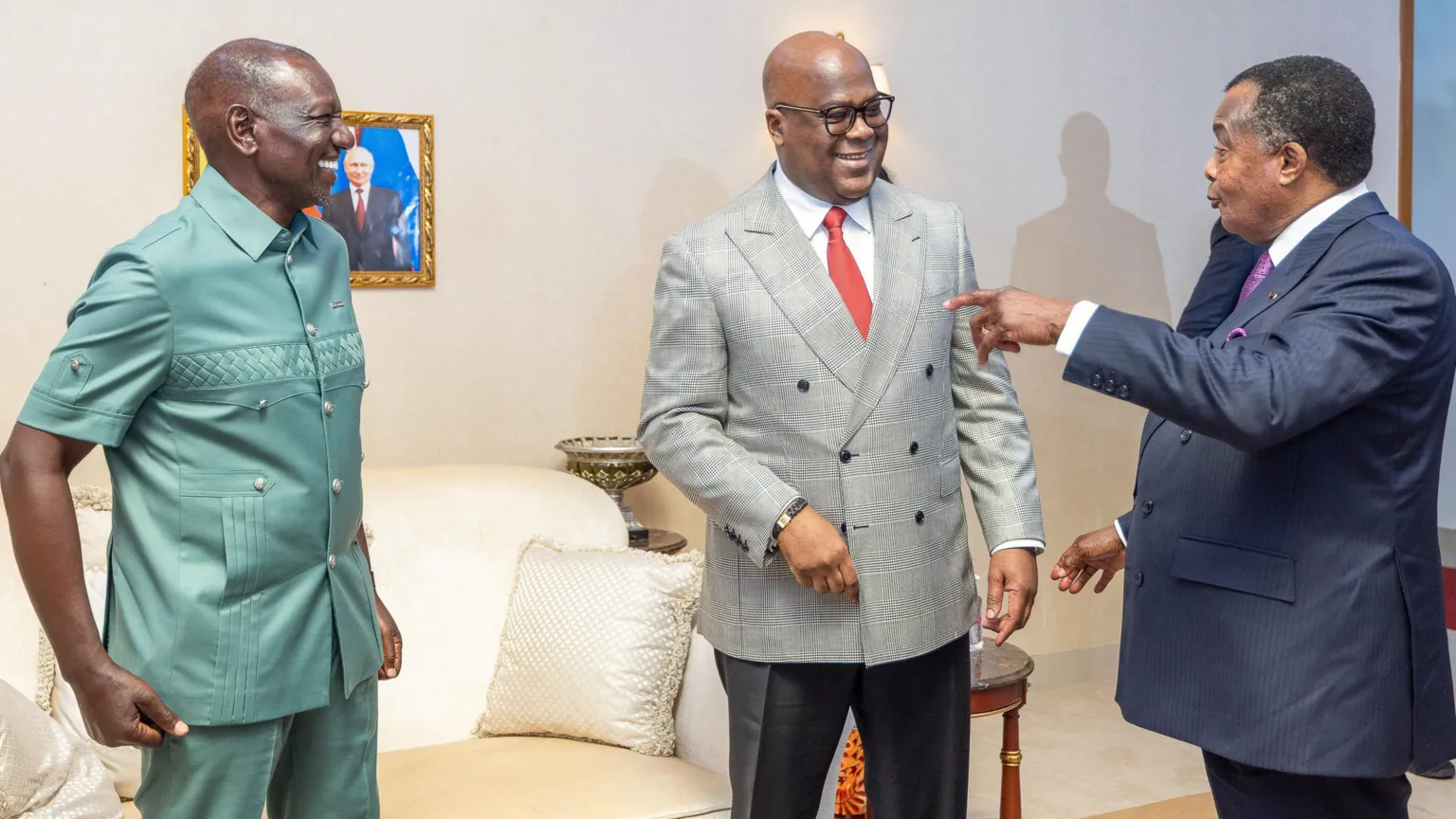
Kenya’s President William Ruto and his Congolese counterpart Felix Tshisekedi have agreed to restore full diplomatic ties between the two countries following tensions over the conflict in eastern Democratic Republic of Congo.
Relations between the two countries have soured since 2023 when DR Congo accused Kenya of hosting leaders launching a rebel alliance, including the M23.

This led DR Congo to recall its envoy to Nairobi. Relations deteriorated further when Kinshasa refusing to accredit Kenya’s nominated ambassador.
On Sunday, the two leaders affirmed their commitment to “sovereignty, territorial integrity, non-interference in the internal affairs of states”.
The agreement was announced in a joint statement issued after the summit held in the town of Oyo in Congo-Brazzaville, facilitated by the nation’s President Denis Sassou Nguesso, with Togolese leader Faure Essozimna Gnassingbé as mediator.
Tshisekedi and Ruto also agreed to “good neighbourliness and peaceful settlement of disputes” as well as “strengthen cooperation within regional mechanisms”.
DR Congo and Kenya are both members of the East African Community (EAC).
DR Congo, which joined in 2022, is the latest entrant to the bloc, but its membership has been complicated by its accusation that Rwanda, a fellow member, backs the M23 rebels. Rwanda denies the claims despite overwhelming evidence.
DR Congo has also accused Kenya of hosting Congolese political and rebel leaders whom it says are working to destabilise the country.
When the Congo River Alliance (AFC), a political-military alliance including the M23, was launched in Nairobi in 2023, DR Congo responded by recalling its ambassador to Kenya.
The tensions were stoked further in March last year after Kenya named a consul-general to Goma, the capital of DR Congo’s North Kivu region, after it fell to M23 forces, who control many eastern parts of the country.
DR Congo said naming the envoy amounted to disrespect for the country’s territorial integrity and seemed to legitimise the group’s occupation.
Relations deteriorated further after Kenya hosted a meeting of Congolese opposition figures, including former President Joseph Kabila, in October 2025.
Kabila was in 2025 sentenced to death in absentia on charges including war crimes and treason. He denied the accusations, but did not appear in court to defend himself.
He has since been named the leader of the Front for the Refoundation of the Nation (FRN), the new rebel coalition that took over from the AFC.
Sunday’s meeting between Ruto and Tshisekedi also included other issues including deepening trade cooperation, economic development, and regional integration.
The two also sought to collaborate to control the spread of the Ebola virus.
On Sunday, the head of the World Health Organization (WHO), Tedros Adhanom Ghebreyesus, said the frequency of attacks across the country’s east had increased since the end of October, seriously affecting the Ebola response.
Tedros said heavy fighting in an area close to where the Ebola outbreak first emerged had disrupted work and the wider Ebola response.
More than 5,700 people have died and 11,000 infected with Ebola in DR Congo since the outbreak was declared in May.
The latest outbreak, caused by the Bundibugyo species of the virus, has spread beyond DR Congo borders, with cases reported in Kenya, Uganda and Nigeria.




 English
