

















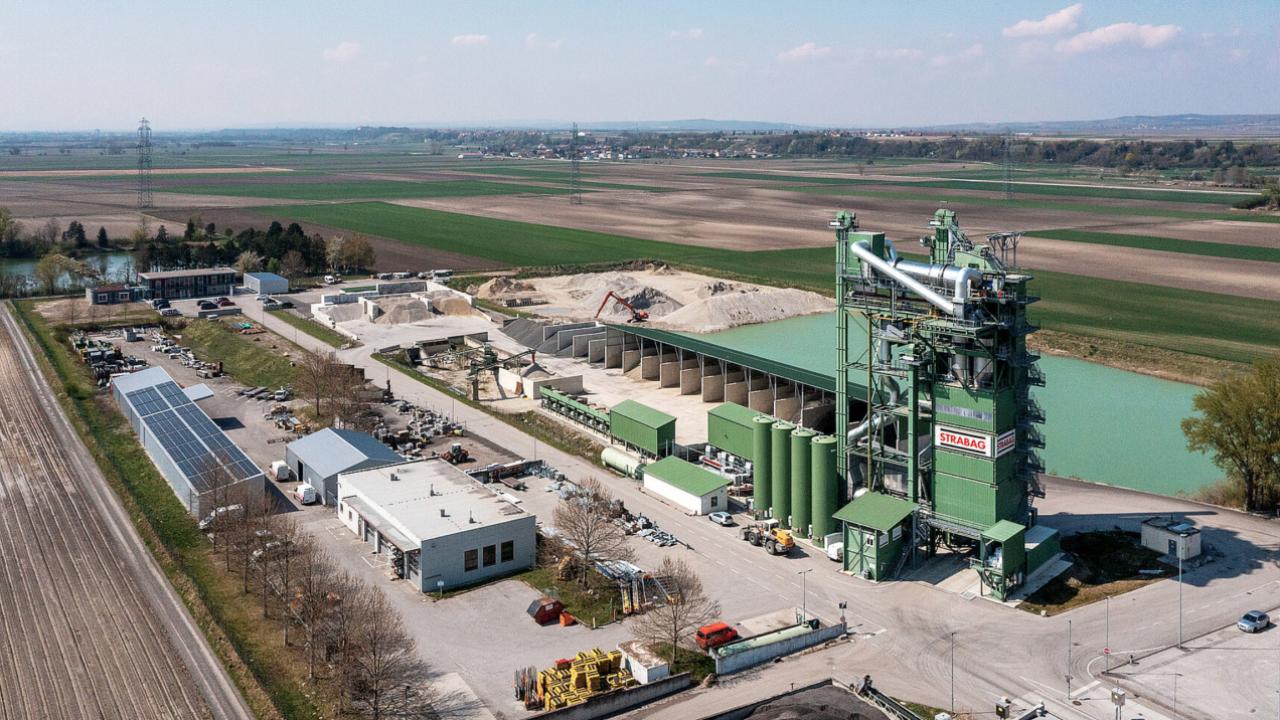
The High Court in Arua has dismissed an application by Rocktrust Contractors (U) Ltd seeking to attach and preserve equipment belonging to German construction company Strabag International GmbH over an ongoing contractual dispute involving a stone quarry and crusher plant in Adjumani District.
In a ruling delivered on November 16, 2026, Justice Harriet Grace Magala rejected Rocktrust’s application for an order attaching an asphalt plant, crusher plant and other quarry equipment at the disputed site, or alternatively compelling Strabag to deposit Shs1.5 billion in court as security pending determination of the main suit.


The judge ruled that Rocktrust had failed to establish that Strabag was disposing of its assets with the intention of frustrating the execution of a possible court judgment. She also found that the applicant had not demonstrated a strong and arguable case to justify the exceptional remedy of attachment before judgment.
The dispute stems from a Memorandum of Understanding (MoU) signed by the two companies on February 24, 2025, concerning the transfer of rights and obligations under an Environmental and Social Impact Assessment certificate issued by the National Environment Management Authority (NEMA) on May 4, 2021.
The certificate relates to a stone quarry and crusher plant located in Okutulu Village, Ibidoworo Parish, Pakeke Sub-County, and Ojigo Cell, Nyivuta Ward, Pakeke Town Council, Adjumani District.
Rocktrust subsequently sued Strabag in Civil Suit No. 0024 of 2026, accusing the company of breaching the agreement by failing to hand over the quarry premises. The substantive case is still pending before the High Court.
Through the application, Rocktrust sought to prevent Strabag from disposing of or removing the asphalt plant, crusher plant and other associated equipment from the site before the main suit is determined. It also wanted the German company ordered to deposit Shs1.5 billion in court to secure any decree that might eventually be issued against it.
Rocktrust argued that despite transferring the rights and obligations under the NEMA certificate, Strabag had continued occupying and using the quarry, selling aggregate stones and other raw materials. It further alleged that Strabag had started dismantling the crusher plant and disposing of machinery, raising fears that the company could leave Uganda and frustrate enforcement of a future judgment.
The applicant also told court that Strabag was a foreign company whose directors were not Ugandan citizens, had disposed of most of its known assets and had no known contracts or projects remaining in Uganda.
However, Strabag opposed the application, arguing that the disposal of equipment was part of its normal business operations following the completion of its project in Adjumani in 2024.
Through its lawyers, the company explained that it had completed the project in June or July 2024 but remained at the site during the defects liability period before beginning to demobilise equipment for deployment to new operations in Nairobi, Kenya.
Strabag further told court that the process of relocating the equipment had started in December 2024, before the MoU was signed in February 2025 and before Rocktrust instituted the main suit.
The company also maintained that the equipment had been advertised for sale in July 2025, with negotiations over a possible purchase continuing between September 2025 and March 2026.
In examining the dispute, Justice Magala noted that attachment before judgment is an exceptional legal remedy intended to protect a successful litigant from a defendant who deliberately disposes of or removes property to obstruct or delay execution of a court decree.
However, the judge cautioned that the remedy must be exercised carefully because it interferes with a defendant’s property rights and ordinary business operations before the substantive dispute has been determined.
The court identified several requirements for granting such an order, including proof that the applicant has a strong and arguable claim, evidence of an imminent disposal or removal of assets intended to frustrate execution, and an undertaking by the applicant to compensate the respondent for any damages arising from an order that is later found to have been wrongly granted.
On whether Rocktrust had a strong case, the judge examined the February 24, 2025 MoU and found that it provided for the transfer of rights and obligations under the NEMA environmental certificate but did not expressly provide for the transfer of ownership of Strabag’s machinery or other assets.
Justice Magala observed that Clause 4 of the agreement required Rocktrust to assume responsibility for negotiating and obtaining any additional permits or permissions from government institutions, local authorities and relevant landowners to ensure that quarry operations continued legally.
The judge also considered correspondence showing that Strabag’s representative, Jean Pierre Baruko, had offered to sell the asphalt plant to Rocktrust for 270,000 Euros, approximately Shs1.1 billion.
Rocktrust subsequently made a counteroffer of 150,000 Euros, which it indicated was negotiable. The negotiations were contained in a letter dated February 2, 2026, almost a year after the MoU had been signed.
According to the judge, the separate negotiations demonstrated that the two companies understood that the asphalt plant was to be acquired through a separate transaction rather than as part of the February 2025 agreement.
She consequently found that the MoU did not transfer ownership of the plant or other equipment to Rocktrust, adding that the NEMA certificate transfer approval presented before court equally contained no provision transferring ownership of the assets.
The judge therefore concluded that Rocktrust had not demonstrated a strong and arguable case against Strabag to justify attachment before judgment.
On the alleged disposal of assets, the court acknowledged that Strabag was indeed selling equipment at the quarry site, as confirmed by newspaper advertisements presented by both parties.
However, Justice Magala noted that the advertisements dated July 21, 2025, and another published in 2024, showed that the disposal process had started before the main suit was instituted.
The judge agreed with Strabag’s explanation that the disposal was part of the demobilisation of equipment following completion of its project and its planned relocation to Nairobi.
She further observed that Rocktrust had itself been negotiating to purchase the asphalt plant before filing the main suit, making it difficult to conclude that the subsequent disposal of the equipment was intended to defeat a possible court judgment.
The court held that the mere fact that a defendant is selling or relocating property does not automatically justify attachment before judgment. The applicant must demonstrate that the disposal is intended to obstruct or delay execution of a decree.
Justice Magala also faulted Rocktrust for failing to provide an undertaking to compensate Strabag should the attachment orders be granted and later found to have been unjustified.
The judge noted that such an undertaking was necessary to protect a respondent from financial losses that could arise from an order interfering with its business operations.
Besides the substantive issues, Strabag had raised preliminary objections concerning the manner in which the application was filed.

The company argued that Rocktrust had failed to identify and provide estimated values for the specific property it wanted attached, contrary to Order 40 Rule 5(2) of the Civil Procedure Rules.
The court agreed, observing that Rocktrust had generally referred to an asphalt plant, crusher plant and other associated quarry equipment without adequately specifying the property or providing its estimated value.
Although the applicant later identified the asphalt plant in its submissions as a Benninghoven TBA-K120, with a capacity of 120 cubic metres and manufactured in 2003, the judge said the description had been introduced through submissions rather than properly presented evidence. The applicant had also failed to provide a valuation.
However, the court rejected Strabag’s objection that the chamber summons was invalid because it had not been signed by Rocktrust or its lawyers. Justice Magala found that the summons had been signed by the Deputy Registrar on June 25, 2026, and was therefore valid as a court-issued document.
The judge also rejected the argument that Rocktrust had introduced an entirely new case through its affidavit in rejoinder, finding that the disputed paragraphs largely responded to matters raised by Strabag.
In the final determination, Justice Magala dismissed Rocktrust’s application for lack of merit. She ordered that costs of the application would abide the outcome of the main suit.
The ruling was delivered electronically on November 16, 2026, at the High Court in Arua. The substantive contractual dispute between the two companies remains pending.












 English
