













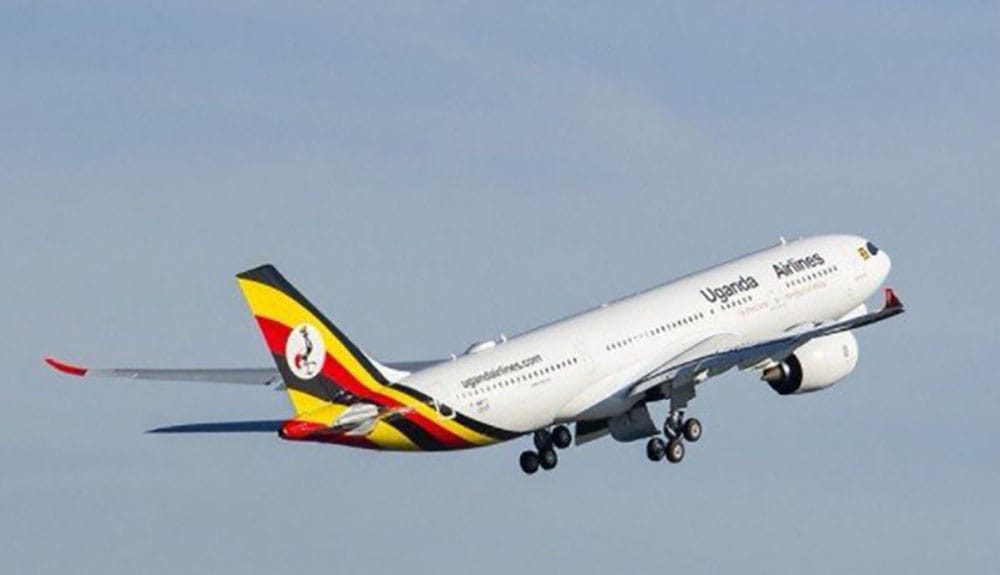
KAMPALA — Who is frustrating Uganda’s efforts to revive its national cargo carrier through a multi-billion-shilling partnership with a United Arab Emirates (UAE) investment firm?
That question is gaining urgency following revelations that a joint venture between Uganda Air Cargo Corporation (UACC) and Dubai-based Alpha MBM Aviation DWC-LLC has remained largely unimplemented, more than a year after the agreement was signed.

What was presented as a strategic investment to revive the struggling state-owned corporation and position Uganda as a regional air cargo hub has instead become a story of unfulfilled promises, institutional disagreements and government bureaucracy.
An audit by the Auditor General for the financial year ended June 2025, whose implementation assessment covered November 2025, exposes failures on both sides of the partnership.
Under the agreement signed on May 22, 2024, the government, represented by the Ministry of Defence and Veteran Affairs (MoDVA) and UACC, was expected to provide land at Entebbe International Airport, hangar facilities, aircraft assets and operating rights.
Alpha MBM, the private investment partner associated with UAE royal family member Sheikh Mohammed bin Maktoum bin Juma Al Maktoum, committed to providing working capital, up to seven cargo aircraft, access to international markets and other technical and commercial support.
However, the Auditor General found that neither party had fulfilled its major obligations.
Alpha MBM had not provided financing, credit lines, marketing activities, technology investments, staff training or strategic partnerships. Its only aircraft contribution, a Boeing 737-400 freighter temporarily deployed between June and September 2024, had been withdrawn.
On the Ugandan side, the government had failed to provide land for a hangar at Entebbe, while the corporation’s Lockheed Hercules L100-30 remained grounded in Jordan, where it was undergoing maintenance. Flagship and route rights had also not been granted.
The audit concluded that the joint venture had not been operationalised, threatening its intended purpose and the overall performance of Uganda Air Cargo.
Government institutions under scrutiny
The revelations raise questions about whether government agencies entrusted with facilitating the investment are doing enough to make the partnership work.
During parliamentary scrutiny in July 2025, the Committee on Commissions, Statutory Authorities and State Enterprises (COSASE), chaired by Medard Lubega Sseggona, questioned the Ministry of Defence’s involvement in the arrangement and the apparent lack of progress.
The committee also questioned why the government was pursuing an investment partnership while owing Uganda Air Cargo billions of shillings for services already rendered.
The Ministry of Defence reportedly owed the corporation Shs29 billion for transporting Ugandan troops and equipment to Somalia, a debt that further complicated its financial position.
The Auditor General’s subsequent report showed that the corporation’s outstanding receivables had increased to Shs33.96 billion by June 2025, with Shs25.76 billion, representing 76 per cent, owed by the Ministry of Defence.
Trade payables also increased by 54 per cent to Shs9.26 billion.
The figures paint a picture of a corporation struggling with cash-flow constraints while the very government institution expected to support its recovery remains its biggest debtor.
Who benefits from the delays?
The controversy is particularly significant given that Uganda Air Cargo has sought approximately Shs381 billion to restore its operations after losing its air operator’s certificate in 2014.
The partnership was intended to provide an alternative to expensive aircraft acquisitions and leasing arrangements while opening international markets for Ugandan agricultural products and other exports.
In July 2025, Permanent Secretary Rosette Byengoma defended the agreement before Parliament, explaining that it followed discussions between President Yoweri Museveni and Sheikh Mohammed.
She said the partnership had been considered a better option because government lacked the financial capacity to independently acquire and operate the required aircraft.
But with both parties failing to deliver, the country risks losing an opportunity to rebuild a strategic national aviation asset.
The Auditor General disclosed that a joint meeting between UACC’s board and management and the Ministry of Defence was held on September 18, 2025, to discuss operationalising the agreement. Several amendments were proposed but had not yet been implemented at the time of the audit.
The central question, therefore, is no longer simply whether Alpha MBM has honoured its investment promises. It is also whether government agencies are fulfilling their own commitments and why the outstanding obstacles have not been resolved.
Ugandans deserve answers from the Ministry of Defence, Uganda Air Cargo management, the Civil Aviation Authority and the UAE investment partner.
If the agreement is commercially unviable, the country should be told. If one party is frustrating its implementation, those responsible should be held accountable.
What Uganda cannot afford is another strategic national asset being allowed to collapse through institutional inaction, conflicting interests and unfulfilled commitments.








 English
