













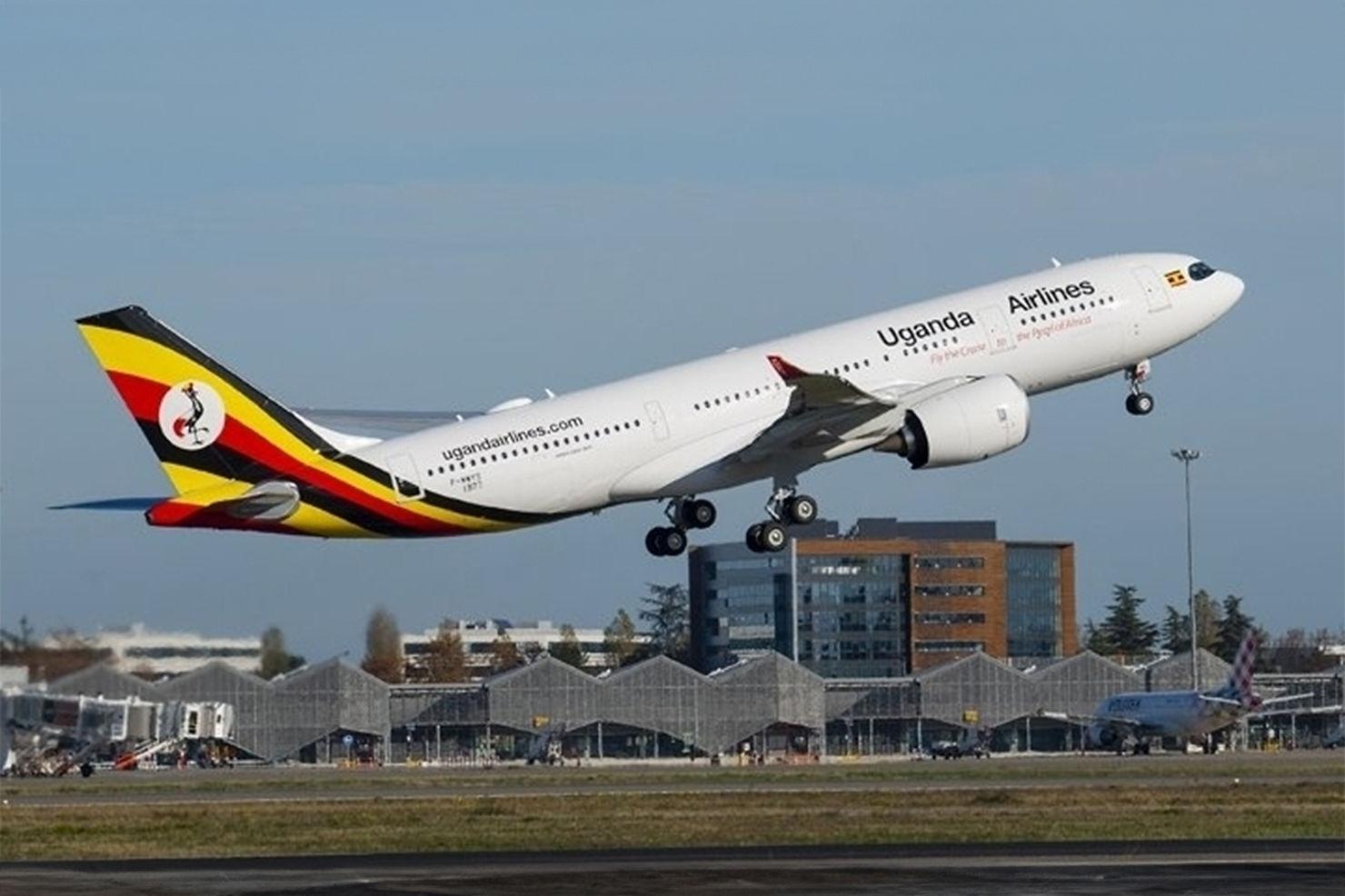
A fresh debate over the ownership of Uganda National Airlines Company Ltd, the operator of Uganda Airlines, has emerged following parliamentary scrutiny of the Auditor General’s report, with questions raised over how much of the airline is actually owned by the Government.
Media reports highlighting the airline’s share capital prompted some members of the public to conclude that the Government owns only 0.01 percent of the company, raising questions about who owns the remaining stake.


However, the 0.01 percent figure does not represent the Government’s actual ownership of Uganda Airlines. It arises from the difference between the company’s formally registered share capital and the much larger amount of money the Government has invested in the airline.
According to the Auditor General’s 2025 report, the Government had invested about Shs1.984 trillion in Uganda Airlines, but only Shs200 million had been recognised as share capital. The remaining funds were recorded as “Share Application Funds and GoU Capitalisation, pending formal conversion.”
Uganda Airlines is wholly owned by the Government, with its shares held equally by the Ministry of Finance, Planning and Economic Development and the Ministry of Works and Transport.
The controversy, therefore, is less about who owns the airline and more about how the Government’s substantial financial contributions have been reflected in the company’s legal and financial records.
How The 0.01 Percent Figure Emerged
The confusion is not entirely new.
When the airline was being established in 2019, government representatives acknowledged that some of the initial registration documents contained an error in the way the shareholders were listed.
The documents reportedly named then-Finance Minister Matia Kasaija and then-Minister of Works and Transport Monica Azuba as individual shareholders rather than indicating that the shares were held on behalf of the Government through their respective ministries.
Former Uganda Registration Services Bureau Registrar General Twebaze Bemanya later explained that the error was corrected, with the Government presenting revised allotment documents.
The corrected position established that the airline belongs to the State through the two ministries and not to the individual ministers.
The latest controversy has instead been triggered by the Auditor General’s observation that the company’s registered share capital remains far below the amount of money the Government has committed to the airline.
What The Auditor General’s Finding Means
The distinction between share capital and total government investment is important.
The Government can provide money to a state-owned company in different forms, including equity, loans, grants or capitalisation pending formal conversion into shares.
In Uganda Airlines’ case, the Auditor General found that a substantial portion of the Government’s funding had not yet been converted into formally recognised share capital.
This does not automatically mean that the Government does not own the airline. Rather, it indicates that the company’s formal equity structure has not yet been updated to reflect the scale of public money invested in it.
The issue nevertheless raises questions about financial reporting, corporate governance and accountability.
A company whose registered share capital is only Shs200 million while the Government has invested nearly Shs2 trillion requires clear documentation showing the legal and accounting treatment of the additional funds.
The Institute of Certified Public Accountants of Uganda has also raised concerns about the need for clarity in the treatment of such funds, noting that their classification can affect how the company’s financial position, value and liabilities are assessed.
Why Conversion Into Equity Matters
The conversion of the Government’s investment into share capital would provide a clearer picture of the State’s financial interest in the airline.
It would also strengthen the alignment between the company’s legal ownership structure and the resources committed to it by the Government.
Economist Fred Muhumuza has argued that equity financing can be an important tool for strengthening enterprises, although governments sometimes delay converting financial support into equity until a company encounters difficulties.
For Uganda Airlines, the conversion would require the necessary corporate resolutions and legal filings to increase the company’s authorised and issued share capital.
The changes would also need to be properly reflected in the company’s records and subject to the relevant government oversight procedures.
Until that process is completed, additional Government funding could continue to accumulate outside the formally recognised share capital.
Finance Minister Henry Musasizi has indicated that the Government remains committed to providing resources for the airline, including funding related to aircraft and other operational requirements.
Uganda Airlines Is Not An Isolated Case
The treatment of Government funding to Uganda Airlines is part of a wider pattern in which the State injects money into public enterprises through different financial arrangements.
For example, the Government provided Shs25 billion to Vision Group during a period of financial difficulty through convertible preference shares. Under such an arrangement, the Government receives a defined class of shares that can later be converted into ordinary shares under specified conditions.
The Government has also continued to inject capital into Uganda Development Bank as part of efforts to strengthen its lending capacity. Such funding is ultimately incorporated into the bank’s capital structure through the appropriate corporate processes.
Another example is Nyanza Textile Industries, where Parliament approved arrangements for Government credits to be converted into equity as part of efforts to revive the textile company. The arrangement resulted in the State acquiring a direct stake in the enterprise.
These examples demonstrate why the value of Government funding should not automatically be equated with the registered share capital at a particular point in time.
The Real Issue
The controversy surrounding Uganda Airlines therefore appears to have arisen from the interpretation of two different figures: the Shs200 million formally recognised as share capital and the nearly Shs2 trillion invested by the Government.
The first figure does not represent the Government’s total ownership of the airline.
Uganda Airlines remains fully owned by the Government through the Ministries of Finance and Works and Transport.
The more significant concern is whether the Government’s substantial financial investment has been properly documented, classified and converted into equity in accordance with the company’s legal and accounting requirements.
Addressing that gap would not change who owns Uganda Airlines, but it would provide greater clarity about the State’s financial interest, strengthen accountability and ensure that the airline’s corporate records accurately reflect the resources invested in it.







 English