



A conversation about Africa has been stuck in one place. It has been a conversation about what we borrow, what we import, and what others tell us to do. From how we run our governments to how we run our economies, from what we teach in our schools to the laws we use in our courts, we have too often looked outside for approval.
We have acted like an outpost for ideas made elsewhere. But true freedom can never live on light that belongs to someone else. When you live on borrowed light, you are at the mercy of the owner of that light. You depend on his mood, his power, and his interests. The world as it is today demands that we break this habit. We must stop waiting for answers from outside and start facing the real imbalances that have made our own wisdom look small.

To understand why Africa has struggled to move forward, we must look at the deep roots of dependency. For many years, the world believed one story about progress. That story said the West had already arrived, and everyone else simply had to copy what the West did. That was the only road to success. African countries were, therefore, given plans that were drawn in foreign capitals. Those plans assumed that we had nothing of our own. They treated our long histories and rich cultures as empty pages ready to be written over.
This is what it means to live by borrowed light. When the light that guides you comes from another place, your ability to see depends on someone else’s kindness. If that outside sun becomes weak, if it faces its own problems, or simply looks away, you are left in sudden darkness. And borrowed light never shines deep enough. It lights up the centre of the capital city, the big boardrooms, and the best universities for a few people, but it leaves most of our people in a dim zone where imported policies do not touch their real lives.
The cost of this has been huge. It has given us economies that show growth on paper but do not change the lives of ordinary people. It has given us politics where people cast votes but do not feel real power. It has given us schools that produce people who are only looking for jobs instead of people who can create new things and solve deep problems. To break out of this, Africa must stop looking outside for light and remember that what we need for a great rebirth is already here. It is in our soil, in our history, and in our people.
At the centre of our slow progress is an economy that was never designed to make us self-reliant. It was designed to take from us. The roads that were built long ago were built to carry minerals from deep inside the continent straight to the ships. The laws were built to protect foreign money, not local businesses. The tax systems were built to punish anyone who tried to add value at home. That old structure is still alive today, and it still hurts us.
For many years, powerful financial institutions told African states what to do. They said we must sell public property, cut support for poor families, and open our markets very quickly to goods that were already heavily supported abroad. They promised that this would bring factories and jobs. They said free markets and foreign money would naturally make us industrial.
What really happened was different. We were locked at the bottom of the world economy. We were pushed to keep selling cheap raw materials such as copper, gold, cocoa, and oil, only to buy back finished goods at prices we can hardly afford.
This is the great irony of our time. Africa holds the minerals that power every smartphone and computer. Africa holds the minerals that drive the green energy revolution. Africa feeds many parts of the world. Yet we still import phones, cars, medicine, and even food. The trap works by making our own leaders believe that we do not have the money, the skills, or the knowledge to process our own wealth ourselves.
To get out of this trap, we need a bold change in direction. Trading more among ourselves is not just an idea. It must become our way of life. The African Continental Free Trade Area must move from paper to real action on the ground. We must make laws that demand value addition at home. If you mine here, you must process it here. We must protect the ownership of our own ideas and resources. And we must build stronger ties with partners in the Global South who want to grow with us, not above us.
Beyond money and politics, there is another battlefield that is even more dangerous. It is the battlefield of the mind. For too long, knowledge has been pushed aside. Our own ways of thinking, healing, governing, and keeping peace have been called backward.
Our schools have remained museums of colonial life. A law student learns foreign law in great detail but knows nothing about the justice systems that kept our communities together for centuries. A history student is taught that Africa was discovered by outsiders, not that Africa was already building great kingdoms, trading across oceans, and creating deep philosophy. Even in science and security, we import answers from foreign experts that do not fit our land, our culture, or our reality.
A free people cannot think with a borrowed mind. True freedom must start in the classroom, in the laboratory, and in our cultural spaces. This does not mean we should close our doors to the world. It means we should meet the world with confidence in our own ideas. Our universities must stop being buyers of ideas from the North and become creators of ideas for all humanity. Our systems for running public affairs, keeping peace, and growing wealth must draw from our own deep wells.
We have powerful ideas of community, care for nature, and solving problems through long discussions until we reach agreement. When people begin to trust their own thoughts, they stop begging for permission to shape their future.
In matters of peace and power, the cost of borrowed light is felt most painfully. For many years, when conflict comes, when elections are tense, or when crime crosses borders, we have looked outside for soldiers, reports, and plans to bring peace. The message behind this is clear and insulting. It says Africans cannot keep their own homes safe without help from outside. This message ignores the truth. It ignores the fact that many of our worst conflicts started with borders drawn by outsiders, borders that cut through families, split kingdoms, and turned brothers into strangers.
A self-respecting Africa must take full control of its own peace. Relying on foreign bases, foreign reports, and foreign weapons has not stopped rebellions, terrorism, or coups. It has often made things worse. Real security must grow from the ground up. It must come from communities that trust the police enough to share what they know. It must come from strong regional forces that know our lands and our languages. It must come from justice that is close to the people, fair, and swift.
Our police, our armies, and our private security must leave behind the old model that was built to control Africans and build a new model that is designed to protect and serve Africans. It must be smart, use good information, and put people first. When African nations stand together to guard their own peace, they take away a tool that outsiders use to influence us.
To light its own flame, Africa must choose growth that starts from within. Growth is driven by our own people, using our own resources to meet our own needs and dreams. This calls for a new way to judge leaders and policies. Public office must no longer be seen as a way to get rich quickly or to be praised in foreign capitals. It must be seen as a sacred duty to our children and to those not yet born.
Governments must invest with courage in real research, science, and practical skills that give our young people power. Our continent is the youngest in the world. That youth is not just a number. It is a force. But that force must be equipped not just to find a place in the world economy, but to reshape it completely.
And our rise must also live in our culture. Today, the world is dancing to African music, reading African stories, and celebrating African art and film. This is soft power that no money can buy. But we must match it with strong institutions. Writers, thinkers, scientists, and builders must join hands to create one African spirit that is larger than the lines and languages left to us by colonial history.
The age of simply reacting to what others do is over. The age of being fooled by sweet words that hide unfair deals must end for good. For too long, our continent has been invited into partnerships that are not partnerships at all. We are offered small amounts of aid and big lectures while our riches leave in large ships. Real friendship between nations cannot be built on charity. It must be built on mutual respect and real exchange.
We are not looking for someone to manage our future for us. We do not need anyone to grant us permission to take our rightful place among the great. Our unity is unbroken from Cairo to Cape Town, from the busy markets of Dakar to the ancient hills of the East and the South. The resilience and genius of our people form one strong thread that cannot be broken.
In this moment, waiting for rescue or believing empty promises from abroad is a path to being left behind. The road ahead demands that we govern ourselves with courage, think for ourselves with pride, and keep our wealth for ourselves with wisdom.
Africa will not rise by walking on paths drawn by others. It will not shine by reflecting a sun that is fading far away. It will rise when we dare to face hard truths, reject unequal treatment, strike our own match against hard times, and light a flame that will burn for generations.
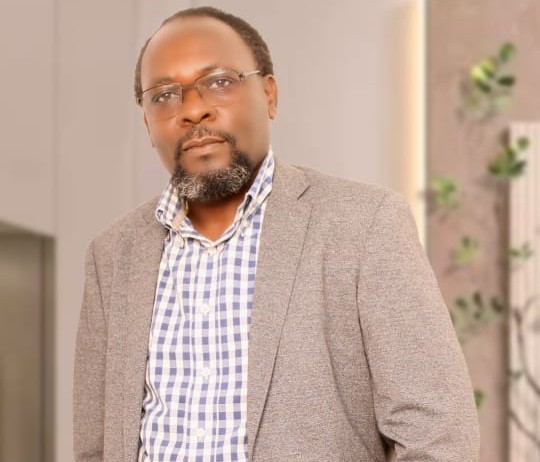
By Twiine Mansio Charles
CEO and Founder, The ThirdEye Consults (U) Ltd






 English