
















KALANGALA — For mothers admitted to the maternity ward at Kalangala Health Centre IV, a safe delivery is often the only thing on their minds. But for some, the journey to giving birth begins with another challenge: having the basic necessities needed during admission and delivery.
That reality came into sharp focus on September 29, 2026, when a birthday celebration was turned into an act of giving, with Ms Trish Riolah Ahabwe choosing to mark her birthday by supporting mothers at the health facility.


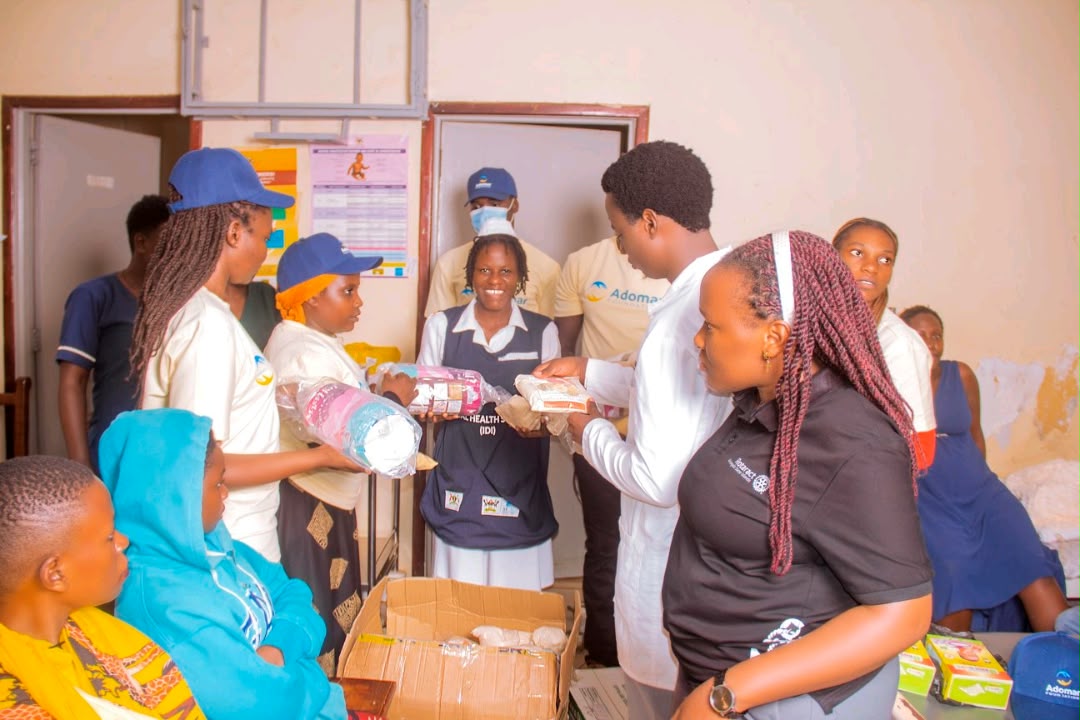
Through Adomar Foundation, Ahabwe partnered with the Rotaract Club of Kalangala District to donate essential items to expecting and inpatient mothers at the health centre, in an initiative aimed at supporting women through pregnancy, admission and delivery.
Rather than celebrate her birthday with a conventional gathering, Ahabwe chose to make the occasion about other lives, particularly mothers preparing to bring new lives into the world.
The intervention followed a needs assessment conducted by the Rotaract Club of Kalangala at the maternity ward. The assessment found that some mothers were admitted without basic necessities, including mama kits, which are important supplies for women preparing for delivery.
The findings provided a practical starting point for the partnership between Rotaract and Adomar Foundation.
For the organisers, the donation was therefore not simply a birthday gesture. It was an attempt to respond to an identified need in a health facility serving women in the island district.
“All of us were once babies; we are products of these mothers. So we have a duty as Ugandans and as Rotarians to support those who nurtured us,” said Allan Mutagubya, Immediate Past President of the Rotaract Club of Kalangala.
Mutagubya said maternal health remains one of the thematic areas of Rotaract, making the partnership with Adomar Foundation a natural extension of the club’s community outreach work.
“We are privileged to extend a hand to our mothers here at Kalangala Health Centre IV,” he said. “No one has ever become poor by giving. Giving is not about how much you have, it is about the heart.”
He described the donation as a beginning rather than a one-off intervention, expressing hope that the partnership would lead to larger efforts to support maternal health in Kalangala.
The significance of the intervention extends beyond the items donated.
Uganda has made progress in reducing maternal deaths, but the country continues to face challenges in ensuring that every woman has access to safe pregnancy and childbirth services.
According to the World Health Organisation, Uganda’s maternal mortality ratio stands at 189 deaths per 100,000 live births. Although this represents substantial improvement over the past decade, it remains considerably higher than the United Nations Sustainable Development Goal target of fewer than 70 maternal deaths per 100,000 live births by 2030.
Maternal deaths are rarely caused by a single factor. Complications during pregnancy and childbirth can be compounded by conditions such as malaria and anaemia, while health facilities can also face challenges involving supplies, equipment, infrastructure and referral systems.
The situation makes interventions at health-facility level particularly important, especially in communities where access to services and essential supplies can be constrained by geography and other socioeconomic factors.
For Kalangala, the geographical setting adds another dimension to the challenge. Ensuring that mothers receive the care and support they need requires not only trained health workers, but also adequate supplies and functioning systems that can respond when complications arise.
The needs assessment by the Rotaract Club offered a glimpse into one part of that broader challenge.
According to the club, some mothers arriving at the facility for admission did not have basic necessities, with mama kits identified among the most immediate needs.
It was this finding that helped transform a personal celebration into a community intervention.
For Adomar Foundation, the decision was also rooted in the belief that supporting mothers is ultimately an investment in the survival and future of children.
A representative of the foundation said the initiative followed the needs assessment and coincided with Ahabwe’s birthday, creating an opportunity to combine personal gratitude with community service.
“Due to a needs assessment that was communicated, one of our members, Ahabwe Trish Riolah, was celebrating her birthday, so she felt it was important to celebrate life while supporting more lives,” the representative said.
The representative told the mothers that their role goes beyond giving birth to individual children.
“We understand you as mothers. You are not only the mothers of the babies that you are carrying, but you are mothers of this nation,” the representative said.
“We believe every baby deserves a chance to live. So we can only celebrate life together with you because you are actually ushering in new babies that are going to take Uganda and the world forward.”
The foundation also acknowledged the work of health workers at the facility, whose responsibilities extend far beyond the moments when mothers eventually deliver.
“I take this opportunity to thank the in-charge and her team for working tirelessly to ensure safe delivery. We hope the little support offered will help the mothers in safe delivery,” the representative said.
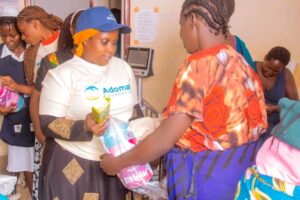
At the maternity ward, the intervention was welcomed by health workers who said mothers arrive at the facility under different circumstances and therefore require different forms of care and support.
Carol Nambwere, the maternity ward in-charge, said some of the women currently admitted at the facility are experiencing illness during pregnancy, while others are waiting to deliver.
“We currently have mothers who are admitted; some are sick while pregnant, and others are awaiting delivery. We hope for the best for all of them,” Nambwere said.
She thanked Adomar Foundation and the Rotaract Club for remembering the maternity ward and appealed to more well-wishers to support maternal health services.
“We are so happy that you thought of this department, that you thought of us. Thank you so much for coming to support our mothers,” she said.
The Kalangala initiative illustrates an important reality in the country’s maternal health debate: improving outcomes is not only about reducing deaths when complications occur. It is also about identifying and addressing the smaller, everyday barriers that women encounter before and during delivery.
A mother arriving at a health facility without basic supplies may not necessarily face a life-threatening emergency because of that absence. But when such gaps are repeated across facilities and communities, they become part of a wider picture of vulnerability.
ENDS.










 English