













Businessman Hassan Basajjabalaba has renewed his claim for compensation over a cancelled agreement to redevelop Kampala’s City Square, just as a fresh proposal to commercialise part of the public space triggers a new dispute over its future.
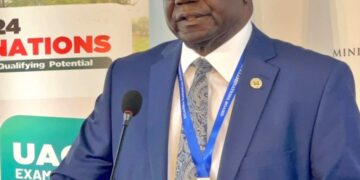
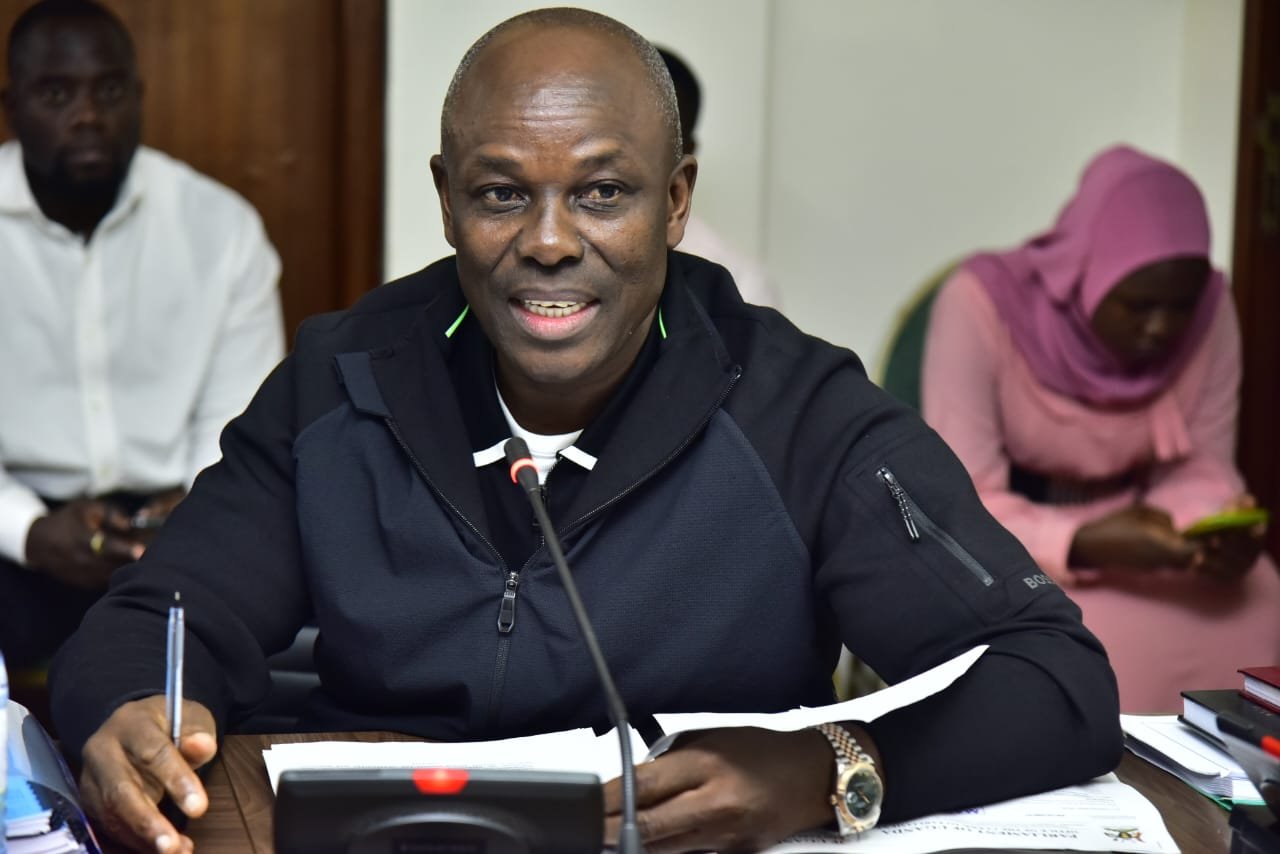
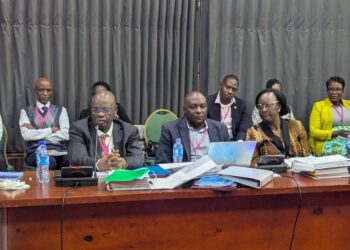
Basajjabalaba appeared before Parliament’s Committee on Commissions, Statutory Authorities and State Enterprises (COSASE) on Wednesday, where he told legislators that his company had secured a tender in 2001 to redevelop about 2.5 acres of the square.

According to Basajjabalaba, his company paid Shs1.635 billion to the then Kampala City Council as a premium under the agreement.
He said the proposed development was designed to retain the green space at ground level while placing the commercial facilities underground. The arrangement provided for an initial five-year lease starting in 2002, with an option to extend it for a further 49 years.
The agreement was later cancelled, becoming part of a broader dispute between Basajjabalaba’s companies and government over terminated market and property contracts.
The businessman told MPs that the emergence of a new proposal for the same area had surprised him, particularly because his claim arising from the earlier agreement remains unresolved.
The latest proposal was submitted by businessman Hajj Hassan Bulwadda, who wrote to President Yoweri Museveni on August 18, 2026, seeking permission to develop about two acres of City Square into what he described as an eco-friendly commercial complex.
The proposed project would include a hotel, shopping mall and other commercial facilities, with solar energy forming part of the planned power system.
On August 30, Museveni directed Minister for Kampala Capital City and Metropolitan Affairs Minsa Kabanda to examine the proposal in consultation with the Kampala Capital City Authority (KCCA) and report back to him.
The proposal has since attracted opposition from city leaders, with Kampala Lord Mayor Ronald Balimwezo Nsubuga arguing that City Square should remain an open public space.
Balimwezo has cited the square’s environmental, recreational and civic importance, as well as legal provisions concerning public land held in trust by KCCA. He has also argued that the city needs to preserve its remaining green spaces.
The renewed debate has consequently brought Basajjabalaba’s earlier agreement back into focus. His position before COSASE suggests that he could challenge any fresh allocation or development of the site while the compensation dispute arising from the cancelled agreement remains outstanding.
A long-running compensation dispute
The City Square disagreement is linked to a much wider and highly contested compensation saga involving Basajjabalaba’s Haba Group and the government.
Between 2000 and 2011, companies associated with Basajjabalaba entered into a series of contracts and leases with the then Kampala City Council covering several major markets, including Nakasero, Nakivubo-Shauri Yako, St Balikuddembe and Nakawa, as well as Constitutional Square.
After some of the agreements were terminated, the companies pursued compensation, resulting in payments and financial arrangements involving sums running into more than Shs140 billion. The transactions later became the subject of legal and parliamentary scrutiny.
The compensation dispute has also involved questions about the legality of the underlying contracts and the circumstances surrounding government-backed financing.
In September 2025, the Supreme Court overturned the Constitutional Court’s decision in litigation involving Basajjabalaba and Legal Brains Trust. The Supreme Court held that the Constitutional Court did not have jurisdiction because the case principally involved contested factual issues and enforcement matters rather than constitutional interpretation.
The ruling therefore dealt with the jurisdiction of the Constitutional Court and the legal route through which the dispute had been pursued. It did not itself determine that City Square should be redeveloped or allocate the site to any developer.
Battle over City Square
The latest controversy comes as City Square once again finds itself at the centre of competing interests.
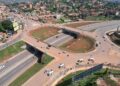
The site, located in central Kampala near major government institutions and the Independence Monument, has historically served as an important public gathering and open space.
Its strategic location has also made it attractive for commercial development. The current proposal by Bulwadda has revived questions about whether parts of the square should be preserved as public green space or opened to private development.
For now, the President’s directive requires the Kampala ministry and KCCA to examine the proposal and report back, meaning no final decision on the proposed development has been announced.
Basajjabalaba’s appearance before COSASE adds another layer to the dispute, with the businessman maintaining that the government’s handling of his earlier City Square agreement must be resolved before another developer can take over the same public space.








 English