

















Contractors implementing government-funded electricity projects have blamed persistent delays in government payments for slowing rural electrification, increasing borrowing costs, and forcing some companies into financial distress.
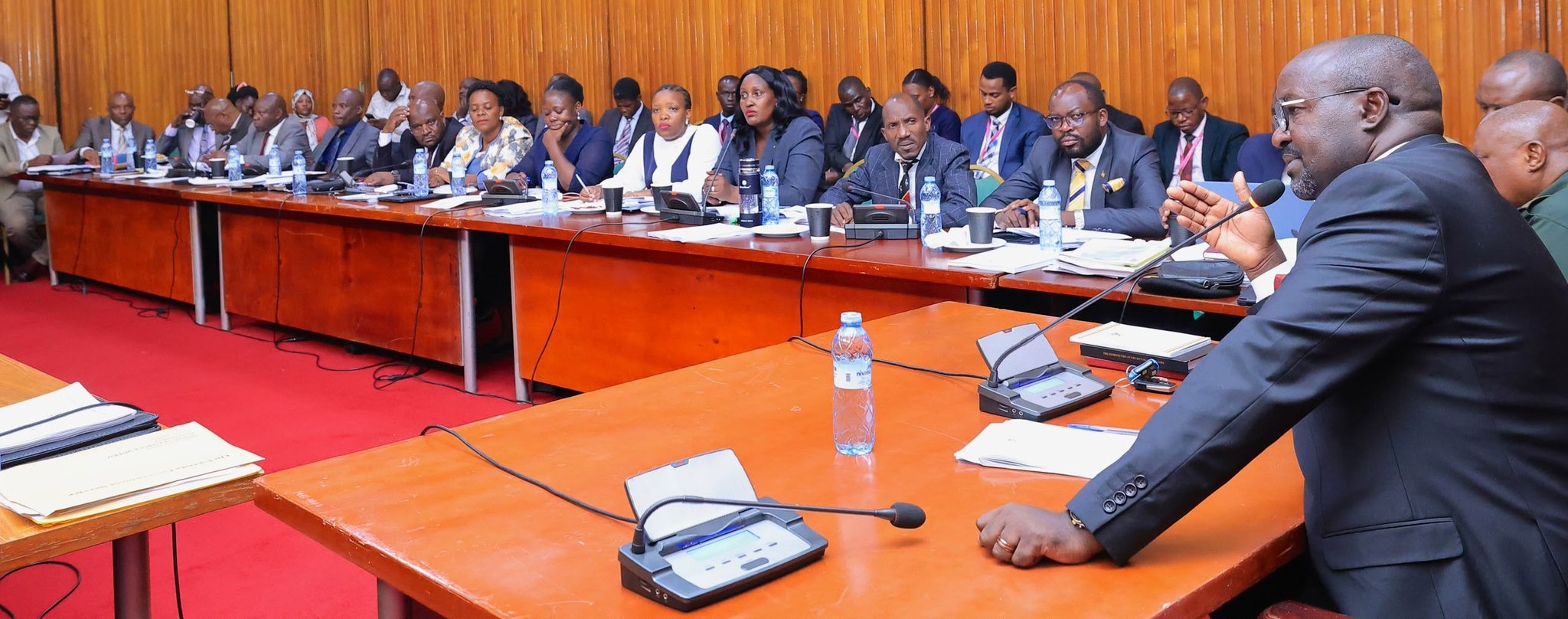
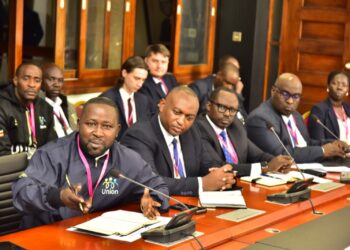
The concerns were raised before Parliament’s Public Accounts Committee (PAC) during scrutiny of the Auditor General’s report, which highlighted delayed electricity projects, abandoned works, financial losses and their impact on expanding access to power.

The meeting was chaired by Patrick Nsamba Oshabe and attended by officials from the Ministry of Energy and Mineral Development led by Permanent Secretary Eng. Irene Bateebe. Commissioner for Rural Electrification Eng. Abdon Atwine and representatives of several contracting firms also appeared before the committee.
A recurring concern among the contractors was the delayed settlement of certified interim payment certificates, which they said has disrupted project implementation and increased dependence on costly commercial bank loans.
Fredrick Tinka, Operations Manager at OnTrack Technical Services Uganda Ltd, told the committee that the company finances nearly 70 percent of its projects through bank borrowing, making timely government payments essential for smooth operations.
He explained that prolonged delays attract additional interest charges from lenders, significantly increasing project costs and eroding contractors’ financial capacity.
“We rely heavily on commercial bank financing. When government delays payment, banks continue charging interest, making the projects much more expensive to execute,” Tinka said.
He urged government agencies to honour agreed payment timelines or, where delays are unavoidable, communicate with contractors to allow them to plan accordingly.
While acknowledging that the COVID-19 pandemic affected the importation of transformers from Turkey, Tinka said financing challenges caused by delayed government payments have had a far greater impact on project completion.
According to him, by the time payments are eventually released, banks often recover a substantial portion of the money to settle outstanding loans and accumulated interest, leaving contractors without sufficient working capital to continue construction.
He added that although OnTrack has successfully completed several electrification projects, the company has struggled to secure new government contracts because its bids accurately reflect the rising cost of executing projects under the current financing environment.
Former Dakabela County MP and proprietor of C&G Group Ltd, Cosmas Elotu, told the committee that commercial banks have become increasingly reluctant to finance projects funded directly by the Government of Uganda.
He said lenders are more willing to support projects backed by development partners such as the World Bank because payments are considered more predictable.
“When banks realise a project is financed by the Government of Uganda, they become hesitant to provide credit facilities,” Elotu said.
He explained that without access to letters of credit, contractors are often forced to import expensive electrical equipment using cash, placing further pressure on their finances.
C&G Group disclosed that it is owed UGX 5.2 billion in unpaid certificates, in addition to approximately USD 2 million inherited from contracts undertaken under the former Rural Electrification Agency (REA).
Elotu appealed for increased government funding for rural electrification, arguing that prompt payment would enable local contractors to complete projects more efficiently and at a lower cost.
Representatives of Global Komolo Joint Venture recounted a similar experience. The company was awarded a UGX 12.1 billion rural electrification contract in 2019 covering Butambala, Gomba, Masaka, Lwengo, Kiruhura and Rakai districts.
Company spokesperson Tom Oluka said the firm completed about 70 percent of the works before payment delays led to loan defaults.
He told MPs that accumulated bank penalties had reached about UGX 3.5 billion by the time government settled the certified payments.
The financial burden prevented the company from completing the remaining works, forcing government to engage another contractor to finish the project.
Babcon Uganda Ltd also cited mounting financing costs, saying it lost about UGX 2 billion in bank interest while implementing the UGX 28 billion Muzizi substation project, whose completion period stretched from the planned 18 months to nearly four years.
Silver Technical Services Ltd informed the committee that it waited for more than a year to receive payment for a UGX 5.2 billion interim payment certificate submitted in March 2025. The company said the money was eventually released in instalments over an extended period.
Responding to the concerns, Permanent Secretary Eng. Irene Bateebe acknowledged that delayed payments are largely a result of inadequate government funding.
She said the ministry received only UGX 35 billion for government-funded rural electrification projects during the previous financial year, an amount far below what was required to meet contractual obligations.
Bateebe, however, welcomed Parliament’s decision to increase the allocation for the current financial year to UGX 161.15 billion, saying the programme requires about UGX 200 billion annually to eliminate unpaid certificates and prevent project delays.
She noted that once funds are available, the ministry is able to process certified payment certificates within one to two months through the established certification, audit and payment procedures.
Committee Chairperson Patrick Nsamba Oshabe urged the ministry to strengthen coordination with Members of Parliament and local leaders throughout project implementation to minimise disputes over project scope and improve accountability.
Committee members also questioned reductions in project scope, vandalism of electricity infrastructure, overloaded transformers and the continued lack of electricity in some communities located near completed substations and hydropower facilities.
MPs further sought an explanation for why several contractors with proven performance records have struggled to secure new government contracts, while others previously criticised for poor performance or abandoning projects continue to receive government work.








 English