
















Makerere University has launched electronic academic transcripts and certificates, allowing graduates to access their academic documents online while enabling employers and other authorized institutions to verify credentials digitally.
The initiative, which the university says marks a major milestone in modernizing academic service delivery, is part of a wider digital transformation agenda aimed at improving efficiency, reducing bureaucracy and expanding access to higher education services.

Makerere University Academic Registrar Prof. Mukadasi Buyinza said the new system will eliminate the need for graduates to repeatedly visit the university offices to collect certified copies of their academic documents.
“The new e-transcripts and certificates will enable graduates to access their academic documents electronically while allowing employers and other third parties to verify their authenticity online with the graduate’s permission,” Buyinza said.
He explained that the digital certification system will enhance the security, credibility and accessibility of academic records while making verification processes faster for graduates, employers and institutions.
The launch of e-certification comes as Makerere expands its use of technology in teaching and administration. Buyinza said the university has fully embraced blended learning, combining traditional classroom teaching with online instruction across its programmes.
He added that the institution is also developing fully online degree programmes that will enable students from different parts of the world to study remotely and obtain Makerere qualifications without necessarily being physically present on campus.
“The university is adopting smarter and more efficient approaches to deliver education while widening access to higher learning,” Buyinza said.
As part of its academic reforms, Makerere will introduce revised curricula beginning in the 2026/2027 academic year in line with the government’s directive to shift from theory-based learning to Competency-Based Education and Training (CBET).
The new approach is expected to focus more on practical skills development, preparing graduates with competencies that match industry needs and improve their employability.
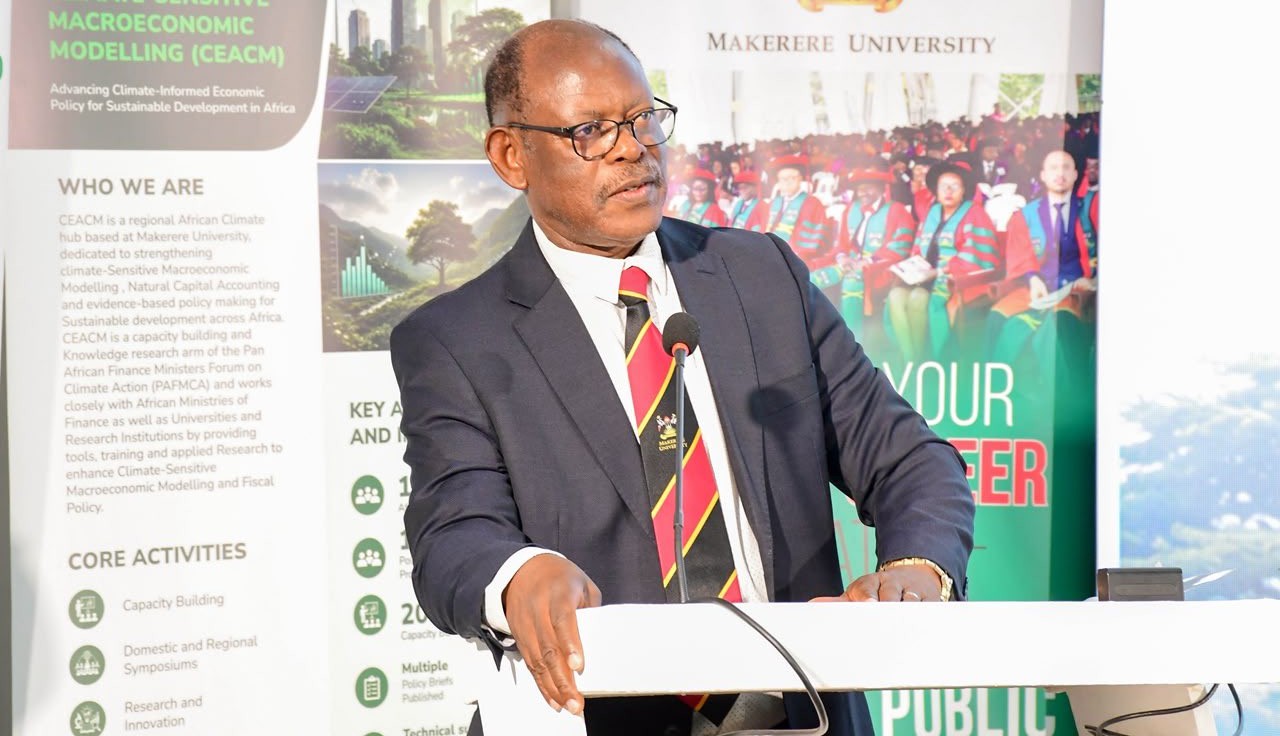
Meanwhile, Makerere Vice Chancellor Prof. Barnabas Nawangwe has dismissed concerns over a shortage of lecturers at the university, saying the institution remains among the best-staffed universities on the continent.
Speaking during an update on Makerere’s 2025–2030 Strategic Plan, Nawangwe said the university currently has about 32,000 students and approximately 1,400 teaching staff, including 1,100 lecturers holding doctoral qualifications.
He said this translates into a lecturer-to-student ratio of about one lecturer for every 21 students, which he described as better than the international benchmark of one lecturer for every 35 students.
Nawangwe said the high number of PhD-qualified academic staff has strengthened Makerere’s research capacity, enabling the university to compete favourably in international academic and research rankings.
He also rejected claims that the university has halted recruitment and promotions, saying Makerere continues to strengthen its workforce through strategic appointments and staff development.
“The university continues to make significant strides in building a robust and motivated workforce through strategic recruitment, appointments and promotions,” Nawangwe said.
He noted that the university’s Appointments Board has continued approving promotions and appointments to key academic leadership positions, including deans and heads of departments, while recruiting academic, administrative and support staff to fill critical gaps.
Although retirements and natural staff attrition continue to create vacancies, Nawangwe said Makerere remains committed to replacing departing employees and attracting highly qualified personnel as it implements its strategic plan.








 English