














Jailed opposition figure Kizza Besigye and his co-accused Hajji Obeid Lutale have moved to the High Court Criminal Division seeking to have terrorism-related charges against them dropped, arguing that their prosecution is tainted by serious violations of their constitutional rights.
Through a fresh application filed under Miscellaneous Application No. 922 of 2026, arising from Criminal Session Case No. 335 of 2025, the two contend that the entire criminal process should be terminated due to alleged unlawful arrest, mistreatment in detention, and public comments they say have compromised judicial fairness.

They also cite the Muhoozi Kainerugaba, Chief of Defence Forces, among the respondents, alongside senior UPDF officers and the Attorney General. The applicants argue that statements allegedly made by Muhoozi on social media amount to prejudgment of their case and threats against their lives, which they say undermine the presumption of innocence and the independence of the court.
According to their filing, Besigye and Lutale claim they were forcibly removed from Nairobi, Kenya, on November 16, 2024, while attending a public event hosted by Kenyan politician and lawyer Martha Karua. They allege that Ugandan security personnel carried out the transfer without formal extradition procedures and later detained them incommunicado before producing them in court.
The duo further alleges that they were held at Makindye Military Barracks, denied access to lawyers, family members, and medical care, and subjected to treatment that violates constitutional safeguards against torture and arbitrary detention.
Their lawyers also argue that their continued prosecution contradicts the Supreme Court ruling in Attorney General vs Michael Kabaziguruka, which limited the trial of civilians in military courts, questioning the legality of proceedings that initially involved a military tribunal.
Central to their application are claims that Muhoozi made repeated public remarks on X (formerly Twitter) that, according to court filings, suggested predetermined guilt and threatened extrajudicial punishment. The defence says such statements have created a hostile environment that makes a fair trial impossible.
They further argue that delays in disclosure of prosecution evidence and prolonged pre-trial proceedings have weakened the integrity of the case and contributed to what they describe as an unfair judicial process.
In an affidavit supporting the application, human rights lawyer Tumusiime Kakuru states that the combined effect of alleged unlawful arrest, detention conditions, and public commentary has rendered continuation of the trial unjust. The applicants are therefore seeking orders to nullify all proceedings, secure their release, and obtain medical and psychological treatment.
The Attorney General of Uganda and other respondents had not yet filed their responses at the time the application was lodged, according to court records.
Meanwhile, in separate proceedings before Justice Emmanuel Baguma, defence lawyers raised concerns over what they described as the accelerated pace of the treason trial, particularly the appointment of assessors ahead of full pre-trial resolution.
Court-appointed assessors—John Musana, Sarah Babirye, and Richard Okello—were selected to assist the judge in evaluating evidence, though their opinions are not binding on the final decision. The court confirmed that their details would be shared with the defence before they take oath.
Justice Baguma also directed court administrators and security officials to improve access arrangements for relatives, elderly persons, and other visitors, citing space constraints in the courtroom.
Prosecutors, led by Assistant Director of Public Prosecutions Thomas Jatiko and Chief State Attorney Richard Birivumbuka, are expected to present the first prosecution witness on June 11, 2026.
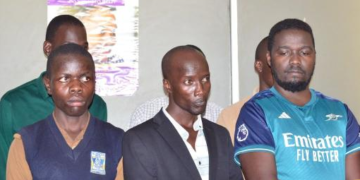
Besigye, Lutale, and Captain Denis Oola remain on remand as they face treason charges. The prosecution alleges that the group held meetings in several international locations, including Geneva, Athens, Nairobi, and Kampala, where they allegedly planned to mobilize resources, recruit fighters, and coordinate destabilization activities against the government of Yoweri Museveni.
State prosecutors further allege that the accused engaged with foreign contacts and attempted to acquire weapons and other prohibited materials, claims the defence continues to challenge in court.




 English