














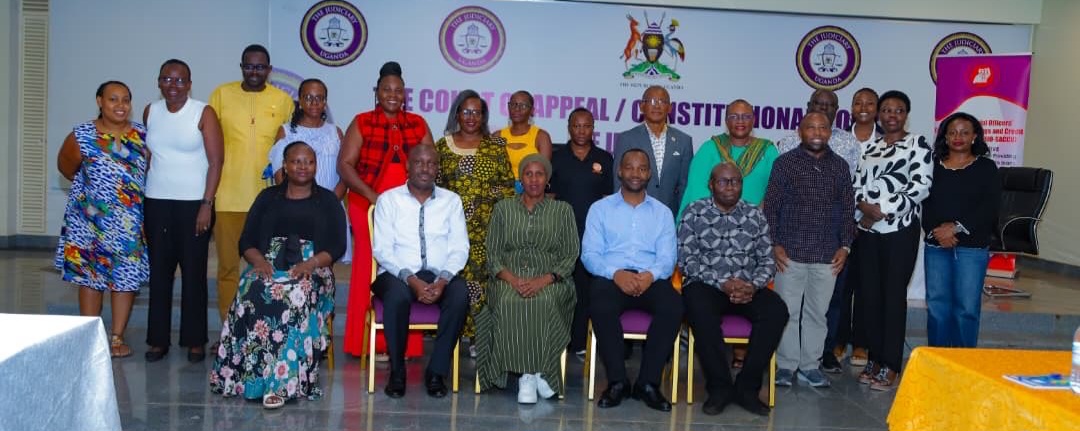
The Uganda Judicial Officers Savings and Credit Cooperative Organisation (UJO-SACCO) has elected Lady Justice Mary Kaitesi Kisakye as its new Chairperson during the SACCO’s Elective Annual General Meeting held in Kampala.
Justice Kisakye takes over from Justice Boniface Wamala and is expected to steer the institution toward expanding savings, strengthening investments, and improving financial services for judicial officers across the country.


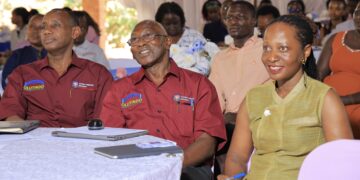
The elections took place at the Court of Appeal Conference Hall on Saturday, where members gathered to review the SACCO’s performance and chart strategies for future growth and sustainability.
Other officials elected to the Executive Committee include His Worship Dr Alex Karocho Mushabe as Vice Chairperson, His Worship Timothy Lumunye as Treasurer, and Her Worship Jessica Chemeri as Secretary.
Lady Justice Linda Lillian Tumusiime Mugisha was elected to represent Justices and Judges, while Her Worship Naume Sikhoya will represent Registrars and Chief Magistrates. Her Worship Evelyn Najjuko was elected to represent Magistrates, and His Worship Charles Yeteise will represent retired judicial officers.
Justice Geoffrey Kiryabwire retained his position as Chairperson of the Supervisory Committee, assisted by Her Worship Marion Ninsiima and Her Worship Sheila Fiona Angura.
Speaking shortly after her election, Justice Kisakye thanked members for entrusting her with the leadership of the SACCO and pledged to build on the progress achieved by the outgoing administration.
“We will continue strengthening the SACCO and improving services for members. Together with the new committee, we shall work to take the institution to another level,” she said.
The leadership transition comes as UJO-SACCO marks 13 years of operations supporting judicial officers through savings mobilisation, affordable credit, and investment opportunities.
In his farewell remarks, outgoing Chairperson Justice Boniface Wamala highlighted steady growth registered during the 2025 financial year. He revealed that membership increased from 338 to 351 members, while the SACCO’s loan portfolio rose from Shs1.84 billion to Shs2.259 billion.
He also noted growth in savings, share capital, and total assets, attributing improved loan recoveries to the introduction of standing orders.
Justice Wamala announced that members would earn annual interest of 10 percent on their savings, in addition to a recommended dividend payout of Shs5,000 per share following the SACCO’s financial surplus.
Despite the progress, he cautioned that the institution still faces challenges, including low participation in some savings schemes, delayed contributions, inadequate savings, and loan repayment defaults caused by cancelled or unfunded standing orders.
“The SACCO still has enormous untapped potential,” Justice Wamala said, urging members to embrace a stronger culture of saving and active participation.
Justice Geoffrey Kiryabwire also challenged members to adopt a long-term vision for the institution and increase their involvement in SACCO activities.
“You cannot build cooperation without active cooperators. Out of the 351 registered members, only a small fraction consistently participates in SACCO programmes,” he observed.
He encouraged the institution to pursue ambitious expansion plans and draw lessons from successful regional cooperatives such as Kenya’s Sheria SACCO.
Lady Justice Olive Kazaarwe Mukwaya, President of the International Association of Women Judges Uganda Chapter, urged judicial officers, especially women, to prioritise saving and investing through cooperative structures.
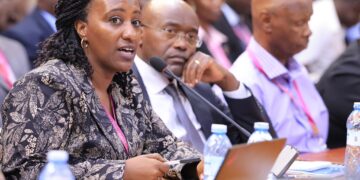
Members attending the AGM proposed stronger financial literacy programmes, tailored savings products for housing, education and retirement, as well as the introduction of a dedicated “SACCO Month” aimed at increasing mobilisation and savings awareness.
The meeting ended with recognition awards for outgoing Executive Committee members and expressions of optimism that the SACCO’s new leadership will further strengthen the institution’s role in promoting financial empowerment within the Judiciary.






 English