


















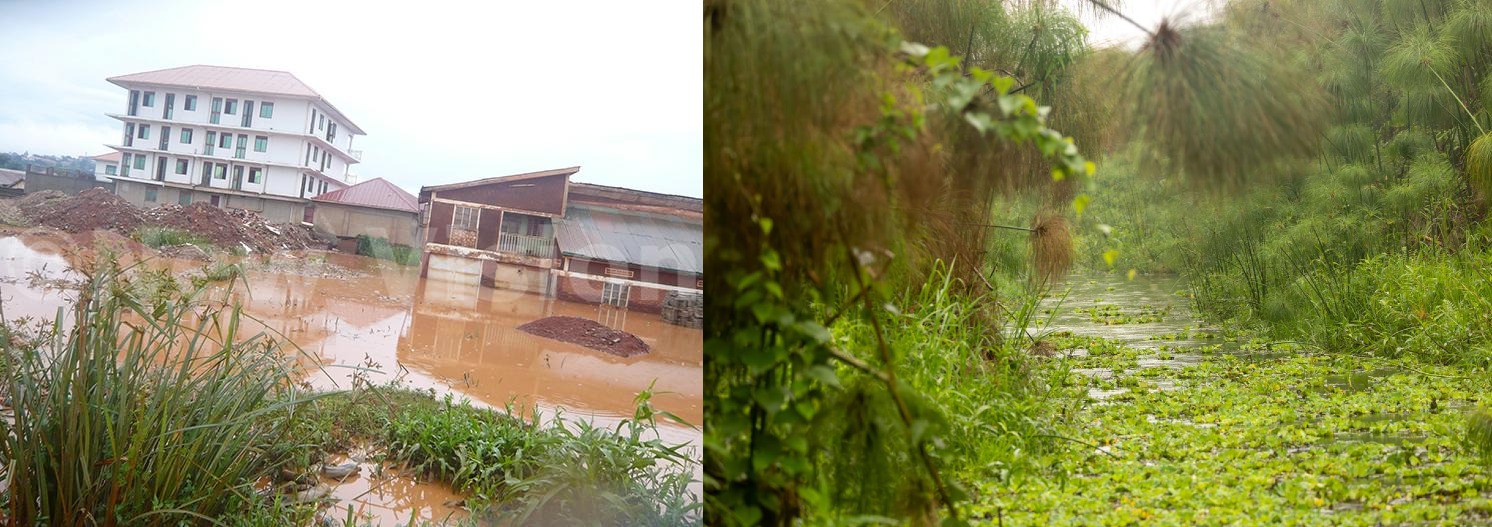
The government has intensified its crackdown on illegal developments in wetlands, with authorities warning that a school in Seeta, Mukono District, could soon be demolished for encroaching on protected land.
The Minister of Water and Environment, Sam Cheptoris, announced that the enforcement exercise will begin next week and will target all structures built in wetlands, regardless of the owners’ social or economic standing.


Speaking at the National Performance Review Conference held at Speke Resort Munyonyo, Cheptoris emphasized that the government is taking a firm stance to restore degraded ecosystems and prevent further environmental damage.
“We are not going to spare anyone. Whether it is a private developer, an institution, or an individual, all illegal structures in wetlands must be removed,” he said.
The minister specifically pointed to a school in Seeta that was constructed within a wetland, noting that it poses a significant threat to the natural drainage system and surrounding communities.
He explained that such developments disrupt water flow, increase flooding risks, and contribute to long-term environmental degradation.
Wetlands play a critical role in Uganda’s ecosystem by filtering pollutants, controlling floods, and supporting biodiversity.
However, rapid urbanization, especially around Kampala and its suburbs like Mukono, and Wakiso has led to widespread encroachment, with residential, commercial, and institutional structures increasingly being established in these fragile areas.
Environmental experts have repeatedly warned that continued destruction of wetlands could worsen flooding in low-lying areas and strain the country’s water resources.
In recent years, parts of Kampala and Wakiso have experienced severe floods, partly attributed to blocked or degraded wetlands.
Cheptoris noted that the upcoming demolition exercise is part of a broader government strategy to reclaim and restore wetlands across the country.
He added that enforcement teams will work alongside local authorities and environmental agencies to ensure compliance.
While the move is expected to face resistance from affected property owners, the government insists that the long-term environmental and public safety benefits outweigh the immediate disruptions.
Local leaders in Mukono have called for clear communication and, where possible, support for institutions like schools that may be affected, particularly to ensure that learners are not abruptly displaced.
As the deadline approaches, attention is now turning to how the demolition exercise will be implemented and whether it will mark a turning point in Uganda’s efforts to protect its shrinking wetlands.









 English