

















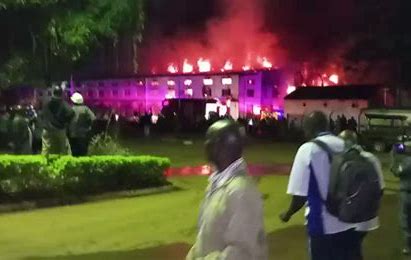
In the aftermath of a recent fire outbreak at Kakira Sugar Works Limited, fire and safety authorities are urging sugar mill operators across the country to install modern fire surveillance and detection systems to prevent similar incidents involving bagasse.
The fire, which started at around 1:00 p.m. in the bagasse storage area, is believed to have been triggered by excessive heat accumulation.


Bagasse is a dry, fibrous byproduct of sugarcane used as a biofuel for generating electricity and heat.
While valuable for energy production, it is highly flammable and poses a significant fire hazard if not properly managed.
Although no injuries were reported and operations continued without disruption, it took firefighters over 16 hours to completely extinguish the flames.
According to James Mubi, spokesperson for the Kiira Region Police, the nature of bagasse made the fire difficult to control and slow to die out.
“Bagasse is highly flammable and takes a long time to be completely extinguished,” Mubi explained. “This is why the firefighting team had to remain on the scene for such an extended period.”
The firefighting effort, led by Manisul Isabirye, the regional commander of the Fire and Rescue Services Department, was supported by the internal safety department of Kakira Sugar Works.
Their joint response significantly reduced potential damage and ensured the safety of workers and facilities.
In a statement, Mubi emphasized the importance of proactive safety measures to prevent future incidents.
He advised sugar mill operators to implement comprehensive systems for monitoring heat and moisture, installing fire suppression mechanisms, and establishing early fire detection protocols.
“The management should always monitor for heat and moisture, install fire suppression systems, and put in place early fire detection measures to minimize damages and risks of self-ignited fires within the bagasse shades,” Mubi stated.
Patel Van Greunen, General Manager of Kakira Sugar Works, confirmed that the fire did not affect the company’s operations.
“We did experience a small fire in our bagasse heap, which was extinguished without any damage to equipment and without interrupting either sugar production or power generation. No one was injured,” he said.
Bagasse is considered an environmentally friendly energy source since it converts agricultural waste into usable energy.
However, this benefit comes with increased responsibility for ensuring safe storage and handling practices.
Experts warn that spontaneous combustion of bagasse piles is a known risk and must be addressed with modern technological solutions.
In light of the Kakira incident, fire and rescue officials are calling on the Ministry of Energy and Mineral Development and the Uganda National Bureau of Standards to develop and enforce regulations that mandate the use of fire detection and surveillance systems in all sugar mills.
“The safety of workers and infrastructure must be prioritized. Technological upgrades are not optional; they are a necessity,” said Mubi.
As Uganda continues to embrace renewable energy initiatives, industry players must ensure that safety measures evolve alongside production technologies.
The recent fire is a strong reminder that sustainability requires not just innovation, but also vigilance and preparedness.










 English