


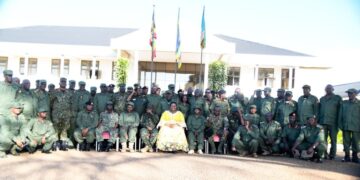
















A retired senior Nigerian military officer and his wife have been kidnapped by armed men in north-west Nigeria, the army has confirmed.
Maj Gen Rabe Abubakar, who held the high-profile role of military spokesman between 2015 and 2017, was abducted from his car on Saturday while travelling in Katsina State.


Efforts are now under way to rescue the couple and track down their captors, military spokesman Gen Michael Onoja told the BBC.
The kidnapping highlights the continuing security challenges facing parts of north-west Nigeria, where criminal gangs known locally as “bandits” frequently carry out kidnappings for ransom, as well as cattle rustling and attacks on rural communities.
Some militant jihadist groups have also operated in the region. An alleged militant camp in Sokoto State was targeted in a US airstrike on 25 December last year.
Katsina has been one of the states most affected by the violence.
Zamfara State, which borders both Katsina and Sokoto, has experienced years of similar violence, with some communities previously attempting to make peace with armed groups. However, those efforts have largely failed to bring lasting stability.
The government has intensified efforts to curb kidnappings, including introducing measures aimed at discouraging ransom payments. However, attacks have continued.
No group has claimed responsibility for Saturday’s abduction, and the army said it is still waiting for the kidnappers to contact the family.
Local reports say the retired general was travelling to Katsina for a wedding when gunmen attacked his vehicle.
Abubakar’s driver reportedly escaped despite being hit by gunfire, while the former military spokesman and his wife were taken by the attackers into a nearby forested area.
The abduction comes days after another deadly attack in Katsina State. On Friday, armed men reportedly raided Kiliya village in Dutsinma Local Government Area, killing at least 16 people.
Police have not yet commented on the reported killings.
Residents said the attack happened shortly after Friday prayers, as people gathered to celebrate the Eid al-Adha holiday.
Security agencies had issued warnings about possible attacks during the celebrations, prompting some state governments to introduce measures aimed at limiting large public gatherings and strengthening security.











 English