



















The launch of Uganda’s first fully-fledged gold refinery in Kampala has been hailed as a transformative development for artisanal miners, many of whom have long grappled with fraud and exploitation in the country’s informal gold trade.
Joseph Dave Mwebesa, who has worked in artisanal mining for over a decade in Busia and Mubende, said the new refinery offers a long-awaited sense of protection and stability.
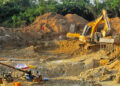

“We’ve been conned by fake buyers too many times. This refinery gives us a secure and legal space to sell our gold,” he noted.
The facility, known as Euro Gold Refinery, is owned by entrepreneur Feni Benard and supported by investors from the United Kingdom, United Arab Emirates, and India.
It plans to purchase gold directly from small-scale miners in districts such as Busia, Karamoja, Buhweju, Kassanda, and West Nile.
Feni Benard emphasized that the refinery, situated on Katego Road in Kamwokya, has received endorsement from the London Bullion Market Association (LBMA)—the global authority on gold and silver standards.
He said the refinery will not only ensure fair trade for miners but will also contribute to reducing fraud and generating employment.
The facility offers a full range of services including assaying, smelting, refining, and support for international mineral trade.
In addition to its refining operations, Euro Gold Refinery has secured government concessions to mine gold in Yumbe District over a 79.8 square kilometer area, and in parts of Karamoja, solidifying its footprint in the sector.
The company also holds a mineral refining license and a dealer’s license, further legitimizing its activities.
During the official commissioning in July 2025, Energy and Mineral Development Minister Dr. Ruth Nankabirwa Ssentamu lauded the refinery as Uganda’s first officially recognized facility of its kind.
She encouraged the company to prioritize local capacity-building and align with the Bank of Uganda, which has launched a Domestic Gold Purchase Programme aimed at boosting foreign reserves through refined gold acquisitions.
Authorities expect the new refinery to play a key role in closing tax loopholes and minimizing gold-related scams.
Earlier in February 2025, CID Deputy Director Beata Chelimo identified gold scams as one of the country’s most rampant forms of organized crime.
She reported that over 24 security officers had been apprehended for involvement in syndicates deceiving investors with bogus gold deals.

In a separate development, the 2024 Auditor General’s report revealed that gold exports worth $3.014 billion—approximately UGX 11 trillion—had been carried out illegally, without proper authorization from the Ministry of Energy and Mineral Development.
These actions violated Section 149 of the Mining and Minerals Act, prompting renewed calls for regulation.
President Yoweri Museveni, who banned the export of unrefined minerals after signing the Mining and Minerals Bill in 2021, had previously disclosed in his 2022 State of the Nation Address that Uganda possesses an estimated 31 million metric tonnes of gold, with 320,000 metric tonnes of pure extractable gold valued at $12.8 trillion.
Gold now leads Uganda’s export portfolio. By February 2025, the mineral accounted for 37% of total export earnings, and by June 2024, the country had exported $3.09 billion worth of gold, making it the dominant force among Uganda’s non-coffee exports.
The sector has also become a critical source of employment. Data from planetGOLD indicates that between 400,000 and 600,000 people are directly employed in artisanal and small-scale mining (ASM), with another 2 million indirectly benefiting.
Despite growing efforts toward mechanization, many miners still depend on traditional methods.
With the Euro Gold Refinery now operational, Uganda is taking a bold step toward formalizing its gold sector, increasing transparency, and securing the livelihoods of thousands across the mining value chain.





 English