




President Yoweri Kaguta Museveni has outlined six key pillars that he says will guide Uganda’s next phase of development, following his unopposed nomination by the National Resistance Movement (NRM) Electoral Commission to contest in the 2026 general election.
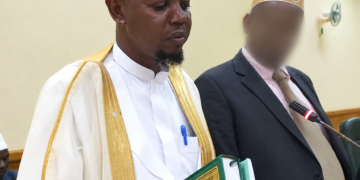
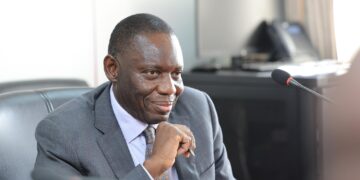
Earlier in the day, Dr. Tanga Odoi, Chairperson of the NRM Electoral Commission, officially nominated Museveni at the party’s headquarters in Kampala as both the NRM’s presidential flag bearer and party chairperson—a position he currently holds. Museveni faced no challengers in either race.


In his address shortly after the nomination, the President thanked his legal team and seconders who mobilized endorsement signatures across all districts, saying the effort reflected deep grassroots support.
He then outlined six foundational pillars for Uganda’s transformation: peace, development, wealth creation, job creation, access to essential services (such as healthcare and education), and spirituality.
“These are the cornerstones of sustainable growth and long-term national stability,” Museveni said, warning against threats to peace and security, which he described as “prerequisites for development and wealth creation.”
On poverty, the President emphasized that it is an individual, not collective, condition. While the government provides infrastructure and public services, he argued that citizens must take personal initiative to pursue wealth.
Museveni acknowledged that, despite national progress, poverty persists—particularly in urban ghettos. He attributed this to a widespread dependency on government employment, especially among youth, urging them to seek opportunities in the private sector instead.
He warned that private investors continue to face operational hurdles that could drive them away, calling for reforms to create a more conducive environment for business and job creation.
Calling for reasoned political engagement, Museveni urged Ugandans to evaluate leadership based on historical experience and practical outcomes, not sentiment.
He recalled the post-independence political turmoil from 1962 to 1971, during which state institutions collapsed, culminating in the murder of Chief Justice Benedicto Kiwanuka.
Museveni credited the NRM government—since its ascent to power in 1986—with stabilizing the country and driving modernization. He pointed to advancements in infrastructure, economic diversification, and value addition in sectors like agriculture, industry, mineral processing, and automobile manufacturing.
According to the President, Uganda’s economy has expanded 16 times since 1986, lifting the country out of the Least Developed Countries category. However, he warned that further progress depends on the fight against corruption.
He projected that Uganda could soon reach middle-income status, with a GDP of 500 billion shillings—what he termed a “qualitative leap”—if governance issues are tackled.
Museveni also revealed increased interest from global investors, particularly in gold refining and jewelry manufacturing, citing Uganda’s high-grade gold reserves.
As he seeks another term in office, Museveni called for divine guidance and reaffirmed his commitment to working with NRM structures to ensure Uganda seizes its place in the global transformation that previously bypassed Africa during Europe’s industrial revolution.
With his nomination secured, Museveni now awaits competition from candidates nominated by other political parties ahead of the 2026 general elections.





 English