
















There is something almost liturgical in the way Washington and Tel Aviv recite the commandments of the so called rules based order.
The cadence is solemn. The vocabulary is sanctified. Sovereignty, security, democracy, deterrence are invoked as though they descend from some geopolitical Mount Sinai.

The words arrive robed in virtue and burnished with moral certainty. Yet when the incense clears and the smoke of rhetoric dissipates, what remains is not revelation but wreckage. Not covenant, but crater. Not peace, but a silence haunted by sirens.
This is the gospel they preach. That intervention is salvation. That bombs are instruments of peace. That sanctions are expressions of compassion.
That defiance of American and Israeli strategic will is a form of heresy requiring correction. The sermon is always the same.
The congregation is global. The offering plate is filled with other nations’ sovereignty, and the tithe is paid in blood and broken institutions.
The scripture of this doctrine opens, in its modern Middle Eastern chapter, in 1953. Iran’s democratically elected Prime Minister, Mohammad Mossadegh, committed the unpardonable sin of nationalizing oil resources.
He dared to suggest that Iranian wealth should belong to Iranians. The response from Washington was not applause for self-determination but orchestration of removal.
A CIA backed coup reinstalled the Shah, compliant and cooperative, restoring a monarchy more amenable to Western strategic and economic interests.
The message was engraved into the political memory of the region with indelible clarity. Sovereignty is respected until it becomes inconvenient.
They did not call it imperialism. They called it stability. They did not call it interference. They called it strategic necessity.
The vocabulary was gentle. The consequences were not. That single act did not fade into archival dust. It fermented into revolution, resentment, and the adversarial architecture that defines United States and Iranian relations to this day.
History does not forget coups simply because press releases grow old. It stores them in the bloodstream of nations.
Half a century later came Iraq in 2003, the high mass of interventionist theater. The administration of George W. Bush assured the world that weapons of mass destruction lurked in the desert. The evidence was described as certain.
The threat was declared imminent. The invasion began with fireworks broadcast live, marketed as liberation and framed as the enforcement of international norms.
Baghdad fell. Ministries burned. The statues collapsed before the institutions did. The weapons were never found.
What was found instead were mass graves, sectarian fragmentation, insurgency, and a region destabilized in ways that still convulse global politics.
The architects of that invasion spoke of democracy while dismantling a state without constructing a viable successor. They preached security while cultivating extremism in the vacuum they created.
They invoked the authority of the United Nations while sidestepping its Charter when it proved inconvenient.
And when the central claim collapsed under the weight of its own fabrication, accountability evaporated into bureaucratic amnesia. One could almost admire the audacity if the human cost were not so staggering.
Libya in 2011 followed beneath a humanitarian halo. The doctrine of Responsibility to Protect was invoked with dramatic urgency as forces loyal to Muammar Gaddafi confronted rebellion.
Airstrikes were framed as mercy. Intervention was described as prevention. The fall of Tripoli was televised as emancipation. Yet with the collapse of the regime came the collapse of coherence. Militias multiplied.
Arms flooded the Sahel. Human trafficking routes expanded across the Mediterranean. The promised stability never materialized.
The interventionists moved on to new crises, leaving Libyans to negotiate the ruins of a fractured polity. It was regime change cloaked in the garments of rescue.
Syria became a labyrinth of external involvement layered atop internal tragedy. American participation, overt and covert, entangled itself in a conflict already drenched in blood and regional rivalry.
Cities were pulverized. Millions were displaced. The country became a chessboard upon which global and regional powers maneuvered with calculated ambiguity.
The language of counterterrorism and humanitarian concern floated above landscapes where ordinary families struggled simply to survive.
Sovereignty once again became conditional, contingent upon alignment with Washington’s calculus and its assessment of acceptable governance.
In Venezuela, the instrument of correction shifted from missile to market. Sanctions were imposed to discipline the government of Nicolás Maduro and to signal disapproval of electoral and institutional practices.
Yet sanctions do not discriminate between presidential palaces and pediatric wards. Inflation soared. Medical supply chains constricted.
Economic contraction intensified the suffering of civilians whose political agency was already constrained. The narrative framed this as peaceful pressure.
Those who endured it might describe it differently, as collective punishment disguised as principled policy.
Across these cases, the rhythm is unmistakable. Identify a state that resists alignment. Construct a narrative of threat or moral urgency. Deploy intervention, whether military, covert, or economic.
Reframe the aftermath as unfortunate complexity. Deliver speeches on international law. Repeat.
Now once again, Iran stands at the center of escalating rhetoric. Tel Aviv positions itself as perpetually endangered. Washington affirms unwavering support in the name of deterrence and alliance fidelity.
The narrative of existential threat is amplified. Military actions are described as defensive inevitabilities.
Yet critics argue that what is presented as containment often functions as provocation, that sanctions and strikes aim not merely to deter but to reshape the regional balance in favor of strategic hegemony.
Retired United States Army Colonel Douglas Macgregor has issued a sobering assessment that punctures triumphalist fantasies. Iran is not a minor adversary.
It possesses geographic depth, a significant population, entrenched regional alliances, and advanced missile and drone capabilities.
A war would not resemble prior asymmetrical campaigns. It would reverberate across energy corridors, maritime chokepoints, and global markets. It could expose vulnerabilities rather than affirm dominance.
Macgregor’s warning is strategic realism rather than ideological sympathy. It recognizes that the age of uncontested American supremacy has receded. Multipolarity is not a slogan but a structural condition.
Military superiority does not guarantee political compliance. Escalation carries consequences that no press conference can neutralize and no slogan can sanctify.
And yet, the sermons continue. Washington and Tel Aviv invoke the sanctity of civilian life even as civilian casualties accumulate in theaters of operation.
They condemn violations of international law while navigating its gray zones with creative elasticity. They celebrate the International Criminal Court when it targets adversaries and question its legitimacy when it scrutinizes allies.
Arrest warrants are issued. Enforcement stalls. Accused leaders travel freely. The spectacle borders on tragic comedy, a theater in which justice appears selective and accountability negotiable.
What then is the United Nations in this drama. A cathedral of speeches where the powerful confess nothing and repent less.
Its Charter prohibits aggressive war and enshrines sovereignty. Its conventions protect infrastructure and noncombatants. Yet when these principles collide with strategic alliances, enforcement dissolves into vetoes and procedural choreography.
Emergency sessions are convened. Gravely worded statements are read with diplomatic solemnity. Meanwhile, neighborhoods are reduced to rubble. The dissonance is almost operatic.
Delegations condemn violence with theatrical gravity while continuing arms transfers that fuel it. They speak of de escalation while obstructing resolutions that call for it.
They lament humanitarian crises while defending policies that exacerbate them. If irony were combustible, the Security Council chamber would be permanently aflame.
Critics of United States and Israeli policy emphasize the asymmetry of moral outrage. Civilian deaths in adversarial states trigger immediate condemnation and sanctions. Civilian deaths resulting from Western aligned operations are contextualized, rationalized, or framed as regrettable necessity.
This selective empathy corrodes credibility. Moral authority cannot survive double standards. The philosophical question is disarmingly simple. Is international law a universal principle or a diplomatic accessory. If it binds only the weak, it is not law but hierarchy.
If sovereignty is contingent upon compliance with Washington’s preferences, it is not sovereignty but probation.
The emotional weight of this pattern cannot be sterilized by legal memoranda or strategic briefings. Children in Baghdad, Tripoli, Aleppo, Caracas, and Gaza grow up under skies that hum with drones or darken with smoke.
Infrastructure collapses more slowly than headlines fade. Trauma becomes inheritance. Reconstruction pledges rarely match destruction budgets.
Defense allocations expand without austerity while humanitarian appeals struggle for funding. The imbalance is not merely fiscal. It is moral.
Anti intervention voices argue that this trajectory does not culminate in total victory for its architects. Empires overreach. Legitimacy erodes. Alliances recalibrate.
Strategic fatigue accumulates like invisible sediment beneath the surface of power. Macgregor’s caution regarding Iran reflects this broader truth. Escalation may frame strength in the short term while accelerating strategic exhaustion in the long term.
A conflict framed as decisive could metastasize into regional conflagration, straining even the most resilient alliance networks and unsettling global markets already on edge.
To assert that Washington and Tel Aviv will not totally win is not wishful thinking. It is historical observation. Tactical success can coexist with strategic decline.
Every intervention justified through inflated rhetoric chips away at credibility. Every selective application of law undermines the order they claim to defend. Power can compel obedience for a season. It cannot compel respect indefinitely.
Still the pulpit remains occupied. The gospel according to intervention insists that power is benevolence, that force is prudence, that dominance is stability. It demands applause for consistency of posture even when consistency of principle is absent.
It treats dissent as naivety and resistance as malignancy. Yet the world is not a passive congregation. Emerging powers articulate alternative alignments. Nations of the global south question narratives once presented as universal truth.
Financial systems diversify. Strategic partnerships evolve. The assumption that military reach equals moral right encounters mounting skepticism in capitals far beyond the Atlantic.
The deeper tragedy lies not only in the conflicts prosecuted but in the hypocrisy normalized. When self appointed guardians of the rules based order manipulate those rules, they hollow out the concept itself. When international institutions are invoked selectively, they become theatrical backdrops rather than enforceable frameworks.
History’s verdict will not be delivered in a single dramatic collapse. It will unfold gradually through erosion of trust and influence. Military supremacy may endure for decades. Moral supremacy is far more fragile and far more difficult to reclaim once squandered.
The empire that lectures on law while practicing fire can continue its sermons. It can polish its vocabulary and perfect its choreography.
It can cloak strategy in sanctimony and package coercion as compassion. But speeches do not erase memory. Memory accumulates. Memory testifies. And memory, in geopolitics, is combustible.
Verily, nations rise and fall. The mighty are brought low not only by rivals but by their own contradictions. Power without justice is a fleeting shadow. Law without mercy is a sword that cuts both ways.
Woe unto those who preach one gospel and practice another, for they shall be known by their fruits. And when the harvest comes, their fruits shall be weighed not by their proclamations, but by the ruins and resentments they have sown across the earth.
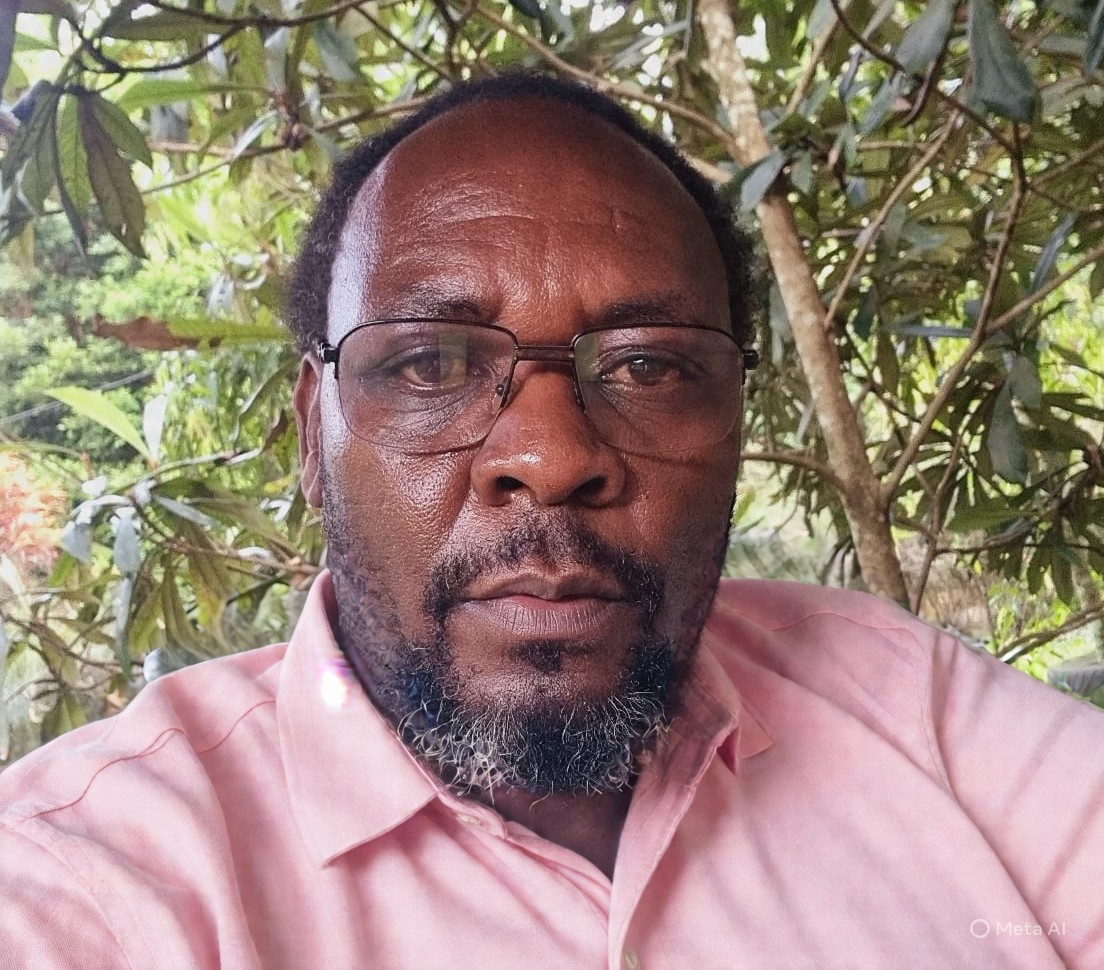
By Twiine Mansio Charles CEO, Founder of the ThirdEye Consults U Ltd & Geopolitical Analyst







 English