





The Democratic Party (DP), once Uganda’s oldest and most ideologically distinct opposition force, is now teetering on the edge of political ambiguity, with its president, Nobert Mao, at the center of a storm that has gripped political watchers and angered longtime supporters.
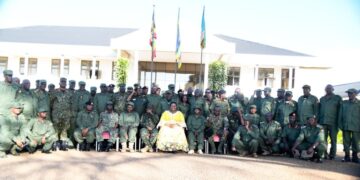
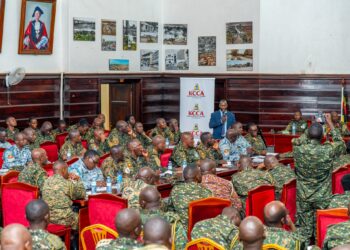
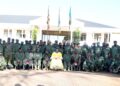
In an unexpected and widely criticized move, Mao recently led a delegation of DP representatives to meet with General Salim Saleh, a key military figure and brother to President Yoweri Museveni, at a high-profile consultative gathering that many have dubbed a veiled endorsement of a quiet alliance between the DP leadership and the ruling National Resistance Movement (NRM).


The event, which Mao insisted was merely an intellectual and strategic “flagship” discussion, has instead fueled accusations of co-optation and betrayal from both DP loyalists and the broader opposition.
Critics argue that the meeting—and the language used during it—signals a surrender of DP’s historical ideals in exchange for political survival.
DP, a party born of resistance against authoritarian rule and committed to constitutional democracy, now finds itself grappling with internal divisions and an erosion of public trust.
Once a beacon of multiparty politics, the party is now being increasingly viewed as a satellite of the NRM—a critique sharpened by Mao’s own words during the engagement with Saleh.
“Because on the economics, we generally agree. But there are political questions,” Mao conceded, suggesting that DP and NRM may already share more common ground than opposition politics would suggest.
He added, “General has given us homework… What are your real disagreements with NRM?”—a statement that has infuriated those who believe DP’s relevance stems precisely from its historical and ideological opposition to the ruling regime.
Saleh’s Role and Implications
For General Saleh, a man often seen more in the shadow of military strategy and economic intervention than partisan politics, the meeting was equally telling.
He acknowledged that he had “never been given this opportunity by NRM” before and appeared puzzled but intrigued by Mao’s overture.
“You are the masters of the politics… We are very worried about empty politics… it can run out of control,” he said, seemingly cautioning against disruptive political activism while highlighting the need for economic stability.
His remarks, laden with both admiration and concern, underscore the NRM’s strategic interest in taming dissent through economic partnership and institutional absorption rather than overt repression—a strategy critics say has neutralized other opposition figures in the past.
Delegate Conference or Power Consolidation?
The Democratic Party is now preparing for an “extraordinary” National Delegates Conference, an event that Mao insists will reaffirm the party’s agenda and outline its positions in ongoing engagements with the NRM.
“The majority of the National Executive Committee… more than 30, are already unopposed,” Mao boasted, suggesting a consolidation of internal power.
But this very consolidation is raising alarm bells, with many seeing it as a stage-managed coronation of Mao’s preferred allies rather than a democratic reckoning.
Indeed, insiders claim that the Conference may be less about policy debate and more about creating a compliant leadership body that will rubber-stamp future collaborations with the government.

A Declining Brand
The fallout has been swift and brutal. Online, DP supporters have expressed outrage, accusing Mao of abandoning the struggle for a more comfortable seat at the high table of state power.
Civil society actors and rival opposition parties have called the move a betrayal of Uganda’s multiparty promise.
Once Uganda’s most principled opposition platform, the DP now risks becoming politically irrelevant.
According to recent data from Afrobarometer, public trust in traditional opposition parties, including DP, has dipped significantly over the past five years, while support for newer, more radical formations—like Robert Kyagulanyi’s National Unity Platform (NUP)—continues to rise.
Political analyst Sarah Akol summarized the sentiment bluntly: “The DP under Mao is no longer the Democratic Party. It is a Democratic Pretender. What we saw with General Saleh was the funeral, not the future, of the party.”
What’s Next?
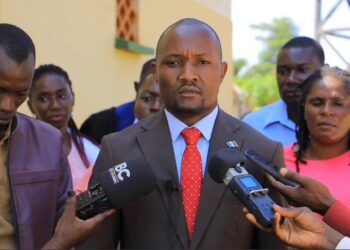
Mao is set to address the public in a press conference today, where he is expected to clarify DP’s position and defend his recent actions.
Whether his explanations will mollify the outraged base or further divide the party remains to be seen.
Meanwhile, observers are watching closely to see if this signals the final absorption of DP into the machinery of the state or if a revolt within the party can still salvage its credibility.
If the press conference does not offer a compelling narrative of independence and purpose, the DP may well go down in history as another opposition giant tamed—not by bullets, but by breadcrumbs of power.



 English