




by our reporter
*BY BARRISTER PETER MAGOMU MASHATE*



My first journey to Karamoja late last year was not just a physical trip; it was an encounter with a region still wrestling with history, perception, and neglect.
On November 22, 2025, I was officially invited as a British resident Legal Scholar, Academic and Barrister-at-Law called to the Bar of England and Wales by the Honourable Society of Lincoln’s Inn of Court London United Kingdom and indeed a Ugandan Senior citizen to KAPATU innaugration.
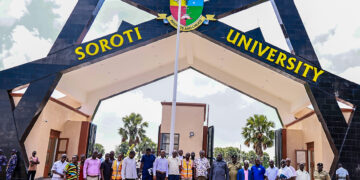
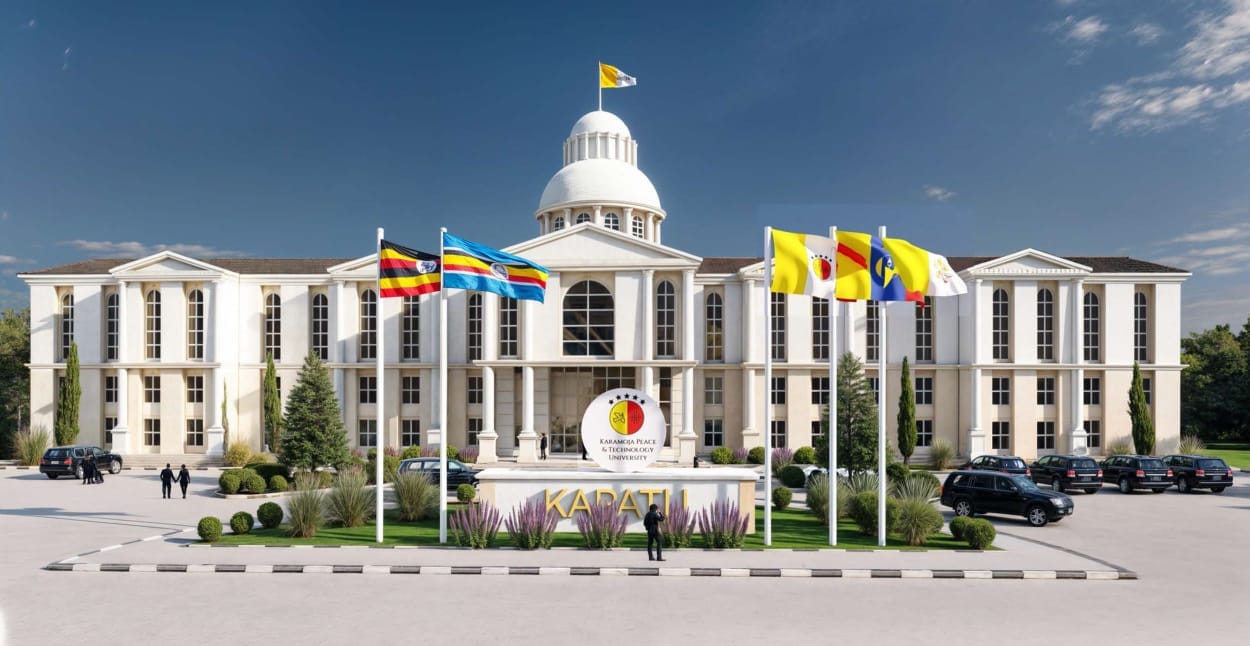
I travelled to Kotido for the unveiling of the Karamoja Peace and Technology University (KAPATU), an ambitious project that could redefine the sub-region’s future. The road from Matany junction in Napak to Kotido town—rough, dusty, and stretching nearly three hours—was a reminder that Karamoja’s challenges begin long before one arrives.
There is a certain silence in that landscape. Not the peaceful kind, but one that speaks of isolation.
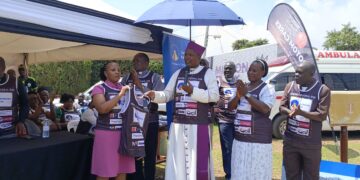
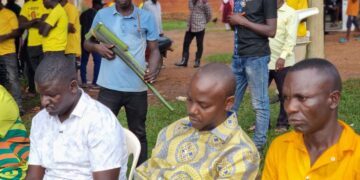
Yet what awaited in Losilang the next day told a different story. The unveiling ceremony drew bishops, ministers, diplomats, MPs, elders, and an entire community. It felt less like a formal function and more like a public holiday, an unmistakable signal of hope in a place too often associated with hardship.
Karamoja is frequently reduced to headlines about cattle raids and insecurity. As a matter of fact I lived in London for years with one of my Karamajong friend former NRM Minister Hon Omwony Ojok (RIP) who out of great humour one evening joked that as a result of Karamajong grazing & roaming instinct he found himself roaming in London & was still roaming looking for his way back to Karamoja.
But unless one has been there, it is difficult to grasp the scale of structural deprivation. Kotido, a district municipality, does not have a single kilometre of tarmac road. Dust defines its streets; development feels distant.
During my stay, I heard a story that captures the deeper roots of Karamoja’s struggle with formal education. In Lomukura village, elders once literally “buried the pen.” To them, the pen and the book symbolised colonial exploitation. They argued that it was through writing that their children were conscripted into foreign wars and subjected to punitive taxation, many never returned.
Education, in that context, became a source of fear rather than opportunity.
Though some families quietly sent their children to school outside the sub-region, the legacy of that resistance still lingers. Today, Karamoja has the lowest literacy rate in Uganda at just over 30 percent. School dropout rates hover around 50 percent, with many children leaving before completing primary school. Even more concerning, nearly three-quarters of school-age children are out of school altogether.
The consequences are visible.
Karamoja’s population is overwhelmingly young, yet the majority have never received formal education. Many lack employable skills. Unemployment is high. In Kotido town, it was common to see young people idle—drifting between trading centres and bars, caught in cycles of inactivity that often feed into cattle rustling and insecurity.
This is not simply a regional issue; it is a national development concern.
At the unveiling, one speech stood out. Dr Limlim Robert, a son of the soil, spoke candidly: Karamoja, he said, is “sick”—sick of underdevelopment, sick of being left behind, sick of lacking the knowledge and skills needed to compete.
It was a stark but honest assessment.
And it is precisely why initiatives like KAPATU matter.
The proposed university is not just another institution of higher learning. It represents a deliberate attempt to bridge a historical gap and bring education closer to a community long excluded from it. Its focus on peace and technology is particularly relevant, given Karamoja’s need for both social stability and economic transformation.
If properly supported, KAPATU could become a catalyst for change: equipping young people with skills, attracting investment, and gradually shifting the region away from subsistence survival towards a knowledge-based economy.
It is worth noting that this initiative did not emerge by accident. It is the product of years of research and collaboration between legal professionals under the Catholic Lawyers Society International(CLASI) and the Kotido Catholic Diocese. That kind of locally grounded vision deserves national backing.
Government support, including that of the President and Vice President, has been encouraging. But the real test lies ahead. The National Council for Higher Education must now expedite the necessary approvals to allow KAPATU to begin academic programmes.
Delays would not just stall a project, they would prolong a problem.
Karamoja does not need sympathy. It needs sustained investment, thoughtful policy, and institutions that speak to its realities. Education is the most powerful of these tools.
The story of the “buried pen” should not define Karamoja’s future. Instead, it should serve as a reminder of how far the region has come, and how much further it must go.
KAPATU offers a chance to unearth that pen, not as a symbol of oppression, but as an instrument of opportunity & development for posterity.
Uganda would do well to ensure that this time, it is not buried again.
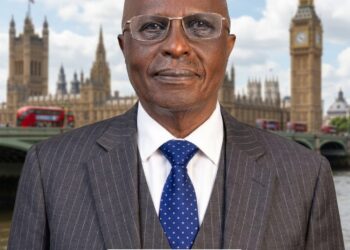
The Writer Is; London Based Barrister Peter Magomu Mashate, An Administrative, Constitutional And Human Rights Barrister-At-Law Of The Honourable Society Of Lincoln’s Inn Of Court London UK, Former Private Lawyer To H.E President Museveni, Former Attorney General Inzu Ya Masaaba Cultural Institution In The Inaugural Cabinet Of Umukuuka 1 His Highness Wilson Weasa Wamimbi & SG NRM Diaspora League & Vice Chairman & Legal Advisor NRM UK & Ireland Chapter.




 English