
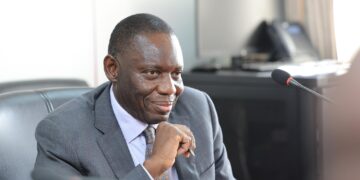
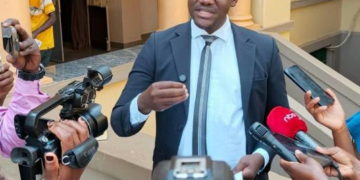




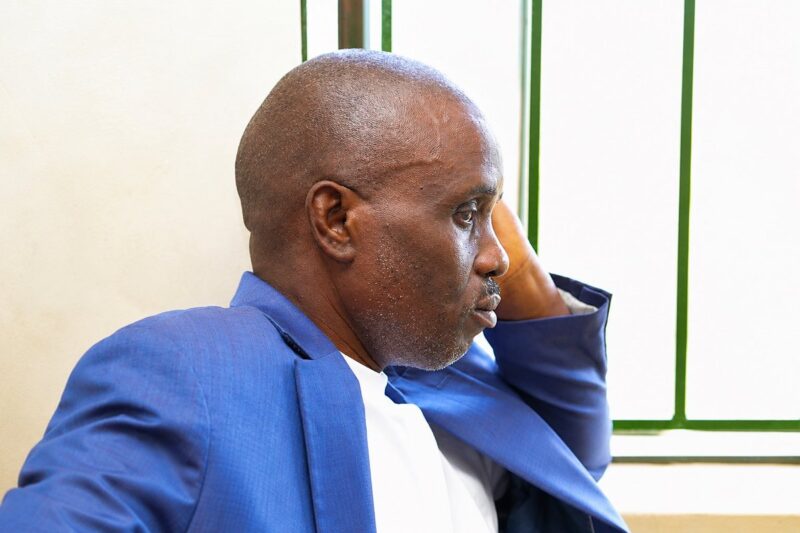
Former Kampala Lord Mayor and opposition politician Erias Lukwago was on Wednesday charged with misprision of treason, joining a small group of legal practitioners who have faced the same offence as some of the clients they have previously represented.
His arraignment came two days after armed men reportedly picked him up from his residence in Wakaliga, Rubaga Division, Kampala.

Misprision of treason is an offence committed when a person is aware that another individual has committed, is committing, or intends to commit treason, but intentionally fails to report that information to the relevant authorities.
Unlike treason, which involves direct participation in efforts to overthrow the government, misprision of treason concerns the concealment of information or remaining silent despite having a legal obligation to disclose it.
Prosecutors allege that between 2021 and November 2024, Lukwago knew that Dr Kizza Besigye, Joel Wakayima, Frank Kihehere Atukunda and Obeid Lutale were allegedly involved in plans amounting to treason but failed to inform security agencies or other competent authorities.
Court records disclosed so far in the treason case against Dr Besigye indicate that Lukwago’s name appears only once in a statement made by Andrew Wilson, also known as Orlando, an American national who describes himself as the operator of a company specialising in investigations and tactical firearms training.
In his statement, Wilson narrates a series of interactions involving Joel Wakayima, opposition politician Salaam Musumba and later Dr Besigye.
He claims that after Wakayima introduced him to Musumba, they discussed proposals to train individuals in journalism and secure communications with the aim of gathering intelligence on government officials and their supporters. It is within this account that Lukwago is mentioned.
Wilson states that Musumba suggested organising a meeting in Brussels and proposed inviting several individuals, among them Lukwago, former Kira Municipality MP Ibrahim Ssemujju Nganda, Lubega Mukaku and political analyst Charles Rwomushana.
According to Wilson, Musumba later asked Wakayima to connect him with Dr Besigye, leading to an online meeting and subsequently a face-to-face meeting in Geneva, Switzerland.
Wilson further alleges that during the Geneva meeting, Dr Besigye requested assistance in establishing militant networks in Uganda to destabilise the country. He claims the meeting was attended by Dr Besigye, Wakayima and Atukunda and that he financed Dr Besigye’s travel from Entebbe to Geneva.
However, Wilson’s statement does not indicate that the proposed Brussels meeting ever took place, nor does it suggest that Lukwago attended any meeting with him.
The statement equally does not accuse Lukwago of participating in discussions about militant activities, intelligence gathering, or attempts to destabilise the government.
The allegations relating to militant networks arise from Wilson’s account of the Geneva meeting, where Lukwago is not listed among the attendees.
Under Section 25 of the Penal Code Act, a person who knows that another individual intends to commit treason and fails to report the information with reasonable promptness to a minister, magistrate, administrative officer or officer in charge of a police station commits the offence of misprision of treason.
The prosecution must prove that the accused had actual knowledge of the alleged treasonous plans and deliberately chose not to disclose that information.
The offence is distinct from treason itself because it does not imply participation in the alleged plot, but rather the withholding of information.
Misprision of treason is punishable by life imprisonment upon conviction, while treason carries a maximum sentence of death. Cases involving misprision of treason may be tried before a Chief Magistrate’s Court, whereas treason cases fall under the exclusive jurisdiction of the High Court.




 English