












A new modelling study has warned that HIV incidence and related deaths in sub-Saharan Africa could significantly increase following the suspension of funding for Pre-Exposure Prophylaxis (PrEP) under the U.S. President’s Emergency Plan for AIDS Relief (PEPFAR).
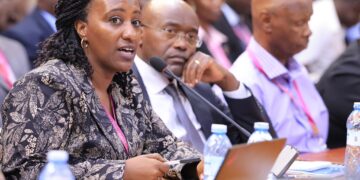
The pre-print study, led by Dr. Jack Stone, Associate Professor in Infectious Disease Mathematical Modelling at the University of Bristol, was presented during a press conference ahead of the 13th International AIDS Society (IAS) Conference on HIV Science in Kigali, Rwanda.


PrEP—an oral medication taken by HIV-negative individuals to prevent infection—was previously supported by PEPFAR and had reached nearly 700,000 people across 28 sub-Saharan African countries by the end of 2024. However, that support was suspended in January 2025.
According to the study, the funding cut could result in approximately 6,671 additional HIV infections within a year and a further 3,617 over the following five years.
Notably, more than 2,900 of the additional infections could occur among gay and bisexual men who have sex with men, while over 2,000 could be among female sex workers.
The study also projects that HIV acquisition rates could increase by more than 5 percent among key populations in several countries.
These include men who have sex with men in eight countries, people who inject drugs in two countries, transgender women in five countries, and female sex workers in six countries.
“Ceasing PEPFAR’s funding for PrEP in sub-Saharan Africa will remove approximately 700,000 individuals from accessing oral PrEP,” said Dr. Stone. “If this continues for a year, we could see 10,000 additional infections over five years, with many occurring among gay and bisexual men and female sex workers. It is crucial that funding is secured to sustain and expand PrEP services in the region.”
Commenting on the findings, Prof. Kenneth Ngure, President-Elect of the International AIDS Society, said the study highlights the real-world consequences of abrupt funding cuts.
“This and other studies being presented at the conference reveal the devastating effects sudden funding gaps are having on vulnerable populations,” Prof. Ngure said. “Millions of people across the continent depend on HIV prevention, testing, and treatment services.
These cuts are not only affecting them but also threatening ongoing research and clinical trials, many of which now face delays or suspension due to financial uncertainty.”







 English