















On the crowded streets of Benghazi Ghetto Community in Mukono Municipality, childhood often looks very different from the picture painted in school textbooks.
For some children, the day is spent searching for ways to survive, helping parents earn a living, caring for younger siblings or simply navigating difficult conditions that make regular school attendance a struggle.
Related posts

Books and homework can easily become secondary concerns when families are struggling to meet basic needs.
Yet behind the difficult living conditions are children with ambitions as big as those of their counterparts in more privileged communities. Some dream of becoming doctors, teachers, journalists, engineers and entrepreneurs.
The difference, education advocates say, is often not talent or ambition.
It is opportunity.
That reality has renewed calls for stronger community-based literacy programmes targeting children living in informal settlements and other disadvantaged communities, where poverty and social exclusion continue to push some children away from formal education.
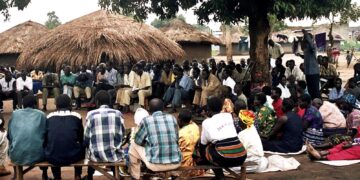
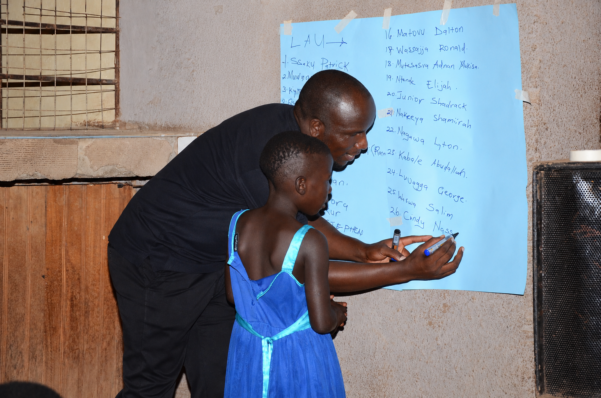
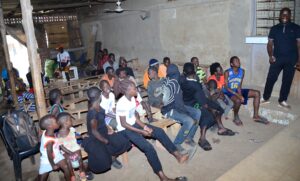
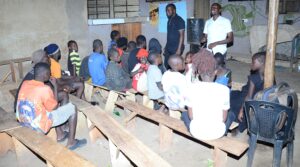
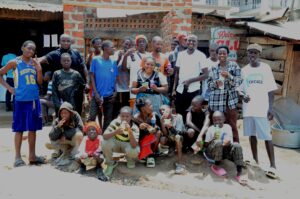
During a recent outreach in Benghazi Ghetto Community in Kitega-Anthony Cell, Mukono Central Division, Literacy Aid Uganda, in partnership with Mvulana Foundation Uganda, brought learning activities directly to children within the community.
The initiative highlighted an increasingly important question: What happens to children who, because of their circumstances, cannot consistently access the learning opportunities available to others?
Taking Books Beyond The Classroom
Literacy Aid Uganda, a community-based organisation operating in Mukono District, believes part of the answer lies in taking learning directly to communities.
The organisation’s Board Vice Chairperson, Diphas Kiguli, said community outreach programmes can provide a second opportunity for children struggling to access or remain in the formal education system.
He said Literacy Aid Uganda is planning to expand community interventions through reading clubs, mobile libraries, storytelling sessions, writing activities and basic numeracy lessons.
Such programmes, Kiguli said, can bring learning closer to children while encouraging them to develop reading habits outside the classroom.
“The approach is particularly important in communities where families face economic hardships. For some households, meeting basic needs takes precedence over purchasing books, paying school-related expenses or creating a conducive environment for children to study,” Kiguli said.
The consequences can be significant.
Some children attend school without adequate learning materials, while others gradually lose interest or drop out completely.
For children living in informal settlements, access to a book or a safe place to read can therefore become more than a simple educational activity. It can help maintain their connection to learning.
When Poverty Becomes An Education Barrier
The challenge facing children in disadvantaged communities is not always a lack of schools.
A child may be officially enrolled but still face obstacles that make meaningful learning difficult.
There may be no books at home, no quiet place to study, inadequate meals, unstable family circumstances or pressure to contribute to household survival.
For some families, education is valued, but poverty limits what parents can provide.
It is within this gap that community literacy programmes are increasingly finding relevance.
The Executive Director of Mvulana Foundation Uganda, Eric Yiga, said literacy equips children with the ability to understand information, communicate effectively and participate meaningfully in society.
He said it also provides the foundation upon which children acquire other skills needed later in life.
“For children in ghetto communities, the benefits can be even more significant because literacy can help counter the effects of poverty and social exclusion,” Yiga said.
He added that community-based programmes have an important advantage because they can bring together parents, teachers, local leaders, youth groups and other members of society to support children’s education.
Parents who may not have received adequate education themselves, he said, can still participate in reading activities with their children.
This helps create a culture of learning at home while reinforcing the idea that education is not the responsibility of teachers alone.
Finding Children Before They Are Forgotten
For Irene Mondo, the Executive Director of Literacy Aid Uganda, community outreach provides another important opportunity.
It can help identify children who have already fallen out of school and connect them with available education services.
Rather than waiting for vulnerable children to find their way back to classrooms, educators and volunteers can go into communities, build relationships and gradually encourage them to return to formal education.
“Instead of waiting for vulnerable children to return to classrooms, educators and volunteers can go into the communities, establish relationships and gradually encourage them back into formal education through partnerships with other organisations,” Mondo said.
However, she stressed that such initiatives should not be seen as replacements for formal schooling.
Instead, they should complement existing government education programmes by reaching children who are most likely to be left behind.
This distinction could prove critical.
Community reading clubs and outreach sessions can keep children connected to learning, but they cannot replace the need for trained teachers, structured curricula and sustainable school attendance.
Their greatest value may therefore lie in serving as a bridge between vulnerable children and the formal education system.
A Growing Challenge In Ghetto Communities
The number of children entering vulnerable urban communities is itself becoming a concern for local leaders.
Patrick Ssegawa, the head of Benghazi Ghetto Community, said the growing number of children accessing the community had increased the demand for books, facilitators, learning spaces and child-friendly materials.
He called for sustained investment in community literacy programmes rather than occasional interventions.
Ronald Ssenabulya, the Chairperson of Kitega Cell, where Benghazi Ghetto Community is located, raised an even broader concern.
He said more children were joining ghetto communities from neighbouring towns, and called for a research-based government intervention to establish why children leave their homes and families.
“For children growing up in ghetto communities, a simple reading session under a community programme could represent much more than an afternoon activity. It could be the beginning of a different future,” Ssenabulya said.
“But government must also establish exactly why these children flee their homes and end up joining the ghettos.”
The concern points to a challenge that goes beyond literacy.
Children may enter ghetto communities because of poverty, family breakdown, neglect, violence, abuse or other forms of vulnerability.
While literacy programmes can provide immediate support, they may not address the circumstances that pushed children into such environments in the first place.
That raises the need for a more coordinated response involving education, child protection, social welfare, local government and families.
More Than Charity
Mukono Central Division Woman Councillor Betty Nakasi Hope said extending literacy opportunities to vulnerable children should not be viewed as charity.
She described it as an investment in human potential.
According to Nakasi, children growing up in disadvantaged communities can contribute significantly to Uganda’s social and economic transformation if they are given an opportunity to develop their abilities.
“The challenge now is for government, civil society organisations, development partners and communities to strengthen outreach programmes and ensure that no child is excluded from the opportunity to learn simply because of where they were born or the circumstances in which they grew up,” she said.
Her remarks capture the wider argument surrounding community literacy initiatives.
The question is not whether every child has the same starting point.
Clearly, they do not.
The question is whether society can create enough opportunities to ensure that a difficult beginning does not permanently determine a child’s future.
The Future May Begin With A Book
Uganda’s education system remains the primary avenue through which children are expected to acquire knowledge and skills.
But for children living at the margins of society, getting into a classroom and staying there can be an achievement in itself.
Community-based literacy programmes cannot solve every problem associated with poverty and exclusion.
They cannot replace families, schools or government systems.
But they can reach children who might otherwise be missed.
A reading club can introduce a child to books.
A storytelling session can stimulate imagination.
A writing activity can reveal talent.
A community volunteer can identify a child who has dropped out of school and help connect them to education services.
For a child growing up in Benghazi Ghetto Community or another disadvantaged settlement, these opportunities may appear small.
But their impact can be much bigger.
A simple reading session can become the first step towards returning to school.
A book can become the beginning of a dream.
And for children whose circumstances have already placed them at risk of being left behind, that opportunity could be the difference between a future limited by poverty and one shaped by possibility.
The challenge for government, civil society organisations, development partners and communities is to ensure that such opportunities do not remain occasional acts of goodwill.
They must become sustained investments.
Because behind every child reading under a community literacy programme is a possibility that has not yet been fully discovered.
And sometimes, changing a child’s future begins with simply making sure that a book reaches their hands.











 English