

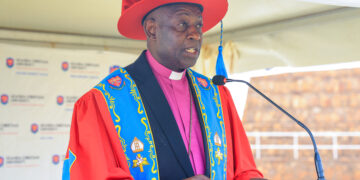


The Archbishop of the Church of Uganda, Stephen Kaziimba Mugalu, has called on Uganda’s 12th Parliament to urgently introduce and pass a National Health Insurance Bill, arguing that access to affordable healthcare has become one of the country’s most pressing national priorities.
Speaking during the Uganda Martyrs Day celebrations at Namugongo Martyrs Shrine on Wednesday, Archbishop Kaziimba said Uganda’s repeated experiences with Ebola outbreaks, cancer and other costly illnesses had exposed major gaps in the country’s healthcare system.

“We need to continue establishing national health insurance in Uganda. I request Parliament to come up with a bill for national health insurance,” Kaziimba said during his sermon.
The Archbishop proposed that part of Uganda’s oil and mineral revenues should be ring-fenced to finance a national health insurance scheme capable of supporting vulnerable citizens and reducing the burden of medical expenses on ordinary families.
“I suggest that our oil and minerals should contribute a percentage to the national treasury for national health insurance so that we build a healthy Uganda and a united Uganda,” he added.
Kaziimba noted that many Ugandans continue to suffer silently because they cannot afford treatment for chronic and life-threatening diseases such as cancer, warning that healthcare should not remain a privilege for the wealthy.
His remarks come amid longstanding public debate over Uganda’s delayed National Health Insurance Scheme, which has faced repeated legislative and policy setbacks despite years of advocacy from health experts, civil society and religious leaders.
The Archbishop also commended the Ministry of Health for its response to Ebola outbreaks and praised frontline health workers for their efforts in managing public health emergencies.
Beyond healthcare, Kaziimba used the Martyrs Day platform to call for national unity, reconciliation and healing in a country increasingly divided along political, tribal and religious lines.
Reflecting on the sacrifice of the Uganda Martyrs who were executed 140 years ago for refusing to renounce their Christian faith, he said their legacy should inspire Ugandans to reject hatred, discrimination and tribalism.
“The martyrs broke barriers of religion and tribe. They remained united even in suffering and in death,” he said.
Kaziimba observed that both Anglican and Catholic martyrs were killed and buried together at Namugongo, describing their shared sacrifice as a powerful symbol of Christian unity and national cohesion.
He further criticized tribal discrimination in employment and public service, saying Uganda’s future depends on merit, inclusion and equal opportunity rather than ethnic divisions.
“Some people fail to get jobs because of tribe or region despite having qualifications. The martyrs teach us to value everyone’s ability,” he said.
The Archbishop also called for national dialogue and forgiveness as Uganda navigates growing social and political tensions.
During the celebrations, Kaziimba appreciated the Government of Uganda and President Yoweri Museveni for supporting this year’s commemorations, revealing that government contributed Shs2 billion towards the Martyrs Day celebrations, while Uganda Christian University added another Shs1 billion towards development projects at the pilgrimage site.
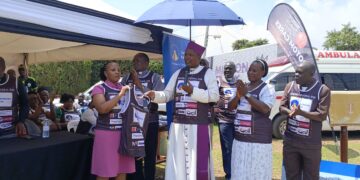
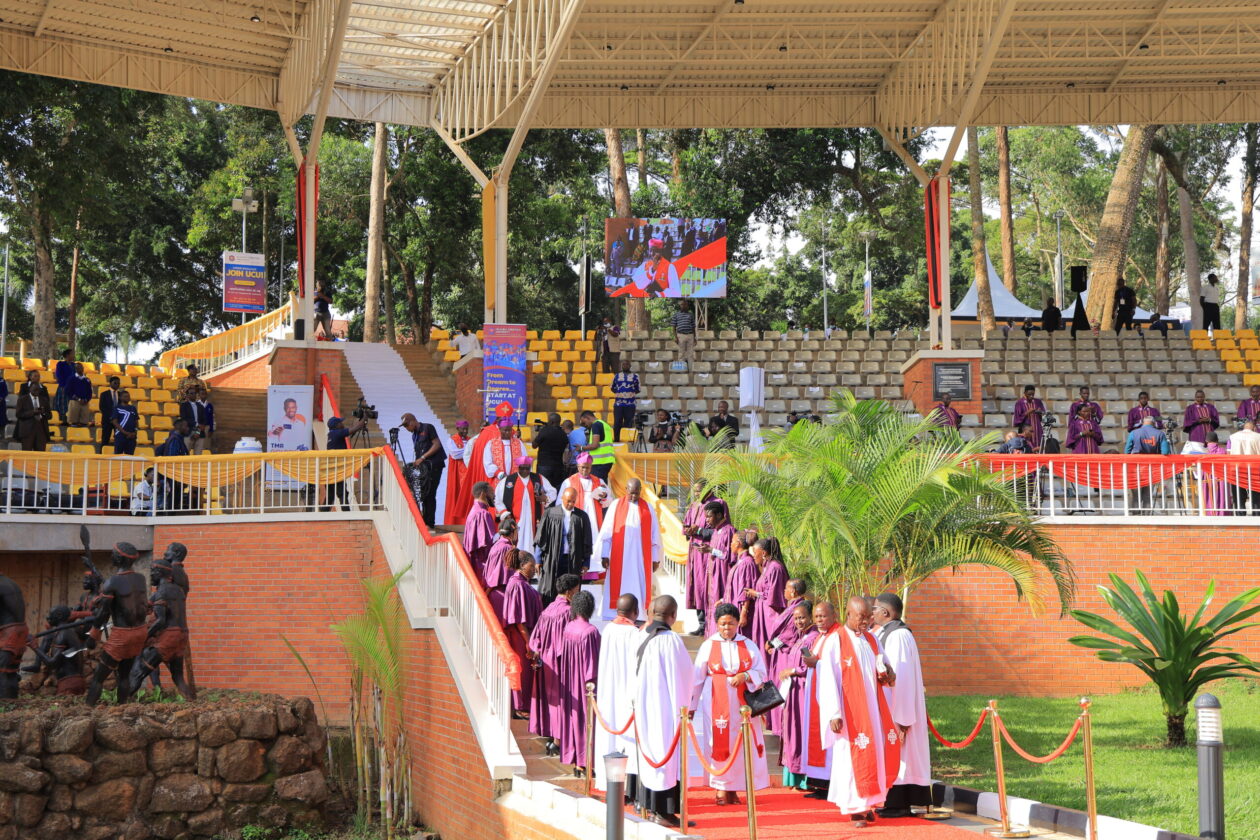
The celebrations also highlighted major infrastructure improvements undertaken at Namugongo under the stewardship of Uganda Christian University, which organized this year’s Anglican commemorations under the theme “Christ is Our Peace: Breaking Walls and Healing Our Nation,” drawn from Ephesians 2:11-22.
Speaking during the opening prayers, the Archdeacon of Namugongo, Rev. Canon Michael Waiswa Ssentamu, described this year’s celebrations as “unique and peculiar” because of the unusually small physical congregation, though thousands followed the service virtually.
Despite the low turnout, Ssentamu praised UCU for transforming the pilgrimage site through several infrastructure projects, including paved walkways, solar lighting, modern sanitation facilities, a rehabilitated perimeter wall and a new borehole to address water shortages. “UCU is going to leave a legacy here,” Ssentamu said.
Vice Chancellor Prof. Aaron Mushyengyezi said the university had also improved water distribution through a solar-powered pump and plans to construct a 550,000-litre water tank to serve pilgrims and surrounding communities.
He said the Uganda Martyrs continue to hold deep spiritual and cultural significance because their story represents courage, sacrifice and unwavering conviction.
“The martyrs symbolize unwavering faith, courage, conviction and sacrifice. Their story transcends national and ethnic boundaries,” Mushyengyezi said.
He added that the martyrs’ message remains relevant to young people facing social, economic and political pressures, urging Ugandans to remain united and committed to integrity and compassion.
Meanwhile, the Bishop of Namirembe Diocese, Rt. Rev. Moses Banja, announced plans to construct the Namugongo Martyrs Archdeaconry Church, noting that Christians in the area had worshipped in temporary tents for many years despite Namugongo’s importance as a major pilgrimage centre.
“Our Christians have suffered for years worshipping in temporary structures. We are now beginning construction of the Namugongo Martyrs Archdeaconry Church and we ask for support from all believers,” Banja said.
Also speaking at the celebrations, Gen. Edward Katumba Wamala urged Ugandans to emulate the martyrs by sacrificing personal interests for national development and unity.
“Let’s break those walls, the walls of political differences, the walls of religious differences, so that we work together to make our country better,” Katumba said.
He also called for stronger action against corruption, saying Uganda must move beyond rhetoric and ensure public resources are used effectively to improve citizens’ lives.
ENDS.


 English