


















Kampala
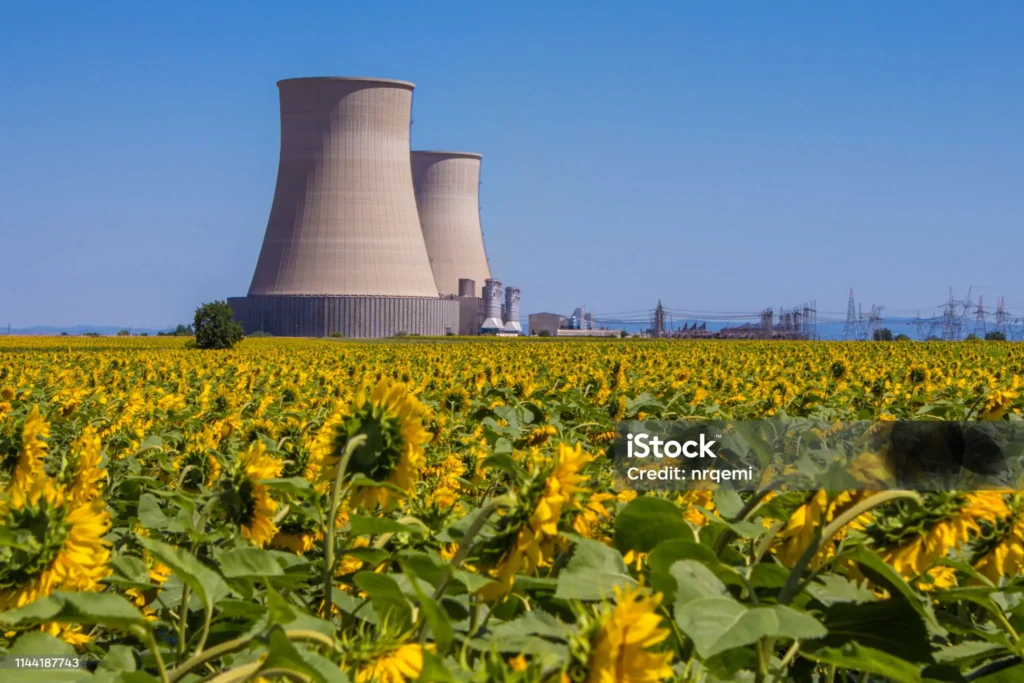
Uganda set an ambitious goal for energy generation to meet its growing energy needs. It aims at generating 52,481MW of electricity by 2040 with nuclear energy contributing 24,000 megawatts (MW) to the national grid.

The East African country discovered uranium deposits in 2004, and in recent years, the government announced plans to build a nuclear power plant to meet the country’s energy needs.
This initiative is championed by President Yoweri Museveni as part of Uganda’s broader climate change strategy to transition to cleaner energy sources.
However, the nuclear energy plan offers more than just a solution to Uganda’s energy needs. It also has the potential to revolutionise the country’s agricultural sector by applying nuclear technology to agriculture.
According to nuclear experts, integrating this technology with agriculture can enable countries like Uganda to address food security challenges by boosting crop yields and making farming more resilient to climate change.
Uganda is one of the African countries hard hit by climate change, even though it contributes little to global emissions.
It experiences more frequent and severe extreme weather events, like droughts, floods, landslides, and mudslides leading to crop failure, loss of life and property.
Chapter 53 (h) of the Atomic Energy Act 2008 clearly emphasises the establishment and functions of the Nuclear Energy Unit to co-ordinate the peaceful application of nuclear energy in the sectors of agriculture, animal health, environment, water resources management, mining, geothermal, human health and any other relevant field.
Actually, to so many people it might sound very strange to connect food and atoms because nuclear is known mostly for nuclear security, and nuclear plants, and it’s less known in terms of food security or agriculture.
But Eng. Pauline Irene Batebe, the Permanent Secretary – Ministry of Energy And Mineral Development, said it’s a possible approach.
In addition to energy generation, Uganda is poised to explore various applications of nuclear technology to enhance its agricultural sector.

Batebe, also a chemical and mechanical, said that the strategy to leverage the use of nuclear techniques in agriculture and climate change management is provided for under the Country Programme Framework (CPF) 2024-2029 between the Government of Uganda and International Atomic Energy Agency.
According to the engineer, this programme, which Uganda already signed onto, will assist research institutions like NARO to develop new, improved and drought resistant rice, cassava, maize and Coffee varieties using mutation breeding techniques.
“Nuclear techniques will also be used to accelerate the development and adoption of climate smart practices that encourage sustainable soil, nutrient and water management,” she explained.
On 16 February 2024, Ruth Nankabirwa Ssentamu, Minister of Energy and Mineral Development, and Hua Liu, the Deputy Director General of the International Atomic Energy Agency (IAEA) and Head of the Department of Technical Cooperation, signed the CPF.
A CPF serves as reference for the medium-term planning of technical cooperation between a Member State and the IAEA and clearly outlines priority areas where nuclear technology transfer and technical cooperation resources will be allocated to support national development goals.
Uganda has been a Member State of IAEAsince 1967 and its CPF for 2024-2029 identifies seven priority areas including nuclear and radiation safety, food and agriculture, human health, water and the environment, introduction of nuclear power, uranium production, feasibility studies on industrial applications like research reactor, industrial irradiator and non-destructive testing.
Nuclear Energy, Climate Change
On a global scale, nuclear power is recognised as a low-carbon energy source that can help countries achieve their climate goals.
For Uganda, integrating nuclear energy into its energy strategy could significantly reduce greenhouse gas emissions, complementing its ongoing renewable energy efforts in hydro-power and solar power.
According to Ruth Nankabirwa, Uganda’s Minister of Energy and Mineral Development, nuclear energy is a game-changer as it’s about sustainable development and climate resilience.
In addition to clean energy, Nankabirwa highlights how nuclear technology offers a variety of climate-smart solutions.
Since 1982, Uganda has been a signatory to the Treaty on the Non-Proliferation of Nuclear Weapons to prevent the spread of nuclear weapons and weapons technology and to promote cooperation in the peaceful uses of nuclear energy.

In June (this year) during the National Stakeholders Workshop on the Atomic Energy Bill 2024, minister Nankabirwa and Akisophel Kisolo, the chairman of the Atomic Energy Council, said the country is ready to harnessing nuclear energy and appealed to the government to fast-track the processing of the Atomic Energy Bill, 2024.
While critics have on many occasions argued that the country lacks the capacity and preparedness to safely manage nuclear energy and the potential environmental and safety risks, the government has taken steps to build the institutional knowledge and capacity to safely deploy nuclear power in the country.
Global Nuclear Experts Weigh in
During the recently concluded Conference of Parties (COP29) in Baku, Azerbaijan, different scientists and researchers mentioned how nations with uranium could utilise it for advancements in agriculture and to combat climate change.
“If you mention nuclear in one sentence together with food many people are afraid because nuclear is perceived as a pollution or a threat to our systems, our ecosystems, our body and if you say food and nuclear that doesn’t go well together in the perception of many people,” said Martin Krause, Director of Technical Cooperation, IAEA.
According to Krause, crops naturally change over time through a process called mutation, which usually takes many years.
Plant mutation breeding, also called variation breeding, is a method that uses physical radiation or chemical means to induce spontaneous genetic variation in plants to develop new crop varieties
“So we are using that technique to help farmers to generate crops that can withstand drought, storms, flooding, adverse climatic conditions,”he explained.
Krause mentioned Bangladesh where mutation breeding technology has been used to develop rice varieties that can withstand drought, flood can grow in saline soils in coastal areas.
As warmer climates often increase pest problems for crops and animals, the sterile insect technique provides an environmentally friendly alternative to using chemical fertilisers or other harmful methods.
“This is where nuclear technology can complement traditional techniques and methodologies on how to deal with a particular problem when it comes to pest control,” he explained, adding that those new innovative nuclear techniques and technologies can make a contribution to the overall agenda of creating more food security in the context of climatic changes.
IAEA further maintains that techniques like the Sterile Insect Technique, where male insects are sterilised to control pest populations, could protect Ugandan crops from invasive species and diseases.
“Nuclear methods are not just about power plants. They’re tools to enhance agriculture, ensure food safety, and adapt to climate change,” Krause explained.
Imagine a scenario where banana plantations in Uganda are well protected against pests like banana weevils and other diseases through such nuclear innovations. He said the impact would be transformative, not just for banana farmers but for food security nationwide.
According to Dr. Syed Haider, Deputy Chief Scientist, Nuclear Institute for Agriculture and Biology, Pakistan, with the nuclear technologies, they have developed 157 mutated varieties of different crops, which include cotton, rice, wheat, pulses, mung beans, sesame, castor oils, oilseeds, and so many crops.
“These are climatically adaptive to different zones. So by using these mutants we have developed mutants which in different zones have very good adaptability, and they are producing high yielding, tolerant to heat, tolerant to stress, tolerant to salinity environments, and they are very successfully grown,” he said.
Haider added that its lifespan is very active in almost 15-16 years and its performance is excellent and it has covered up to 40-60% area all over Pakistan, especially in the cotton growing zones.
“Same is the example of pulses crop, mung bean crops. This mung bean crop was not a traditional crop in our climatic condition, but there was another sort of pulse, but it was used for animal feeds and for other poultry purposes,”he stated.
For Uganda, adopting similar techniques could revolutionize agriculture, boosting food production and protecting livelihoods threatened by climate change.
In regions like the Acholi sub-region, where erratic weather patterns are already reducing yields, nuclear-assisted agriculture could be a lifeline.
However, efforts to demystify nuclear technology will be essential through public awareness campaigns and community consultations to build trust.
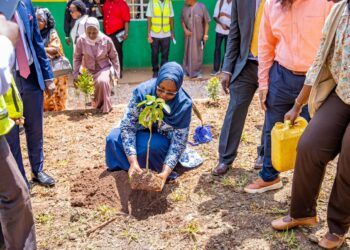
Similarly, local farmers could be trained to use nuclear-assisted agricultural techniques, creating a direct link between nuclear technology and improved livelihoods.
The IAEA’s emphasis on South-South cooperation offers another pathway for Uganda.
Countries like Namibia and South Africa have years of experience in uranium mining and nuclear energy,which provide Uganda with a wealth of knowledge. Facilitated by the IAEA, such partnerships could accelerate Uganda’s progress while avoiding common pitfalls.
For example, Namibia has successfully implemented community-focused mining projects, ensuring locals benefit from the proceeds. Uganda could replicate this model to promote trust and mitigate conflict around uranium exploration.
Clean Energy Transition
The government of Uganda announced that different sites had been identified in the central, southwest and northern regions of the country as potential locations for the host nuclear power plants.
For example, Buyende, one of the pilot districts selected for Uganda’s nuclear program, is projected to produce 8,400 MW. Other districts include Nakasongola with a projection of 7,200 MW, Kiruhura (4,800 MW), and Lamwo (4,000 MW).
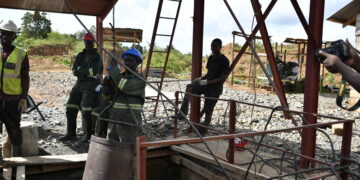
Additionally, the International Atomic Energy Agency also stepped in and conducted its first Integrated Uranium Production Cycle Review (IUPCR) to thoroughly assess Uganda’s preparedness for the exploration and utilisation of these uranium deposits.
However, Uganda’s energy Ministry is working hard to ensure local scientists and engineers receive quality training in advanced nuclear technologies to support the country’s nuclear energy aspiration.
This capacity-building initiative is mainly focused on creating a competent homegrown workforce capable of overseeing uranium exploration and eventual nuclear power generation.
Still, partnerships with international experts from Argentina, Australia, France, and Namibia have already started yielding promising outcomes.
Bright, Challenging Road Ahead
For Ugandans, the stakes are high but with strategic planning and collaboration, the promise of uranium exploration could illuminate more than just the nation’s power grid, it could pave the way for a more prosperous future.
From powering homes to revolutionising agriculture and tackling climate change, Uganda’s nuclear ambitions hold a significant promise.
As the world observes, the country has an opportunity to lead by demonstrating that with the right mix of innovation, partnership, and commitment, even the most ambitious goals can be a reality.
This story was produced as part of the 2024 Climate Change Media Partnership, a journalism fellowship organised by Internews’ Earth Journalism Network and the Stanley Center for Peace and Security.
END








 English