


















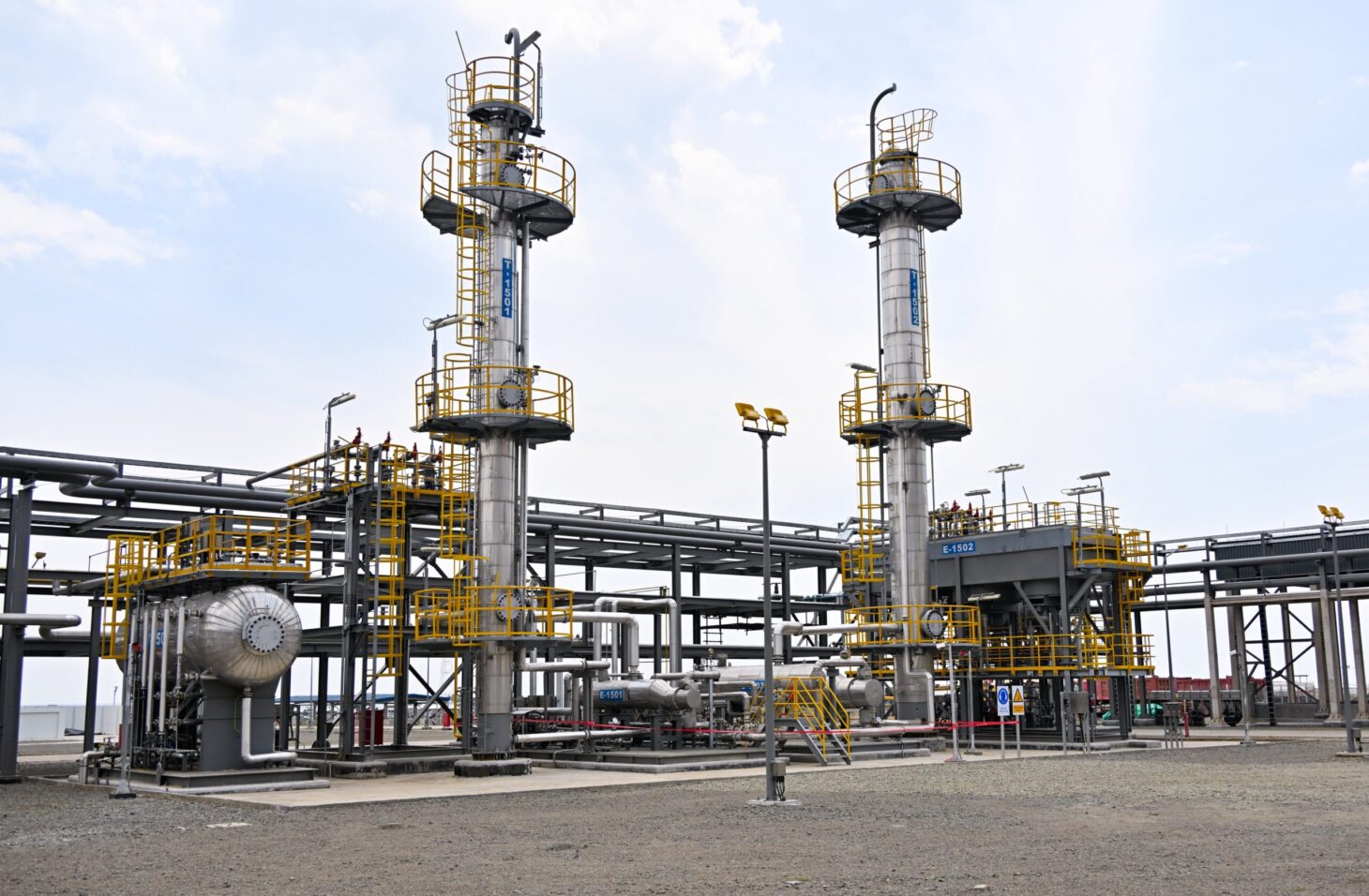
Uganda risks losing billions of dollars in potential petroleum revenue because of weaknesses in its oil taxation framework and the way project costs are recovered, the Natural Resource Governance Institute (NRGI) has warned.
The organisation says the country’s existing petroleum fiscal arrangements expose the government to a disproportionate share of financial risks arising from escalating development costs, while failing to ensure that public revenue consistently increases alongside the profitability of oil companies.
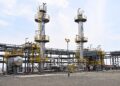

Dr Paul Bagabo, NRGI’s Uganda Country Director, says Uganda must strengthen its petroleum revenue management framework, reconsider the design of its windfall tax and tighten scrutiny of recoverable project costs before commercial oil production begins.
Bagabo made the remarks while presenting findings from NRGI’s research on Uganda’s petroleum revenue management framework during a symposium organised by the Petroleum Authority of Uganda (PAU) and civil society organisations on November 11, 2026.
The study projects that Uganda could earn an average of approximately $1.8 billion annually from the Tilenga and Kingfisher oil projects between 2027 and 2050, assuming a long-term international oil price of $70 per barrel.
However, the projected annual average falls to approximately $1.08 billion if the benchmark price drops to $50 per barrel, illustrating the extent to which government revenue remains vulnerable to movements in the international oil market.
Bagabo cautioned against basing long-term government expenditure commitments on optimistic petroleum revenue projections, arguing that oil earnings are likely to fluctuate considerably throughout the production cycle.
Although Uganda’s petroleum fiscal regime is generally progressive, the research finds that its ability to increase government’s share of earnings as oil companies become more profitable is constrained by the structure of some of its revenue-sharing instruments.

In particular, royalties and profit-oil sharing arrangements are largely influenced by production volumes rather than the actual profitability of petroleum projects.
Bagabo said this could limit government’s ability to capture a proportionately larger share of revenue when oil prices rise, raising the need to reconsider some of the fiscal terms during future negotiations or any possible renegotiation of existing agreements.
“Overall, the regime is progressive. However, at some point, the progressivity starts slowing. At a lower price, and we used 70 conservatively. But because government relies a lot on royalties and profit oil sharing, which responds to production volumes rather than profitability, there is a challenge with the progressivity of the system,” Bagabo said.
He added that the weaknesses should inform future petroleum negotiations to ensure that Uganda secures a fairer share of the economic benefits generated by its natural resources.
Windfall tax raises concerns
The research also questions the design of Uganda’s windfall tax, which is intended to allow government to capture additional petroleum revenue when international oil prices rise above a specified threshold.
NRGI’s modelling identifies a potentially significant distortion around the $75-per-barrel trigger price.
According to the study, an increase in the oil price from $74.99 to $75 per barrel would shift approximately $870 million in Tilenga’s project value from the investor to government.
The modelling suggests that this abrupt adjustment could leave the investor financially worse off at $75 per barrel than at $70, potentially creating unintended incentives around the tax threshold.
Bagabo said Uganda needs a more balanced mechanism that allows the government to benefit from favourable international oil prices without introducing sudden and disproportionate changes in the distribution of project earnings.
“There’s a provision for windfall tax, and we modelled that, and we realised that when there’s a windfall, some money will move away from the companies to UNOC and to government,” he said.
To address the concern, NRGI proposes taxing only the additional profits generated above the specified trigger price or gradually introducing the tax across a defined range of oil prices rather than applying a sharp threshold.
The organisation also recommends that Uganda consider adopting more profit-sensitive fiscal instruments in future petroleum licensing arrangements to ensure that public revenue grows more consistently with the commercial success of oil projects.
Cost overruns threaten government’s share
Beyond fluctuations in global oil prices, NRGI identifies escalating project development costs as another major threat to Uganda’s anticipated petroleum earnings.
Under the existing production-sharing arrangements, oil companies are entitled to recover eligible development and operational costs from petroleum revenues before the remaining profits are shared between government and investors.
Consequently, increases in project expenditure reduce the pool of revenue available for distribution, potentially leaving government with a substantial financial burden.
The study estimates that government would absorb approximately three-quarters of the economic losses resulting from a 23 to 33 per cent increase in Tilenga’s project costs.
It further identifies approximately $4.7 billion in pre-production capital expenditure that will be subjected to the cost-recovery framework, making effective auditing and monitoring of petroleum expenditure critical.
Bagabo argued that controlling project expenditure should be treated as a central component of protecting public revenue rather than being left solely to the operational management of oil companies.
“Because of recoverable costs, the government will bear the bigger brunt of cost overruns, and so we need to try as much as possible to remain within certain costs,” he said.
He warned that the exposure could extend beyond the initial oil production projects, particularly as Uganda and its partners consider additional investments in gas development, the refinery and related petroleum infrastructure.
“Treat cost control as a core revenue-protection function. Why? Because when the costs go up, government bears a higher cost of the overrun. Now, the overrun might come in terms of investment in gas, the refinery project, and any other investments that come after the oil starts flowing,” he said.
The findings point to the importance of strengthening the capacity of relevant government institutions to independently scrutinise project expenditure and establish whether costs submitted for recovery are legitimate, reasonable and consistent with approved development plans.
Kingfisher faces exposure under lower oil prices
NRGI’s analysis also highlights potential financial difficulties for the Kingfisher project if international oil prices fall significantly.
At $50 per barrel, the study estimates that the investor’s net present value (NPV), a measure of the present value of anticipated future cash flows, would turn negative.
Under the same scenario, the model indicates that government’s NPV would exceed the overall economic value of the project, raising questions about the sustainability of the existing fiscal arrangements under unfavourable market conditions.
The findings also indicate that Uganda National Oil Company (UNOC), which holds a carried interest in Kingfisher, may be unable to recover its investment within the project’s 25-year production period under all the oil price scenarios examined.
Bagabo said government needs to examine how the current cost-recovery provisions would perform during periods of depressed oil prices, particularly whether eligible expenditure can realistically be recovered before production ends.
He specifically pointed to the 60 per cent cost-recovery provision, warning that a substantial decline in oil prices could complicate the recovery of accumulated project costs and affect the distribution of petroleum earnings.
Oil revenue could decline sharply after peak production
The concerns come as Uganda prepares to enter the commercial oil production phase, with petroleum earnings expected to finance infrastructure development and support the government’s ambitious tenfold economic growth strategy.
However, NRGI cautions that the country should not mistake the high-revenue years at the beginning of production for a permanent source of government income.
Its projections indicate that annual government petroleum revenue could peak at approximately $4 billion in the 2033/34 financial year before declining to an average of about $700 million annually during the final five years of production.
The organisation says such fluctuations could expose government to fiscal difficulties if petroleum earnings are used to establish permanent expenditure commitments that cannot be sustained once production and revenue begin declining.
To minimise this risk, NRGI recommends introducing a revenue-smoothing mechanism based on a reference oil price or a multi-year average rather than allowing annual government expenditure to fluctuate directly with actual petroleum receipts.
Under the proposed arrangement, the difference between actual petroleum revenue and the amount approved for spending would be deposited into the Petroleum Revenue Investment Reserve (PRIR).
The reserve would provide a financial buffer, enabling government to save part of the revenue earned during periods of high oil prices and draw on accumulated savings when earnings fall.
According to the study, this approach would help protect public expenditure programmes from the volatility associated with international oil prices and the eventual depletion of petroleum reserves.
NRGI calls for stronger parliamentary oversight
The research further identifies the need to strengthen institutional accountability and parliamentary scrutiny of petroleum revenue management, particularly regarding the operations of UNOC and the implementation of fiscal rules.
Bagabo noted that Parliament had approved the 2026–2031 Charter of Fiscal Responsibility, which provides guidance on the management and expenditure of petroleum revenues.
However, he said approval of the policy framework alone would not guarantee effective implementation without sustained oversight of the institutions responsible for collecting, managing and spending the revenue.
“Parliament approved the charter, but there is need for oversight because both the spending entities, UNOC and the Parliament, and the minister of finance, need some oversight,” he said.
NRGI recommends giving Parliament a stronger role in monitoring petroleum revenue expenditure and ensuring that fiscal rules are implemented in a manner consistent with Uganda’s broader economic development objectives.
The organisation also calls for adequate financial and technical resources for the petroleum regulator and relevant revenue authorities to scrutinise recoverable costs, audit project expenditure and monitor compliance with petroleum agreements.
Bagabo urged government to address the identified weaknesses before commercial production begins, arguing that waiting until the country starts receiving substantial oil revenue could make necessary reforms more difficult.
The research forms part of NRGI’s broader work on natural resource governance, focusing on how oil-producing countries can convert finite petroleum resources into sustainable economic development while preparing their economies for the eventual decline of production.







 English
