









Antalya, Turkey
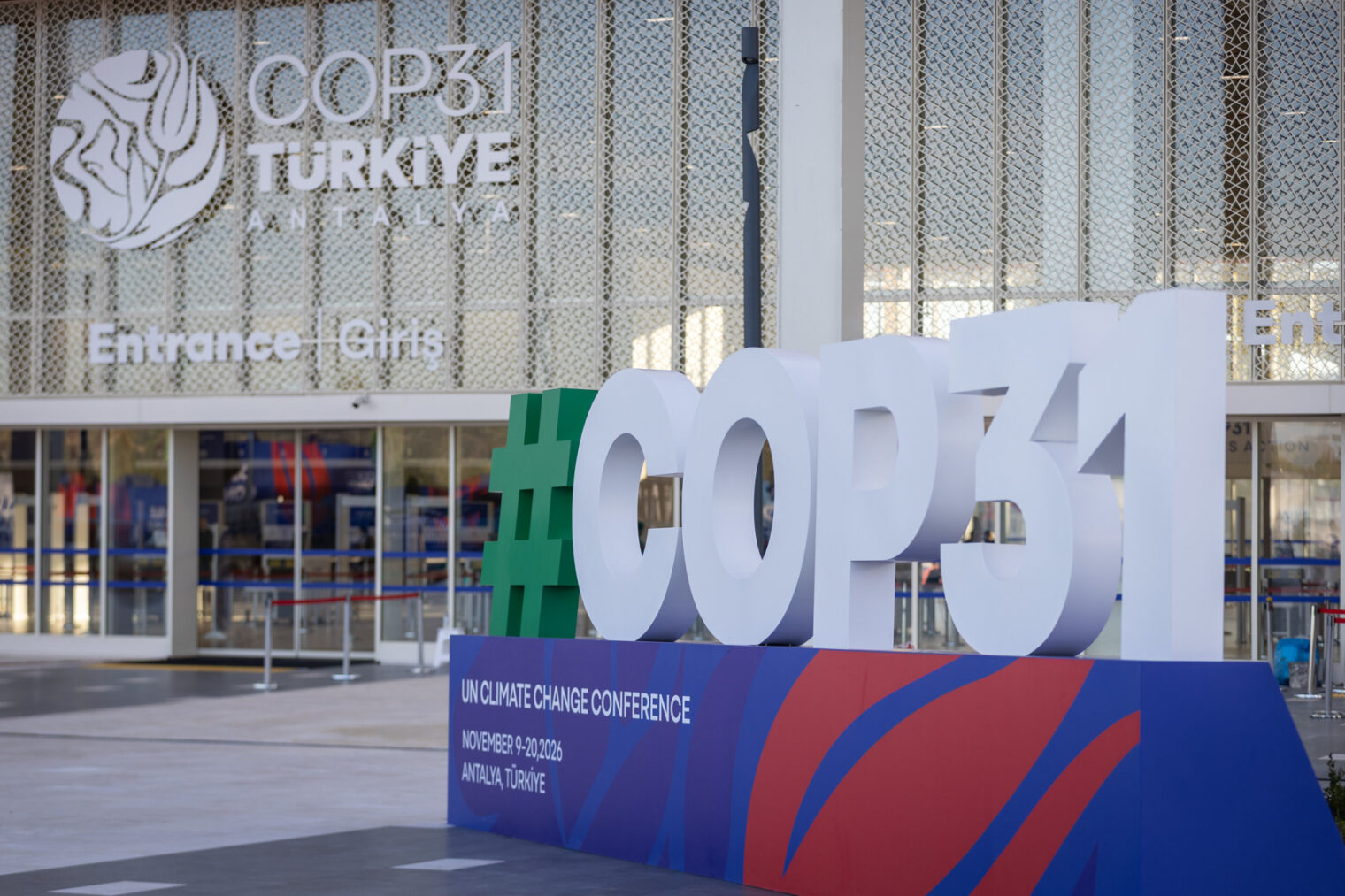
World leaders, climate negotiators from the Global North and Global South, development partners and various stakeholders gathered in Antalya, Turkey, on Monday, for the opening of the 31st United Nations Climate Change Conference (COP31).


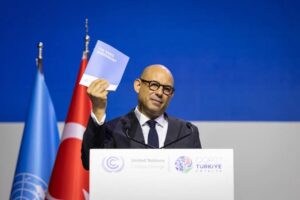
The key message calls on countries to shift from mere climate promises to practical solutions. UN Climate Change Executive Secretary Simon Stiell says this approach is essential for the world to achieve its 2030 climate targets.
According to Stiell, the world has made tremendous progress in setting climate commitments, but the challenge is the implementation, which remains too slow and unable to match the global urgency to combat the climate crisis.
“The progress is nowhere near fast or fair enough,” he argues, saying that COP31 must supercharge solutions and break down existing global targets and national plans into component steps.
Stiell further emphasised the need to break down existing global targets, pushing for urgent solutions to increase finance for adaptation, access to committed and available funding, triple global renewables capacity by 2030, support energy connections across borders, and reduce methane emissions, particularly in the oil and gas and waste sectors.
“Action on methane and electrification could cut the projected global warming by half,” he highlights.
However, for countries like Uganda, the speech raises a critical question: where is the money to facilitate the implementation of the country’s climate commitments, and how much of it reaches the communities that are already bearing climate change impacts?
In Uganda, where millions of people still depend on farming and natural resources for their livelihoods, the real challenge is putting the promises into action.
According to Margaret Athieno Mwebesa, the Country Coordinator for Climate Change Platform, Uganda still finds it hard to get enough funding for climate adaptation and mitigation measures.
Currently, the country needs $28.1bn to fully implement its Nationally Determined Contribution (NDCs) by 2030. For the last five years (FY2021-2025), the country has only managed to mobilise roughly between $1.2 billion and $1.6 billion.
“This is a huge financial gap; without enough funds, our climate agreements risk becoming empty promises,” Mwebesa says. In this situation, she adds, local communities already struggling with devastating climate change effects are left to suffer alone.
Because of the funding gap, the government, through the Ministry of Water and Environment, launched the Uganda Climate Investment Platform early this month. The initiative aims to attract public and private investment for urgent climate-smart investments.
In addition, Uganda’s Vice President, Jessica Alupo called on implementing partners to fast-track the investments to protect vulnerable communities and further drive sustainable growth.
Agreements and Solution
Stiell further advises that the stronger the outcomes, the easier it will be for countries to turn their climate targets into practical outcomes, delivering real benefits to more people.
He explains that the Just Transition Mechanism will help countries to ensure everyone gets the support needed as they move towards a greener economy.
Meanwhile, the agreement on adaptation will establish a board to oversee the disbursement of funds to countries, and introduce indicators to help track and measure progress at the national level.
About climate mitigation, Stiell explains that it will help countries accelerate implementation across sectors of the economy while encouraging businesses and communities to do more to reduce pollution.
“On climate finance, the agreements will provide clarity on how countries can achieve the $300 billion and $1.3 trillion commitments, without reopening previous agreements, banks and private investors, to play their part.
Farmers Who Cannot Wait For Another COP
However, Uganda’s climate financing challenge is clear when viewed through the experiences of communities that are already affected by climate change.
Agriculture supports Uganda’s economy and provides livelihoods for millions of people, especially in rural areas. However, farmers are increasingly struggling with unreliable rainfall, declining soil fertility, prolonged dry spells, floods, and other climate-related pressures.
For smallholder farmers, who depend on rain-fed agriculture, a failed season can mean having less food at home, losing income, falling into debt, and difficulty paying school fees.
This makes climate adaptation more than just a government policy issue. It largely involves giving farmers the support and resources they need to continue producing food despite changing weather patterns.
Such support includes providing irrigation systems, drought-tolerant seeds, improved agricultural extension services, reliable weather information, water storage facilities, soil conservation and accessible and affordable crop insurance.
This is why Stiell insists that COP31 should focus on practical solutions rather than simply making promises, which is particularly important for countries like Uganda.
However, the big question is whether the global climate funding will be provided in a way that is reliable, affordable, predictable, accessible and affordable and easy for countries like Uganda to access resources to implement these interventions.
The ACT Alliance report also highlights another challenge facing the country’s agricultural sector
And gender inequalities. According to the report, women make up about 77% of the agricultural workers in Uganda, but only 31% own land.
In simple terms, women do the most farming in the country but often lack access to land, one of the most important resources they need to improve their farming and increase production.
International Climate Pledges To Local Communities
One key message in Stiell’s speech is that many developing countries struggle to access the climate funds that have already been promised to them.
He further wants COP31 to find practical ways of addressing these obstacles and make it easier and faster for the countries to receive this money to support climate adaptation.
For Uganda, this is especially important as many of its climate ambitions depend heavily on financial support from other countries and international organisations. However, the challenge is not just how much money there is, but also how difficult it is for countries to access it.
To receive global climate funding, countries often have to go through a lengthy application process, including preparing detailed project plans, environmental safeguards, and accreditation processes, before the money can be approved.
Although these requirements are meant to ensure accountability, they make it difficult for countries and institutions with limited resources and technical skills and financial capacity to navigate them.
This situation can also be harder for local governments and community organisations, which may lack the expertise and resources needed to apply for funding.
This further questions whether the climate funding actually reaches the communities most exposed to climate risks, that need it most or whether the process is easier for large institutions with the money, skills and experience to manoeuvre the system.
In Uganda, the Ministry of Finance has been working on ways to track climate funding and improve transparency and monitoring of how the money is managed.
Still, the ACT Alliance report also highlights the need for an effective digital tracking system that can show where climate money comes from, how much and how it is allocated and spent.
Such a system would help the government identify whether more funding is needed, monitor how it is being used, and further establish whether it is reaching the priority sectors and most climate-affected communities.
However, having an effective tracking system is not enough, as information must also be available to the public for citizens, researchers and journalists to independently follow the money and hold those responsible accountable.
Ultimately, the country needs to move beyond just reporting how much climate funding has been promised and mobilised and whether it has made a difference in people’s lives.
END







 English
