


















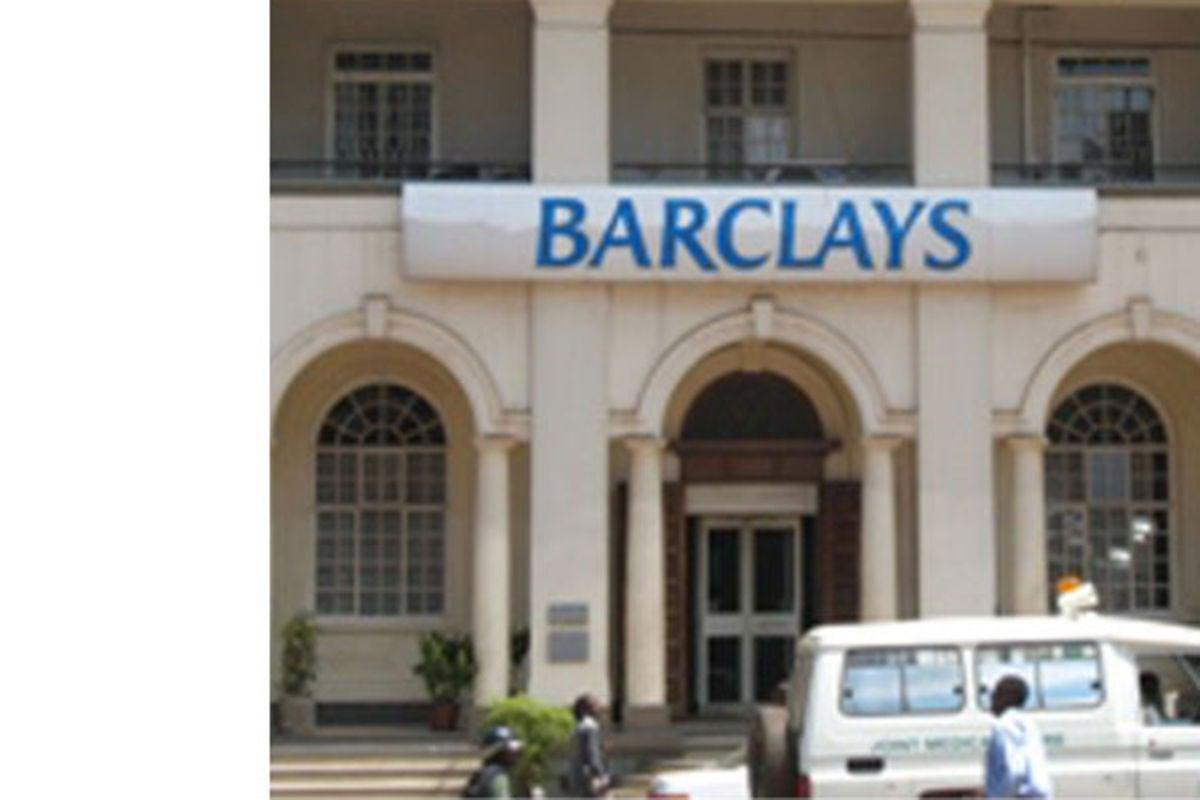
The High Court Commercial Division in Kampala has ordered Barclays Bank of Uganda Limited to return two land titles belonging to a couple after declaring a mortgage used to secure a US$300,000 loan invalid and unenforceable.
The court also awarded the couple, Henry Senoga and his wife Immaculate Senoga, Shs80 million in general damages against the bank for retaining their property titles for about 18 years, while Begumisa Enterprises Limited, trading as Tropical Fish Industries, was ordered to pay an additional Shs120 million for breaching its fiduciary obligations under powers of attorney granted by the couple.


In a judgment delivered on November 6, 2026, Justice Stephen Mubiru ruled that the bank had no lawful basis for retaining the titles after the mortgage deed upon which it relied was found to be invalid under the Registration of Titles Act.
The judge further ordered that the two awards attract interest at 15 per cent per annum from the date of judgment until payment in full.
The dispute arose from a financial arrangement in November 2005, when the couple authorised Begumisa Enterprises Limited to use their respective land titles as security to obtain credit facilities from Nile Bank Limited, which was subsequently acquired by Barclays Bank of Uganda.
Senoga had offered his property comprised in Kyaddondo Block 273 Plot 3165 at Namasuba, while his wife provided land comprised in LRV 3150 Folio 25 Plot 99 at Luthuli Avenue, Bugolobi.
On November 14, 2005, the couple executed separate powers of attorney granting Begumisa Enterprises Limited authority to use the titles to obtain credit facilities from Nile Bank.
They subsequently signed a third-party mortgage deed on December 16, 2005, securing a loan of US$300,000 advanced to the company.
However, the couple later complained that the bank and the borrower had gone beyond the arrangement by allowing their properties to secure additional borrowing without their consent.
They maintained that their obligation was restricted to the original US$300,000 facility, which they said had subsequently been fully repaid.
The couple also argued that the mortgage was improperly executed and could not lawfully be used to claim additional money from them.
Barclays, however, disputed the claims, arguing that the couple had voluntarily mortgaged their properties as third-party security and undertaken to repay the outstanding obligations of Begumisa Enterprises Limited in the event of default.
The bank told court that the borrower had obtained additional facilities, including overdrafts of US$700,000 in October 2006 and US$500,000 later that month, followed by term loans of US$250,000 in June 2007 and US$500,000 in September 2007.
According to the bank, the borrower defaulted, leaving an outstanding balance of US$727,200 by July 17, 2008.
It consequently sought to recover the money from the couple and exercise its rights over their properties.
However, Justice Mubiru found that the original mortgage expressly limited the security to US$300,000 together with interest and that the couple had not consented to the subsequent facilities of US$250,000 and US$500,000, which were partly secured by their properties.
The judge observed that although the powers of attorney contained broad language authorising the borrower to obtain credit facilities for whatever amounts it wished, the subsequent mortgage deed signed directly by the couple with the bank imposed a specific financial limitation.
He ruled that the more specific monetary restriction in the mortgage deed prevailed over the broader provisions in the powers of attorney.
The court further found that Begumisa Enterprises Limited had breached its fiduciary obligations by using the couple’s property to secure credit facilities that benefited its own financial interests.
Evidence presented by the bank’s witness, Christine N. Kibirango, Manager of Business Support and Corporate Recoveries, showed that by December 16, 2005, the company’s account was already overdrawn by approximately US$1 million.
When the US$300,000 loan was disbursed on December 20, 2005, the money was credited to the company’s account, reducing its outstanding debit balance to approximately US$710,000.
Justice Mubiru observed that the loan proceeds were effectively used to reduce the company’s pre-existing debt rather than being applied for a purpose that benefited the couple.
He also noted that the company subsequently facilitated additional borrowing using the same properties without obtaining fresh consent from the owners.
“The evidence establishes two distinct breaches of fiduciary duty by the 2nd defendant,” Justice Mubiru ruled, referring to the use of the loan proceeds to offset the company’s existing debt and the subsequent use of the couple’s properties to secure additional facilities without their approval.
The judge nevertheless distinguished the obligations arising from the powers of attorney from those created by the mortgage deed, observing that the bank was not a party to the private arrangement between the couple and Begumisa Enterprises Limited.
He explained that the couple retained ownership of their properties and their capacity to transact directly despite having granted powers of attorney to the company.
The court also examined the bank’s decision to restructure the borrower’s outstanding obligations through a consent judgment in High Court Civil Suit No. 102 of 2008.
Under that arrangement, Begumisa Enterprises Limited agreed to pay Barclays US$1,559,639.
However, the couple were neither consulted nor involved in the restructuring, which also introduced new securities.
Justice Mubiru held that the consent judgment amounted to a new contractual arrangement between the bank and the borrower, which materially altered the original obligations without the couple’s specific consent.
Relying on Section 72 of the Contracts Act, the judge explained that any material alteration to an agreement between a creditor and a principal debtor without the guarantor’s consent automatically discharges the guarantor from liability arising from the subsequent transaction.
He further held that the bank could not rely on a general clause in the mortgage allowing it to vary credit facilities and make arrangements with the borrower to override the specific US$300,000 limit.
The mortgage declared invalid
In a separate finding, the court declared the mortgage deed dated December 16, 2005, invalid and unenforceable because it did not comply with mandatory requirements governing the execution of instruments affecting registered land.
Justice Mubiru observed that the signatures of the couple and the representatives of Begumisa Enterprises Limited appeared as scribbles without their names being written out in full.
The document also contained a signature attributed to the bank’s Head of Credit Department, but the court found that the person had signed as a party to the mortgage rather than as an independent attesting witness.
The judge explained that the Registration of Titles Act imposes three mandatory requirements for the valid execution of instruments affecting registered land: attestation by a qualified witness, signatures written in Latin characters and proper corporate execution, including use of a common seal where applicable.
The court found that the mortgage failed to satisfy these requirements.
It particularly noted that none of the signatures had been properly attested and that the names and capacities of the company’s representatives were not clearly disclosed.
Justice Mubiru consequently ruled that the defects independently rendered the mortgage invalid, meaning Barclays could not rely on it to enforce its claim against the couple.
The judge also clarified that invalidity of a mortgage does not automatically extinguish the underlying loan obligation. A bank may still pursue a borrower for money owed if it independently establishes the debt.
However, in this particular case, Barclays had filed its counterclaim against the couple rather than Begumisa Enterprises Limited, which had borrowed the money.
The court found that there was no separate guarantee deed, independent covenant to pay or other personal obligation establishing the couple’s liability outside the defective mortgage.
Consequently, the bank’s counterclaim for US$727,200 was dismissed with costs.
Shs200m compensation
In determining the remedies, Justice Mubiru ordered Barclays to immediately return the two land titles to their respective registered owners, free from all encumbrances.
The judge awarded Shs80 million against Barclays, taking into account the approximately 18 years during which the titles had been retained, the value of the properties and the inconvenience suffered by the couple.
He separately awarded Shs120 million against Begumisa Enterprises Limited, citing its breach of fiduciary duty and the financial benefit it obtained from using the couple’s properties without their consent.
The court declined to issue a separate permanent injunction against the bank, reasoning that the order directing the immediate return of the titles would sufficiently protect the couple against further dealings with the properties.
In his final orders, Justice Mubiru entered judgment for the couple against the two defendants severally, dismissed the bank’s counterclaim with costs and directed that both damages awards attract interest at 15 per cent per annum from November 6, 2026, until full payment.
The case, Civil Suit No. 0206 of 2020, was heard on July 3, 2023, and judgment was delivered on November 6, 2026.
The couple were represented by Alliance Advocates, Barclays by MMAKS Advocates, while Begumisa Enterprises Limited was represented by Alli Gabe & Co. Advocates.









 English
